

New post: Rebuilding Skills for Recovery: A Five-Pillar Strategic Framework for Revitalizing TVET in Gaza
New event report: Expert Dialogue on Human Resource Development for TVET Teachers and Trainers in Palestine, 21–24 June 2026
Globally, conflict and state-society fragility are on the rise, and this trend is increasingly prevalent in many of the ETF partner countries. Fragility and conflict result in deteriorating human capital development outcomes, which cumulatively also further contribute to increased fragility and/or conflict. Conversely there are opportunities in these contexts for tailored support to contribute to strengthening resilience and peacebuilding, starting from human capital development.
To strengthen its capacity to work in fragile and conflict-affected contexts, the ETF has run a number of activities.
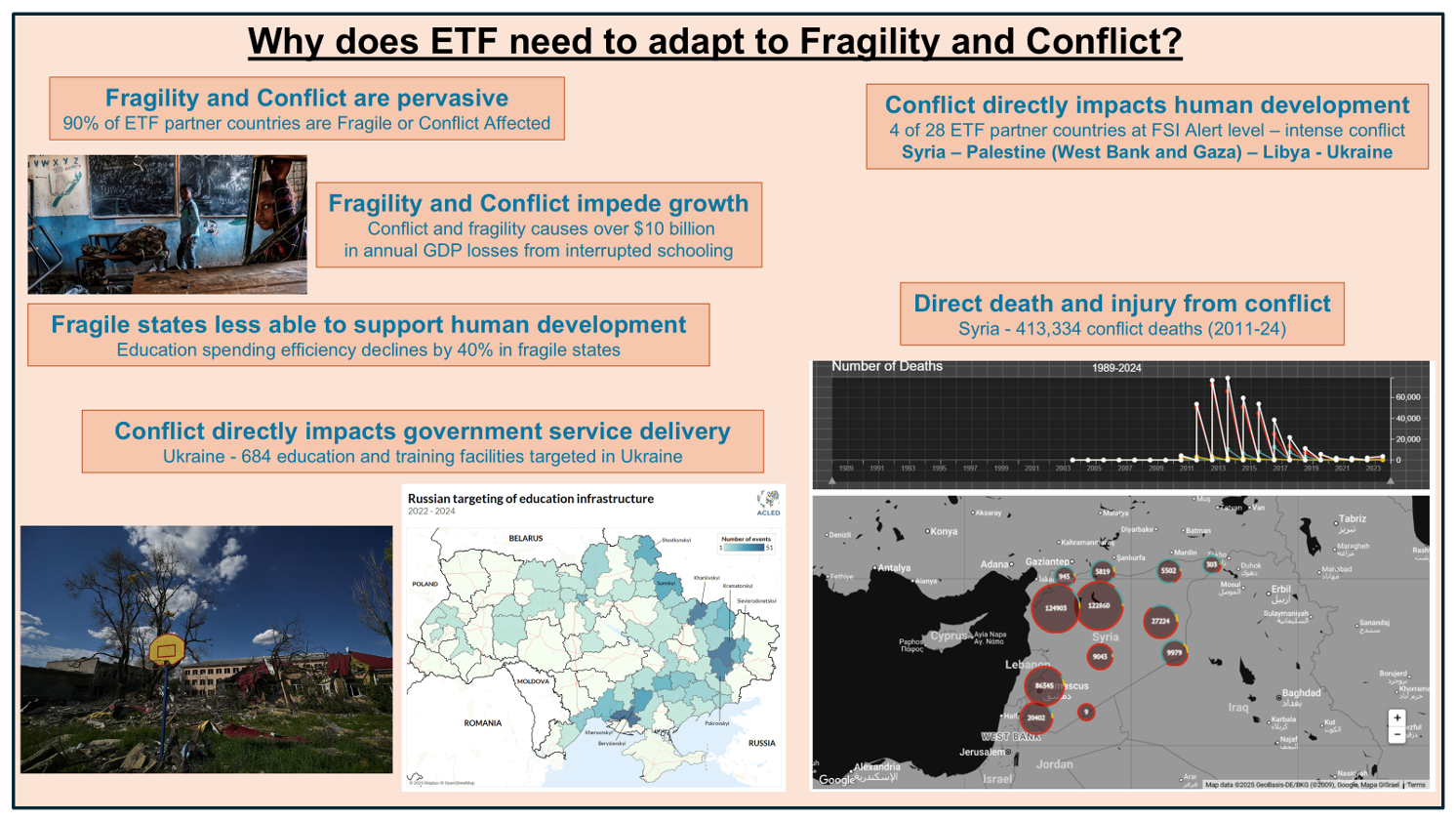
We started by running a literature review to gather foundational evidence from available literature, including an analysis of the current definitions of key fragility and conflict terms used by international organisations and research institutions, an overview of the approaches of key international agencies, a review of available quantitative data and qualitative analysis on fragility, conflict and their impact on human capital development, and a summary of the implications for the ETF work in fragility and conflict-affected contexts. The literature review report is available here.
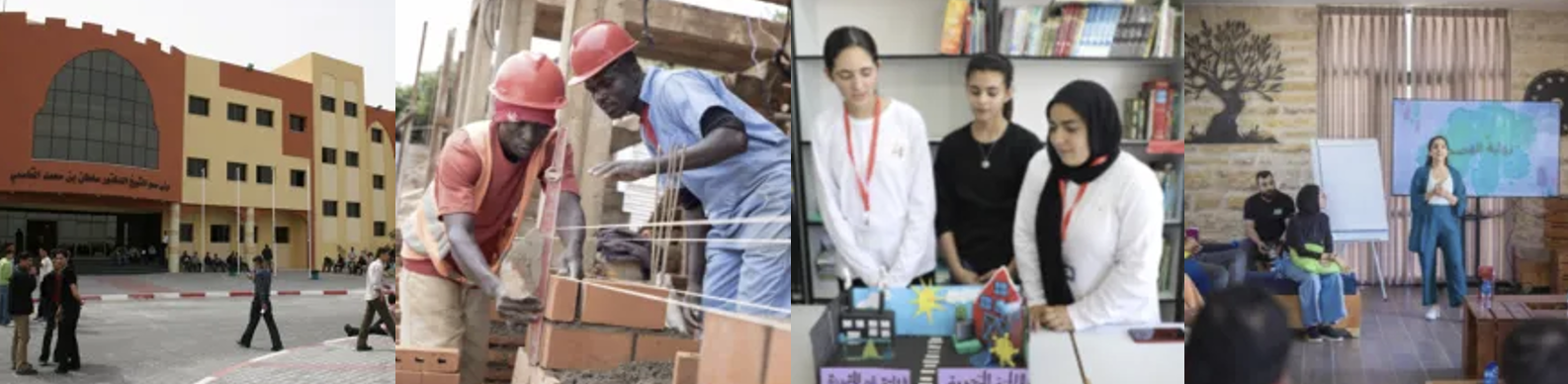
In collaboration with Enabel, we then engaged stakeholders in developing case studies to better understand how education, training and employment are maintained in fragile and crisis-affected contexts. This allowed us to draw valuable insights from successful cases of education and skills development in time of crisis. The 20 case studies are:
- Three TVET success stories from the Department of Service to Palestinian Refugees of NECC in Gaza.
- Building skills and confidence for Palestinian Youth
- Gaza’s Virtual Vocational School: Keeping skills alive
- Learning from a tent: Noor’s journey to graduation in Gaza
- TESI: Keeping Gaza’s students connected to learning
- The EPISODE Project: digital social entrepreneurship for Palestine
- Gaza Sky Geeks: digital skills and opportunities through crisis
- Horizons Academy for youth in the West Bank and Gaza
- Safeguarding Youth through work opportunities in Lebanon
- Trauma‑informed pedagogy training for Gaza’s Universities
- Prevent Gender-Based Violence (GBV) in Kigoma, Tanzania
- Dispositif de parrainage d’apprenants au Burundi
- Overcoming staff shortages through PPP in Ukraine
- From Dreamers to Doers: STE(A)M, Hope and Resilience in Palestine
- Insertion professionnelle en contexte fragile: Programme Nexus au RD Congo
- Lessons from Gaza’s Response to Education and Labour Market Collapse
- Education en Urgence dans la région du Centre-Est au Burkina Faso
- Education et pauvreté multidimensionnelle en RD du Congo
- Les crèches mobiles et l’autonomisation des femmes en Guinée
- Résilience et renaissance de la coopérative Wendin Manegdé à Kaya
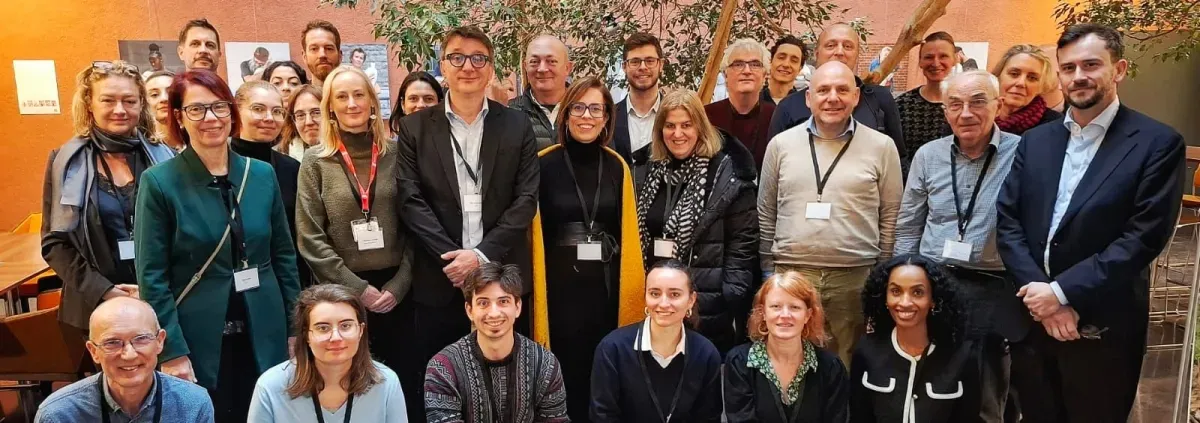
Recommendations and ideas coming from these cases were discussed in a Workshop "Education, skilling, and employment in fragile and crisis-affected contexts" organised in cooperation with Enabel in Brussels on the 20th of November 2025. More information on the event here.
MEC is ready to cooperate with ETF on innovative educational solutions that strengthen resilience, digital skills and employability in fragile and crisis‑affected contexts. Our experience in digital learning, media and AI literacy, youth empowerment and VET innovation positions us to co‑create new MOOC models tailored for vulnerable communities and fair transitions to work. We look forward to contributing to ETF’s work on human capital development, peacebuilding and inclusive skills systems.
Thanks Miomir, great to be able to count on you and on MEC! I cc my colleague Wouter Van Damme who is leading this dossier at ETF.
Dear Fabio, thank you for positive answer.
Dear Wouter Van Damme, I am open to communicate with you and to see how to go forward in potential cooperation.
warm regards, Miomir
Please log in or sign up to comment.