
Case Study on education continuity in fragile settings. The EPISODE Project: Building digital and social entrepreneurship skills for Palestinian youth
In an environment marked by political and economic instability, and limited pathways from education to employment, the EPISODE project is helping young Palestinians turn ideas into impact. Led by UNIMED, Birzeit University, An‑Najah National University, Build Palestine, and ALL DIGITAL, this Erasmus+ initiative strengthens the capacity of vocational and higher‑education providers to support digital and social entrepreneurship across Palestine.
At the heart of the project is YEPISODE, a 210‑hour blended course co‑created by Palestinian universities to equip aspiring entrepreneurs with the skills needed to design, launch, and grow socially driven ventures. Fourteen trainers and mentors were upskilled in innovative pedagogies, online teaching, and emerging digital tools, ensuring that learning could continue even when mobility, safety, or access to facilities were disrupted.
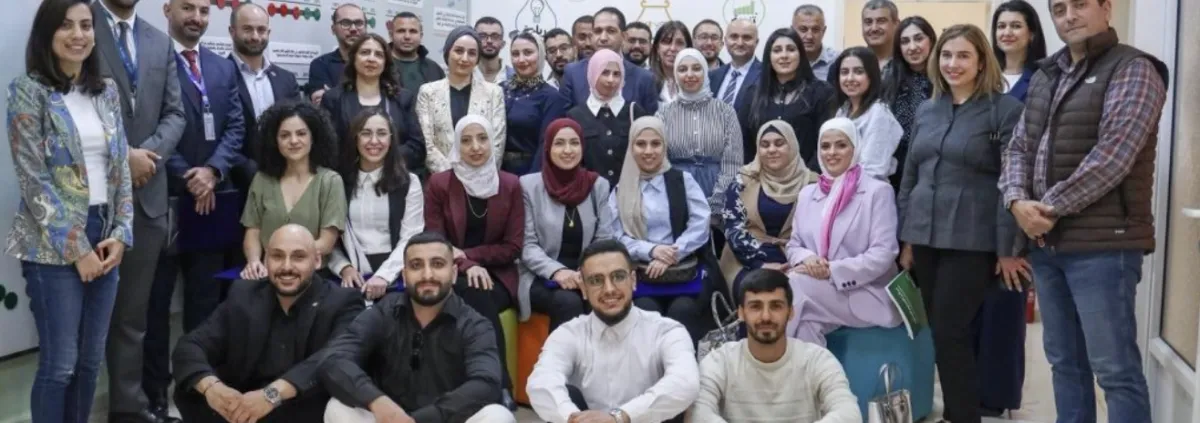
Despite the challenging environment, students engaged deeply: 24 learners at Birzeit University and 16 at An‑Najah completed the programme, developing projects that respond directly to community needs. Pitch events at both universities showcased solutions addressing local challenges, demonstrating how digital tools and social innovation can create tangible benefits for Palestinian society. Participants described the programme as transformative — offering clarity, confidence, and a renewed sense of belonging to a community of changemakers.
By strengthening trainers, empowering youth, and building a shared competence framework for digital social entrepreneurship, the EPISODE project helps maintain continuity of skills development in a highly constrained environment. Its open micro‑learning modules and self‑learning resources ensure that the model can be reused, adapted, and scaled — supporting a new generation of entrepreneurs committed to public prosperity and community resilience.
Case submitted by Sara Pittarello, UNIMED.
Please log in or sign up to comment.