Imagine you were stuck in an elevator with your Education Guru... who would he/she be? what would you ask?

Happy launching ETF Open Space!
Anonymous posted in Open Space
Imagine you were stuck in an elevator with your Education Guru... who would he/she be? what would you ask?
Anonymous posted in Open Space
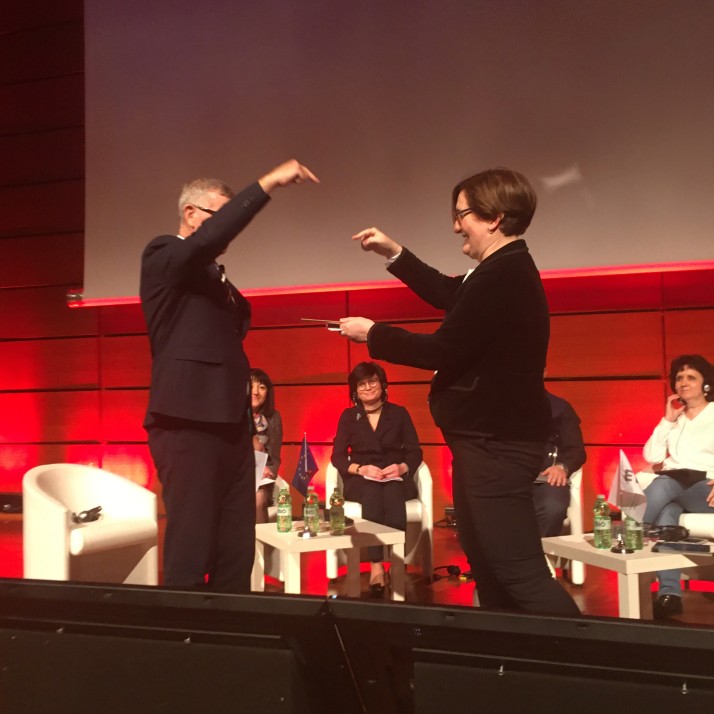
Pressing the button! ?
It’s official now: we are making it happen! ? we cross the barrier of 300 users: can we make it until 400?
Fatma Bennour posted in Open Space
How can we convince teachers and also trainees and their families to switch to flexible courses? To think and to act out of the box?
Julian Stanley posted in Open Space
Goce what else can Ministries and international organization to empower motivated teaches? What makes it possible for teachers to motivate their own own colleagues to innovate?
Natalia Iskortseva posted in Open Space
Question towards Armenian experience in the system for life-long career guidance - what is the starting age (the earliest) and what methods and tools are successfully being used with the younger generations?
Thank you for the answer. I've noticed that kids want to earn their own money already at 10-12 years and they are starting to look for the opportunities. From the other point of view, the example of Netherlands where kids at 12 y.o. have to decide on their future educational path led to 60% of drop-outs in high educational establishments. So the question is when is the right moment to start, and even more important - how to make this early profilization and career development relevant and sustainable? Proposal for everybody - please, share your opinions and experiences.
In answering this question, it is important to rethink the nature of career guidance and career education in the education system. According to Cedefop’s recent analysis of online job vacancies across the EU, worker’s adaptability to changes is the most sought after skills by European Employers. Also within education, young people are making more decisions as they are customizing their learning path. What students think about their future is connected to their engagement in education and learning. This implies, that the perspective of career guidance has shifted from an input-oriented perspective (provision of supporting services, teaching) to an outcome-oriented view in terms of learning outcomes for the individual. To equip the individual with career management skills as an explicit new competence of its own right has became the ultimate goal of guidance interventions and programmes.
As career identity formation is a continuous process of development which starts at the early years of life, more and more countries have developed comprehensive strategies for the teaching and learning career management and entrepreneurial skills as a continuum, starting from primary school through secondary schools and in vocational streams. These strategies include also measures to support the initial and in-service training of school managers, guidance counsellors and other school staff involved in the guidance provision.
At schools, the career education programmes can be delivered as a stand-alone and timetabled subject, as a series of themes taught across different subjects in the curriculum, or through extra-curricular activities. A most comprehensive approach is to include career education as a compulsory or optional timetabled subject within the curriculum. If career education is a mainstream element of curriclula, it provides teachers a possibility to reflect the future options with all the students. Thus well-functioning career education is a cost-effective measure in preventing drop-outs and further social exclusion.
In terms of tools and methods, career education is not one intervention, it includes a range of curriculum based activities, but also work-based experiential learning. A well-functioning partnership model with employers can link the curriculum content to a more up-to-date and in-depth knowledge of the world of work. The development of knowledge and skills through career education helps to ensure the availability of skilled labor force and maintains the balance between the demand and supply of skills and competences in the future. A well-functioning career education is one indicator of a well-functioning and efficient national education system.
Gultekin Cakmakci created a resource in Open Space
Timo Kuusela posted in Open Space
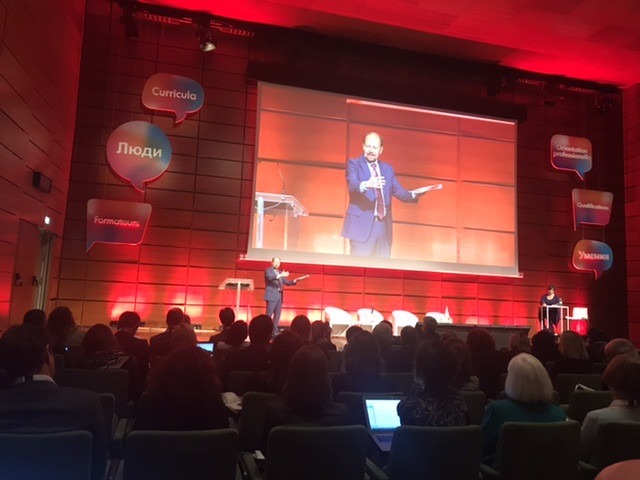
Mika Saarinen talking about why Finland decided to reform its VET system which already worked very well
Reginhild Giunipero posted in Open Space
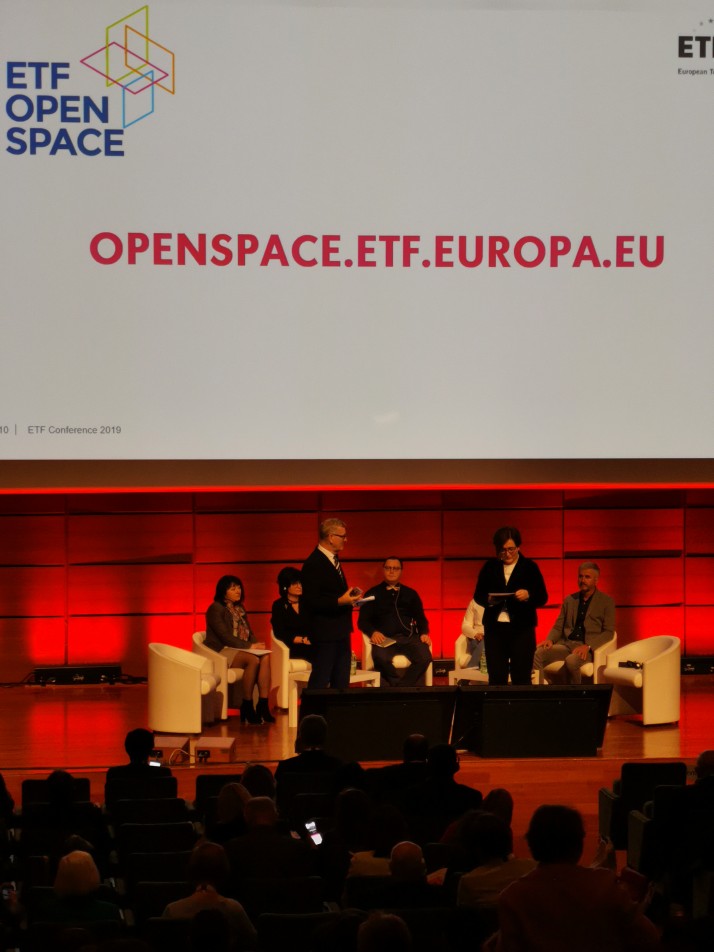
ETF Open Space launched officially
Arjen Deij posted in Open Space
This was Maria introducing Open Space

Reginhild Giunipero posted in Open Space
“We must learn what learning really is”
Please log in or sign up to comment.