The Challenge Addressed
The Zara’s Planet / Eco-Tech Thinking practice addresses one of the key challenges in modern education: the gap between subject-based learning and the development of practical competences that learners need to navigate environmental, technological and social challenges.
Traditional approaches often treat environmental education, STEM learning and social competence development as separate and largely theoretical, especially in early childhood education.
Why the Practice is Innovative
The innovation of this practice lies in the creation of a holistic, author-developed methodology for children aged 3–15 that integrates environmental education, engineering thinking, an entrepreneurial mindset and child development psychology.
At the core of the methodology is the original concept of Eco-Tech Thinking, which combines ecological awareness, technological and project-based thinking, and the development of emotional intelligence and collaboration skills.
Type of Integration and Key Competences
The practice uses an interdisciplinary and practice-oriented integration model. It simultaneously develops environmental, STEAM, entrepreneurial, civic, personal and social competences.
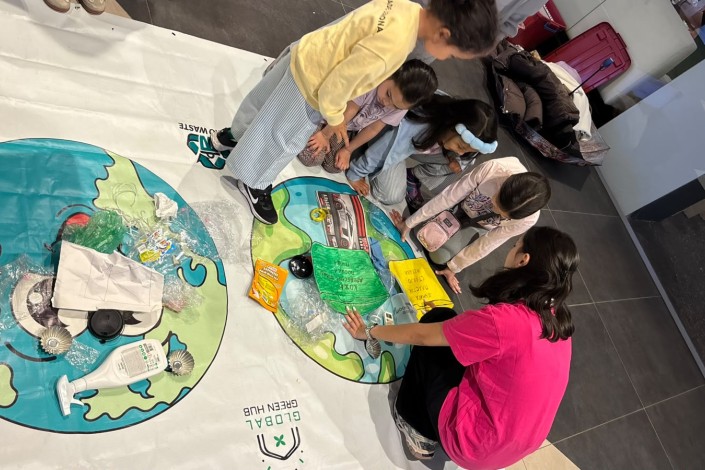
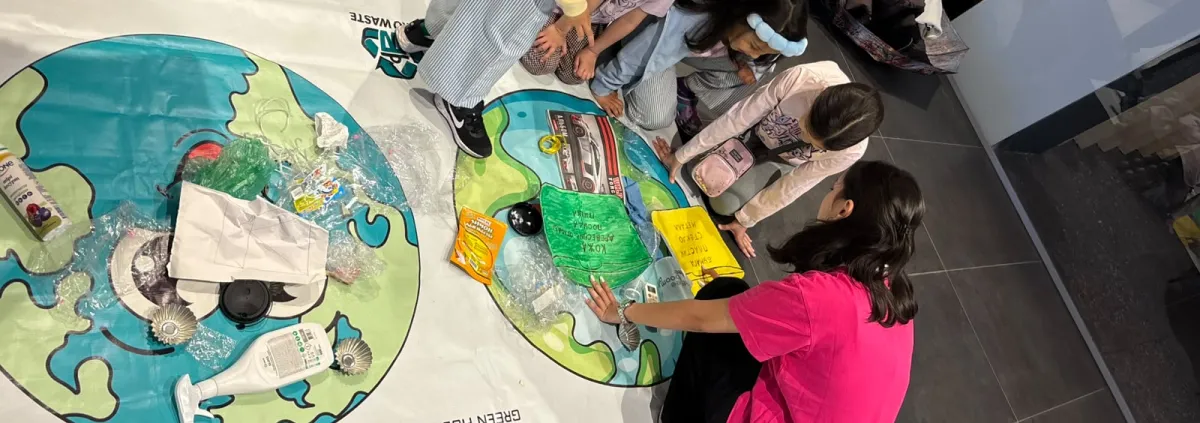
Learning is organised through storytelling, original characters Zara, Mo, T9, hands-on experiments, teamwork and child-led mini-projects connected to real-life situations such as climate, water, plants, animals, resources and sustainable living.
Role of the Teacher/Trainer
The role of the teacher in this practice differs significantly from traditional instruction. Educators act as facilitators and partners rather than providers of ready-made answers.
They guide learning through questions, support teamwork, encourage reflection and help children make sense of their experiences. Mistakes are treated as a natural part of the learning process.
Type of Learning Activities
Learning activities include:
- Story-based and play-based sessions with characters;
- Simple scientific and engineering experiments;
- Work with construction sets and models;
- Collaborative tasks and discussions;
- The development and presentation of children’s mini eco-projects.
Impact of the Practice
The impact of the practice is reflected in the development of sustainable environmental habits, curiosity, confidence, teamwork skills and early problem-solving abilities.
It also reduces teacher workload by providing a clear structure, ready-to-use materials and methodological guidance.
Potential for Replication
The practice has strong potential for scaling and replication. It is adaptable to different educational contexts (kindergartens, learning centres, family learning), does not require complex equipment, includes a teacher training and certification system, and can be scaled at national and international levels.
Innovator: Assel Seifullina - Global Green Hub