
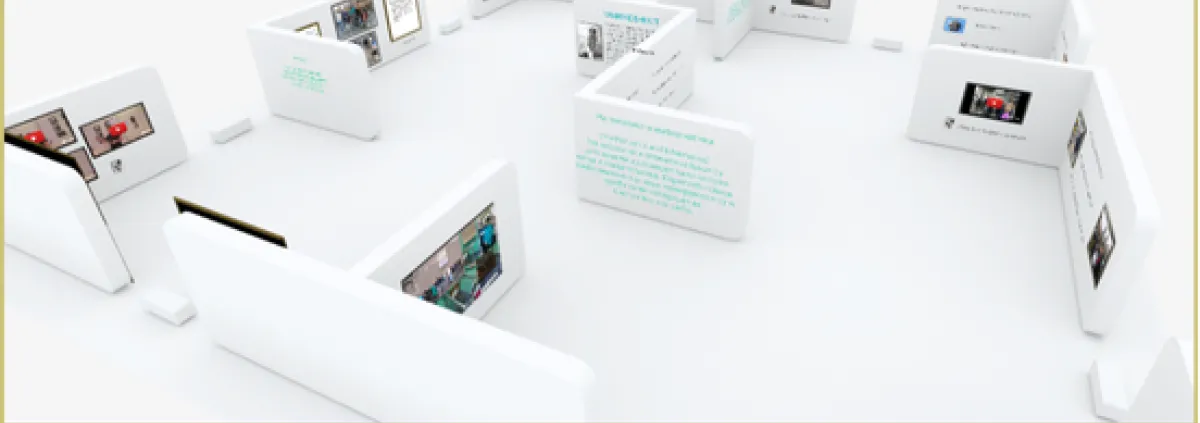
On the occasion of the 80th anniversary of the liberation in World War II, teachers of several subjects designed an integrative project in which 14-year-old students connected their knowledge from history, literature, math, chemistry, ICT, civic, art classes from different angles. The challenge was to connect all these subjects and strengthen students' competencies, and our solution was to choose a dominant common theme - nurturing a culture of remembrance. The result of the students' work is a virtual museum where students' works are collected, and it has become a teaching tool that can be used in the future and expanded every year.
Therefore, we continued and next year created a new museum, connected to the previous one, which allowed us to add new student materials.
Type of Integration and Key Competences
Through the research of historical sources and scientific discoveries, literary analysis of books, students' scientific and media literacy was developed; by creating materials for the museum, their digital competencies were enhanced; through collaborative work at the museum and peer teaching, their interpersonal competencies and ability to adopt new competences were strengthened, while at the same time, their STEAM and competencies for active citizenship were also reinforced. Creating illustrated stories and videos for the museum and writing letters, inspired by the letters of the captured girl Hilda from the camp, led to the development of cultural awareness and expression.
Role of the Teacher/Trainer
The teachers acted as guides through this process, preparing materials, providing additional explanations, and encouraging students to work and conduct research independently. They established cooperation with the local community (museums, libraries, associations that preserve the memory of these war victims, NGOs that organize thematic workshops for students) and also inspired students to research their ancestors during this period, thereby involving the students' families indirectly as well.
Why the Practice is Innovative
Innovation is reflected in the way the material is connected, the application of different methods during the project, and the final result – the virtual museum. Every student could recognize the activities that suited them best and focus on them but also engage with peers in the methods of work in which they did not feel confident enough.
Type of Learning Activities
The students explored this period by analyzing historical sources and literature about this period, studying their ancestors, using science knowledge (encoding and decoding messages in math classes) as well as analyzing the misuse of science (in chemistry classes). They compared human rights then and now in history and civic education classes.
Students also wrote various papers, created thematic illustrated stories and videos, expanded their ICT knowledge by working on a virtual museum, got to know local environment better through visits to memorials and museums, strengthened their collaborative skills through group work and conducting workshops for peers, as well as presentation skills while showcasing the museum to the public.
Impact of the Practice
Teachers and students came up with new ideas, so the impact was significant, and the work continued the following and this year. This kind of work can be continuously expanded and is very appealing to students.
Potential for Replication
This kind of work can be continuously expanded and is very appealing to students.
Links
https://www.artsteps.com/view/65798dd352206515bdf08d7a
https://www.artsteps.com/view/681ba360ab02a1c42939fcf3
Innovator: Jelena Mucic, Tatjana Hadzic Jovovic, Snezana Bogicevic, Vesna Kostic - Elementary school Jovan Ducic