The Challenge Addressed
The SKILLTRACK PASSPORT is an innovative, prototype-ready model designed to establish a comprehensive competence-based learning and assessment system across technical and vocational schools covering industrial, agricultural, commercial, hospitality, and technical specializations. It aims to improve the quality of technical and vocational education, enhance learner motivation, and strengthen students’ readiness for the labour market through a unified and transparent mechanism for documenting practical and professional competences beyond traditional exam scores.
The practice begins before formal learning starts, through a mandatory vocational orientation and aptitude assessment for all incoming learners. Completion of this assessment is a prerequisite for receiving the passport and ensures that each student is placed in the specialization that best matches their strengths and interests (industrial, agricultural, commercial, hospitality, or technical), instead of being assigned based on middle-school exam results alone. This approach creates a fair, motivating, and pedagogically sound foundation for competence-based learning from the outset.
Why the Practice is Innovative
The model integrates four key competences essential to technical and vocational education:
- Personal, social, and learning-to-learn competence
- Digital and technology-based competences
- Vocational and occupational competences relevant to each field
- Language competence, supporting learners in using language appropriately in vocational contexts, understanding technical terminology, reading work-related instructions, and communicating effectively in basic professional situations
A Green Competence dimension is also embedded, promoting sustainability, responsible resource use, and safe in vocational environments.
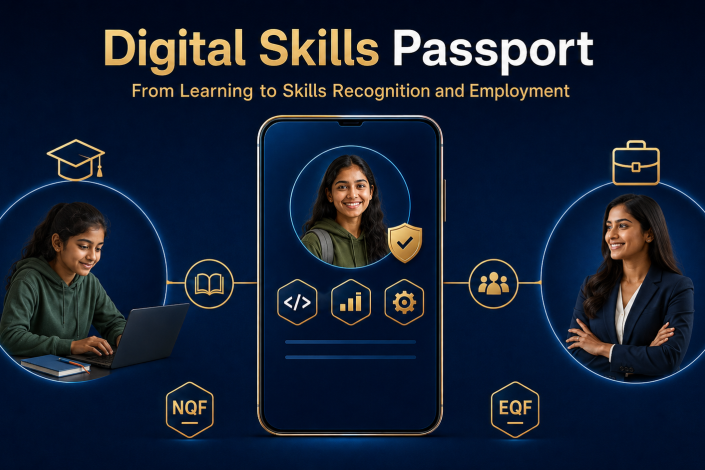
The passport functions as both a digital and printed tool, accompanying learners from their first year until graduation. Progress is documented through evidence-based assessment, shifting away from reliance on theoretical examinations. The conceptual framework, learning components, assessment rubrics, and passport design have already been developed, making the model ready for piloting in selected vocational schools.
Type of Integration and Key Competences
Learners collect evidence across six dimensions:
- Vocational and occupational competences
- Personal, social, and self-regulated learning skills
- Digital skills and technology-based tasks
- Practical projects, applied assignments, and workplace-based training
- Participation in community, entrepreneurial, or green initiatives
- Language competence for reading, understanding, and communicating in vocational settings
Role of the Teacher/Trainer
Teachers and trainers act as facilitators, supporting learners in documenting evidence through a digital platform linked to QR-coded profiles and clear rubrics tailored to vocational contexts.
Learning activities include project-based tasks, simulations, field visits, practical training, and collaborative problem-solving aligned with real workplace environments.
Type of Learning Activities
Learning activities are designed around practical, applied, and workplace-oriented learning. These include:
- Project-based tasks
- Simulations
- Field visits
- Practical training
- Collaborative problem-solving
- Workplace-based training and applied assignments
These activities are aligned with real workplace environments and provide learners with opportunities to collect concrete evidence of their developing competences.
Impact of the Practice
The expected impact includes:
- Higher learner motivation and greater awareness of personal skill development
- Stronger alignment between vocational education and labour-market needs
- Enhanced employability through clear, evidence-based competence portfolios
- Improved cooperation between vocational schools and industry partners
- Increased social inclusion by enabling all learners to demonstrate strengths through evidence rather than grades
- A shift toward competence-oriented assessment practices
Potential for Replication
Highly scalable and adaptable, the SKILLTRACK PASSPORT can be replicated across various vocational schools and training centres due to its flexible structure and digital-ready design. The next step is implementing a pilot in 1–3 schools, gathering feedback, and preparing for a full digital rollout.
The SKILLTRACK PASSPORT provides an innovative, practical, and inclusive framework for developing and documenting key competences in technical and vocational education, supporting sustainable lifelong learning skill.
Innovator: Marcel Azer Sharoubiem - Ministry of Education and Technical Education – Pilot in Technical Secondary Schools