The Challenge Addressed
Navicup is a location-based learning ecosystem that enables schools, museums, municipalities and lifelong learning communities to create interactive, movement-based learning experiences that combine education with physical activity and wellbeing.
The practice responds to a major challenge across Europe: supporting young people’s health, increasing physical activity levels and integrating movement naturally into the learning process.
Why the Practice is Innovative
A core innovation of Navicup is the principle of learning through movement.
Every learning path, mission and task encourages walking, exploring and active participation in real environments.
At a time when many learners spend long hours indoors and sedentary, Navicup offers a pedagogically meaningful solution that embeds movement directly into subject learning, community education and cultural experiences.
Schools use Navicup not only for subject-based missions but also as a modern extension of physical education, where students practice navigation, teamwork, endurance and spatial awareness in an active format.
The platform also supports an educational adaptation of orienteering, a sport widely known for combining physical exercise with problem-solving and environmental awareness.
Teachers can create orienteering-style learning routes where students must move between checkpoints, solve tasks, analyse information and make decisions under time pressure.
This integrates cognitive learning, STEM skills, and physical exercise into a single, motivating activity.
The same approach is used by municipalities and museums to encourage families, youth groups and local residents to explore their surroundings in an active, health-supporting way.
Type of Integration and Key Competences
Key competences developed through the practice include:
- Digital competence: through mobile tools, interactive maps, digital task creation and AI-supported content.
- Personal, social and learning-to-learn competence: enhanced through teamwork, responsibility, problem-solving and self-directed learning during movement-based activities.
- Citizenship and cultural awareness: supported by city heritage routes, museum learning paths and community participation trails.
- Entrepreneurship competence: learners create their own routes, missions and project-based outputs requiring initiative and planning.
Movement-based learning also supports mental health, concentration, emotional regulation and resilience — especially for young people who struggle in traditional classroom environments.
Outdoor learning environments reduce stress, increase engagement and offer inclusive opportunities for diverse learners, including those with attention or behavioural difficulties.
Role of the Teacher/Trainer
Teachers can create orienteering-style learning routes where students must move between checkpoints, solve tasks, analyse information and make decisions under time pressure.
The same approach allows educators to integrate subject learning, physical activity, community education and cultural experiences in a single learning environment.
Type of Learning Activities
Typical learning activities include:
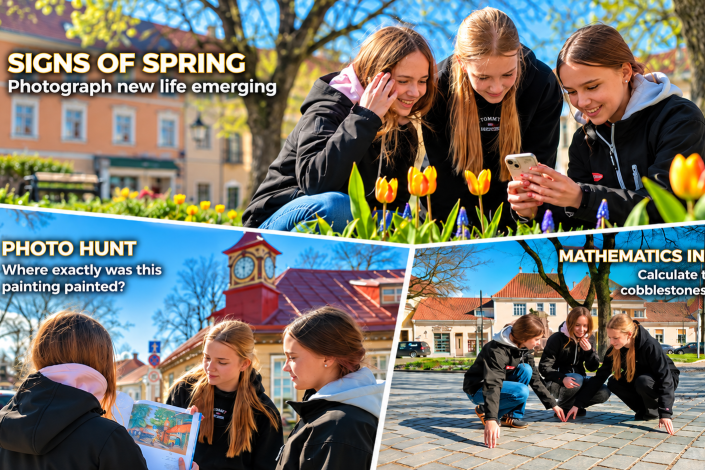
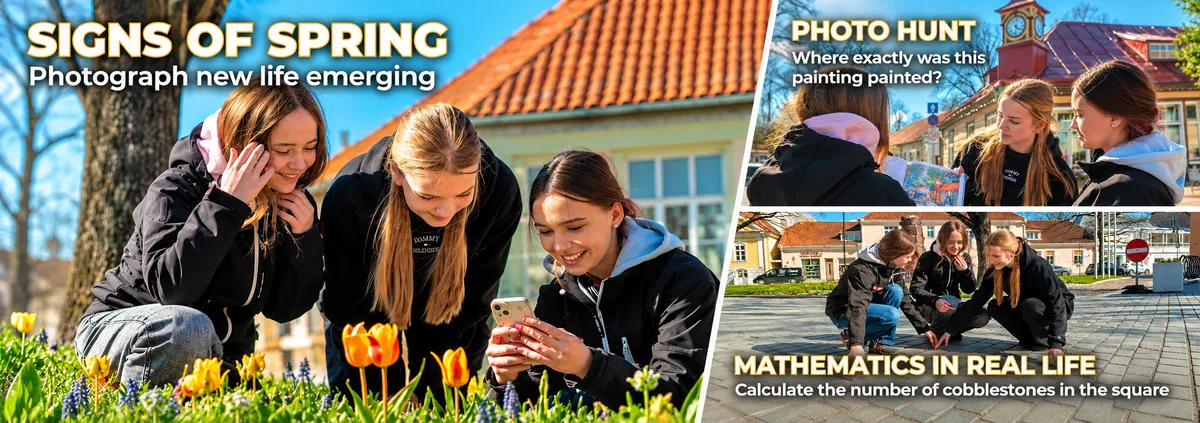
- Physically active missions linking curriculum topics with real locations
- Sport-like orienteering routes enhanced with digital tasks
- Health-promoting community trails encouraging residents to walk and explore
- Multimedia storytelling created on the move (photos, audio, observations)
- Timing, navigation and problem-solving challenges that combine physical and cognitive effort
- Competence-based reflection and assessment tools
Impact of the Practice
The practice has shown strong impact in schools, museums and municipalities in Estonia and internationally.
Educators report better motivation, improved health indicators such as increased physical activity, and deeper engagement with learning content.
Cities report higher participation in community events and stronger connections between residents and their local environments.
Potential for Replication
Navicup is easily scalable and requires no technical skills.
With support for more than 50 languages, it has been successfully implemented across Estonia, Poland, Sweden, Ukraine, Mexico etc.
Learn more about Navicup’s outdoor learning tools for schools at navicup.com/schools
Innovator: Asko Berens - Navicup OÜ