The Challenge Addressed
The MOSAIC Hackathon is an innovative, five-day, intensive, and multidisciplinary pedagogical practice designed to advance vocational education in the arts, crafts, and design sectors.
Developed within the CoVE MOSAIC project (https://mosaiceuproject.eu/), its primary goal is to prepare vocational students for creative industries increasingly shaped by digital fabrication tools (CNC, 3D printing, laser cutters) and Artificial Intelligence (AI), alongside traditional craft methods.
Its core objectives are to raise the quality of vocational education, enhance the attractiveness of these professions, and develop a productivity mindset in future professionals.
Initial trials were led by the coordinator SEPR, with ongoing curation and implementation managed by Wooden Oy (supported by the consortium).
Why the Practice is Innovative
Structure and Innovation
The hackathon is a structured, international framework that integrates students and teachers from various educational levels (vocational schools, universities of applied sciences, and universities) into multicultural and multidisciplinary teams.
This unique, multi-level ecosystem simulates a real creative industry setting - fast-paced, dynamic, and highly collaborative - acting as a pedagogical accelerator.
Teams must develop innovative prototypes under strict time constraints, supported by expert coaches and industry professionals who update participants' skills with the latest industry knowledge.
Type of Integration and Key Competences
Six-Stage Workflow
The hands-on work is guided by a six-stage model (eight hours per day):
- Product development and sketching
- Product concept creation
- Final product design
- Production (product and promotional materials)
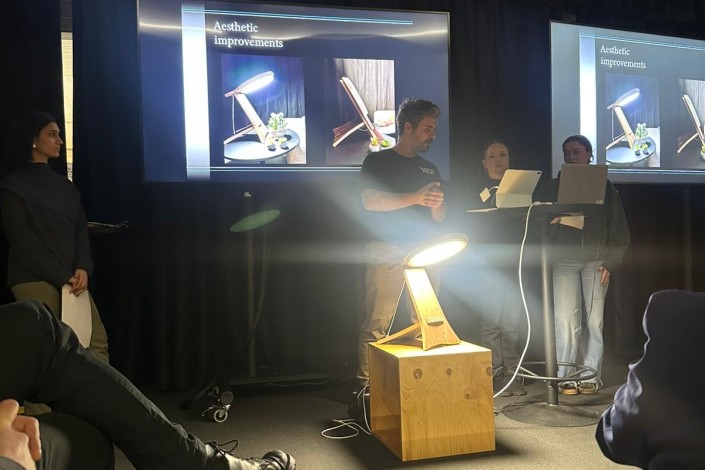
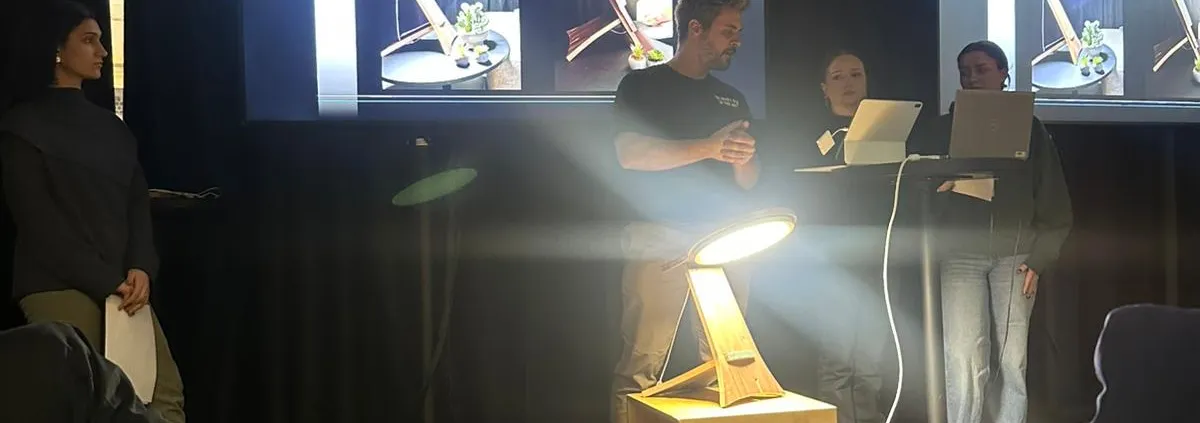
- Daily group presentations
- Public exhibition
Daily afternoon sessions, including presentations and mentor reflections, are central to the learning process, strengthening teamwork and preparing participants for professional challenges.
Key Skill Development
The MOSAIC Hackathon supports integrated learning across essential European skill areas:
Digital and Technology Skills: Teams utilise advanced machinery and AI for tasks like converting hand-drawn designs into digital models or creating professional promotional materials.
Soft Skills: Without a formal team leader, students practice teamwork, independent decision-making, responsibility, and communication, fostering:
- Resilience and Adaptability: Performing under pressure outside of a comfort zone.
- Entrepreneurial Mindset: Scalable production requirements foster a results-oriented approach.
- Cultural Awareness: The international environment promotes multilingualism and the integration of diverse materials and techniques.
- Green Skills: Students prioritise the use of recycled and reused materials to create environmentally sustainable prototypes, aligning production with circular economy principles and raising awareness of waste reuse.
Role of the Teacher/Trainer
Role and Future
Expert educators shift their focus to facilitation, collaborative learning, and integration of practical research, while industry representatives provide technical guidance.
Type of Learning Activities
The MOSAIC Hackathon combines hands-on, multidisciplinary and collaborative learning activities throughout the six-stage workflow.
Students work on product development, sketching, concept creation, design, production, promotional materials, daily presentations and a final public exhibition.
The intensive format, with eight hours of hands-on work per day, combined with mentor reflections and presentations, creates an authentic professional learning environment.
Impact of the Practice
Outcomes
For Students: A transformative experience, boosting confidence to create and collaborate internationally.
For Educators: Encouragement to rethink pedagogy and engage in multidisciplinary work, and an update to their skills for today's workforce.
Recognising its high reproducibility, the MOSAIC consortium developed an additional dedicated teacher training module, “Teaching for Tomorrow,” to facilitate the format's replication by other vocational centers.
Potential for Replication
An iterative process has finetuned the methodology with Hackathons taking place in France, Italy and Finland, example: https://sites.google.com/view/omnia-hackathon-2025/program
The development of the dedicated “Teaching for Tomorrow” teacher training module further supports the replication of the MOSAIC Hackathon format by other vocational centers.
Innovator: Ola Kukkasniemi - Wooden Oy