The Challenge Addressed
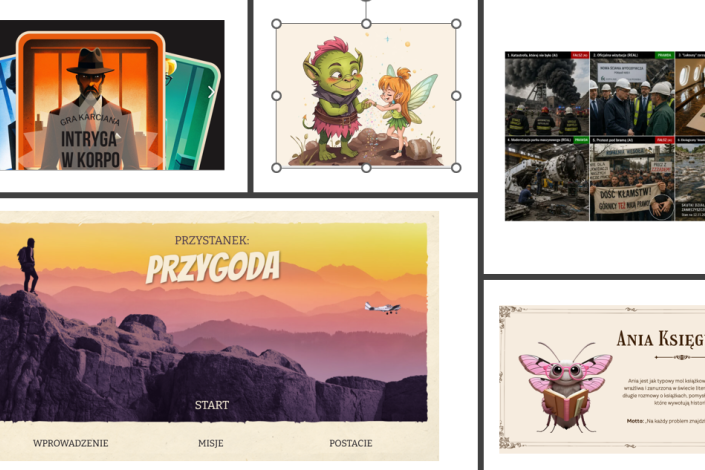
The practice is designed for university students studying public relations, communication, media studies and related disciplines. It develops communication, strategic, creative and project management skills through the design of educational games, challenges, public relations campaigns and social initiatives. Instead of receiving ready-made tasks, students are encouraged to create solutions for real educational, social, cultural and organisational challenges.
Why the Practice is Innovative
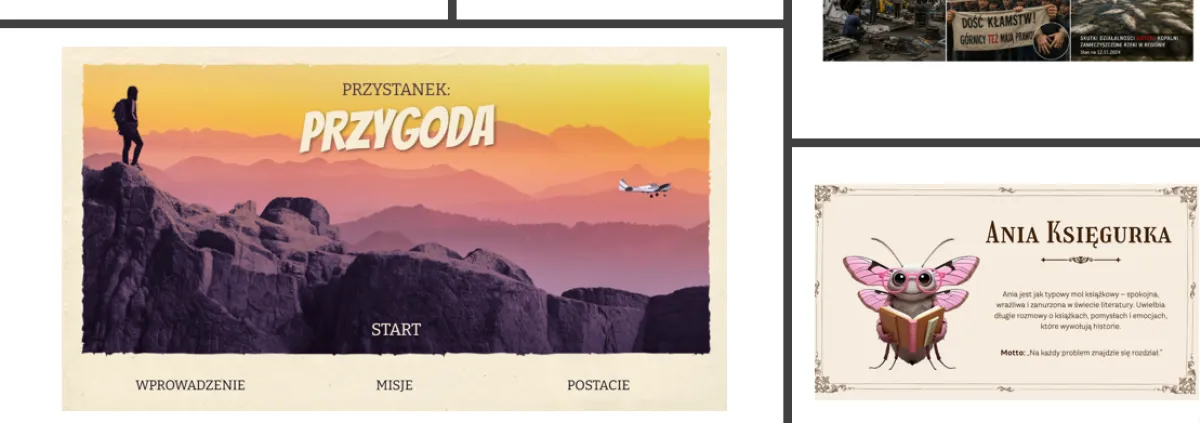
The practice reverses the traditional logic of gamification. Instead of participating in games designed by the teacher, students become creators of educational games, simulations, public relations campaigns and social initiatives. The method combines project-based learning, collaborative work, reflection and mentoring. Students identify real challenges, design solutions, test their ideas and present the final outcomes. Artificial intelligence is introduced at the final stage of the process as a tool supporting improvement and refinement of the developed solutions. The practice is inspired by learner-centred approaches and the idea that students learn most effectively when they create, experiment and take responsibility for their own learning process. It promotes active participation, creativity, inclusion and equal opportunities by enabling students with different strengths and backgrounds to contribute to collaborative projects.
Type of Integration and Key Competences
The practice integrates:
Communication skills
Strategic thinking
Creativity and innovation
Project management
Collaboration and teamwork
Problem solving
Critical thinking
Digital competence
AI literacy
Media and information literacy
Social and civic engagement
Entrepreneurial competence
Inclusion and equal opportunities
Self-directed learning
Role of the Teacher/Trainer
The teacher acts as a mentor, facilitator and project guide rather than a provider of ready-made solutions. Students work individually and in teams to identify challenges, design educational games, public relations campaigns, social initiatives and communication solutions. The teacher supports students through dialogue, questioning, feedback and reflection, encouraging them to make decisions and develop their own ideas. Rather than participating in activities designed by the teacher, students become creators of learning experiences and project outcomes. The teacher also supports the final stage of the process, where artificial intelligence tools may be used to improve, expand and refine student-created solutions.
Type of Learning Activities
The learning activities are based on:
Design of educational games and simulations
Development of public relations campaigns
Creative project work
Problem-based learning
Collaborative group work
Research and analysis
Design thinking
Presentation and pitching of solutions
Reflection and peer feedback
Mentor-guided project development
AI-supported refinement of solutions
The activities are designed to transform students from recipients of knowledge into creators of educational, social and communication solutions. Students work on authentic challenges and develop projects that can be implemented in real educational, cultural, social and organisational contexts.
Impact of the Practice
The practice develops communication, strategic, creative and project management competences while increasing student engagement and ownership of the learning process. By designing educational games, public relations campaigns, social initiatives and communication projects, students move from passive recipients of knowledge to active creators of solutions. The method strengthens creativity, collaboration, problem-solving, critical thinking and digital competences, including the responsible use of artificial intelligence. Students work on authentic challenges and create projects with educational, social, cultural and organisational value. Many projects result in practical outputs, portfolios, partnerships and experiences that support students' professional development and employability. The emphasis on inclusion, participation and equal opportunities enables students with different strengths, experiences and backgrounds to contribute to collaborative projects and achieve meaningful learning outcomes. The methodology has also been disseminated through European educational networks, including EPALE, supporting knowledge sharing among educators and institutions.
Potential for Replication
The practice can be replicated in different higher education contexts by combining project-based learning, learner-centred teaching, mentoring and the design of educational games, communication campaigns and social initiatives. The methodology can be adapted to various disciplines, including communication, media, education, management and social sciences. Its focus on creativity, collaboration, problem solving, digital competence, artificial intelligence literacy and active participation makes it applicable in diverse learning environments. The practice requires limited resources and can be implemented both in face-to-face and blended learning settings. The methodology has the potential to support the development of future-oriented competences while transforming learners from recipients of knowledge into creators of solutions.
Innovator: Lidia Pokrzycka, Maria Curie Sklodowska University, Lublin, Poland