Authors: Biljana Veselinović, mathematics teacher; Svetlana Bogavac Đorđević, teacher of biology and chemistry; Jasmina Marković, speech therapist; Elena Stojanovic, pedagogue-professional associate; Katarina Krčmar, defectologist; Teodora Dašić, defectologist
The Challenge Addressed
In this work study, we presented the project of students, teachers, and parents of the Primary School for Students with Developmental Disabilities and Disabilities "Smeh i Suza" from Aleksinac, Serbia. The goal of this project is to raise people's awareness of the need for environmental protection and the practical way of using organic waste.
Why the Practice is Innovative
Aquaponics is an environmentally friendly food growing technology based on natural biological-ecological processes and does not have any harmful impact on the environment. Our food production system combines fish aquaculture production techniques and hydroponic plant growing techniques.
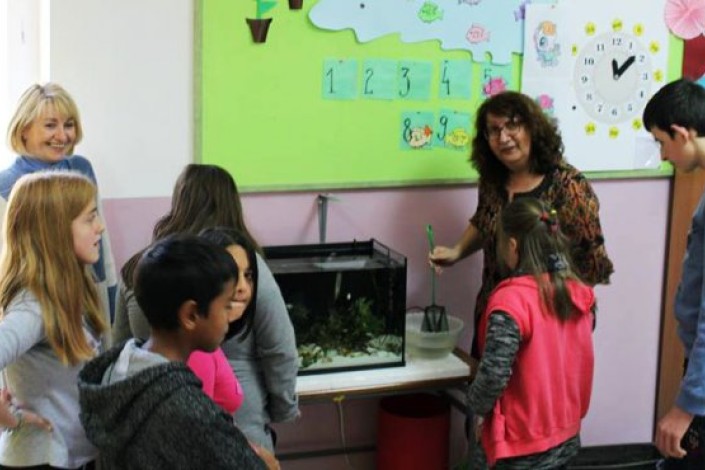
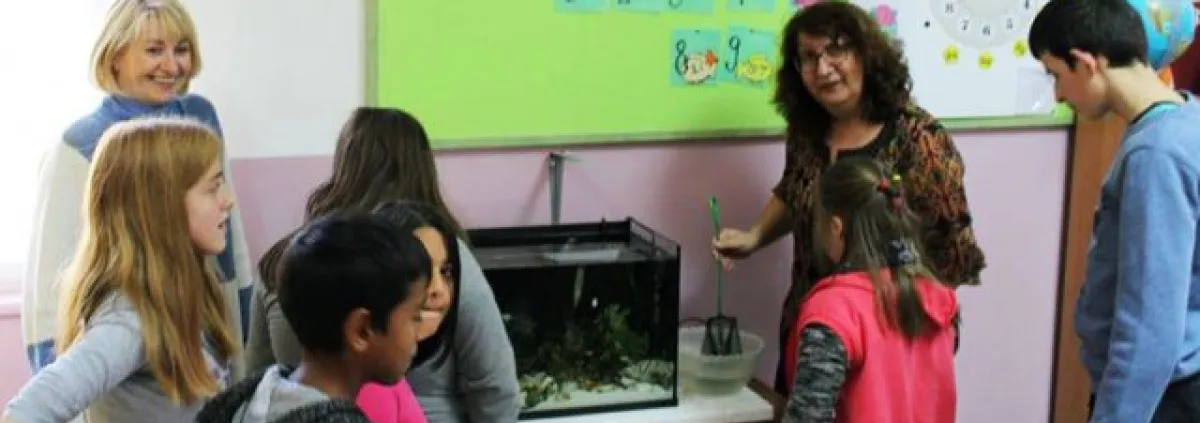
The aquaponic system in our project is an aquarium from which food grows. We used the organic waste from the household to make compost or fish food. Fish wastewater serves as organic fertilizer for plants, and plants clean the water from fish feces and urine.
The benefits of aquaponics are: usage of organic waste for creating fish food, a healthy way of cultivating our own food, saving water through a closed system that doesn't require constant irrigation of new water, requires less space to create more food, the need for chemical ingretients, artificial fertilizers etc is removed, it is installable anywhere, even in densely populated urban zones, at home, on your balcony, on a flat roof of a building, in your garage.
Type of Integration and Key Competences
The project integrates environmental education, biology, chemistry, mathematics, practical learning, and sustainable food production.
The main goal is to develop and strengthen ecological awareness and to realize the importance of environmental protection through practical examples. The children learned about the possibility of useful use of organic waste through a practical example.
On the example of our project, it can be understood how healthy and cheap food can be produced in almost all conditions. This is also important for their professional orientation, given the fact that part of our students end their education at this level.
Role of the Teacher/Trainer
The project involved a multidisciplinary team of teachers and professional staff, including a mathematics teacher, biology and chemistry teacher, speech therapist, pedagogue, and defectologists.
Together with students and parents, the teachers and professionals supported the practical implementation of the aquaponics project and helped learners understand the environmental and practical principles behind the system.
Type of Learning Activities
The children learned through practical, hands-on activities based on the development and observation of the aquaponic system.
Learning activities included:
- Using organic household waste to create compost or fish food
- Observing the relationship between fish, water, plants, and nutrients
- Learning about hydroponic plant growing
- Exploring the principles of aquaculture
- Growing and observing plants in the aquaponic system
- Understanding the importance of water conservation and environmental protection
Impact of the Practice
The project enabled students to develop greater ecological awareness and understand the importance of environmental protection through a concrete and meaningful example.
By working with the aquaponic system, students learned how organic waste can be transformed into a useful resource, how water can be reused, and how healthy food can be produced with limited space and resources.
By the end of our project, the seedlings (cucumber) have sprouted, grew and blossomed with a love flower to our lovely planet, because we don't have a replacement for it.
Potential for Replication
The aquaponic system can be installed in different environments and contexts, including densely populated urban zones, homes, balconies, flat roofs, and garages. Its relatively flexible structure makes it suitable for demonstrating sustainable food production and environmental protection in different educational settings.
The practice provides a practical example of how sustainability, environmental awareness, food production, and professional orientation can be combined in an inclusive learning environment.
Video: https://vimeo.com/275133970?fl=pl&fe=sh
Innovator: Biljana Veselinović - Primary School for Students with Developmental Disabilities "Smeh i suza"