
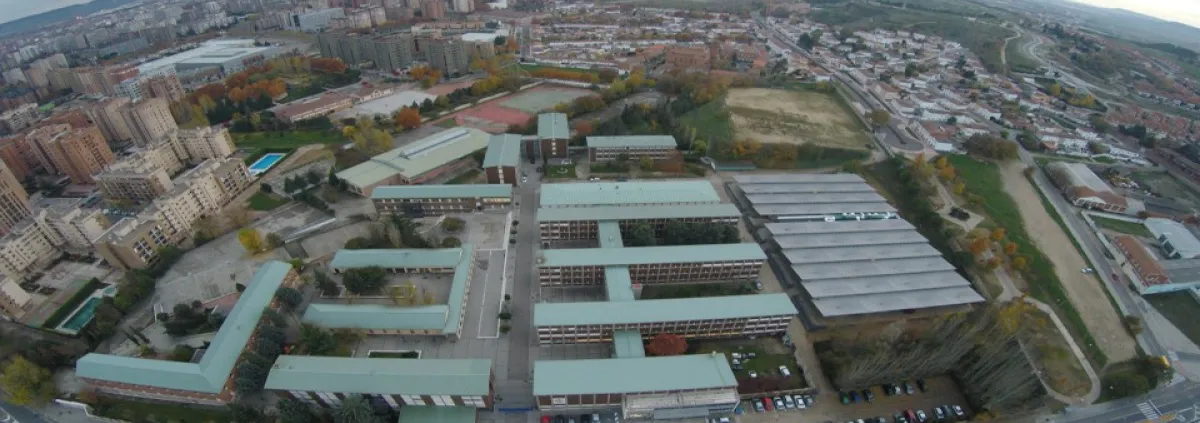
The Cristo Rey Polytechnic Institut in Valladolid offers a comprehensive range of vocational training programs , building upon its historical foundation as a technical school established by the Jesuits in 1939. The institution has a long-standing tradition of preparing students for skilled trades and the professional world, and this legacy is maintained today through various intermediate and advanced level courses, as well as Basic Vocational.
Historical Context and Evolution
The school's origins are deeply rooted in technical education. When founded in the wake of the Spanish Civil War, its primary focus was on providing technical skills and training, essentially operating as a polytechnic institute or a Labor University in the popular memory of its alumni. Over the decades, while expanding to include primary and secondary education, the institute has maintained a strong commitment to vocational training, adapting its curriculum to meet the changing demands of the job market.
Modern Vocational Training Offer
Today, the vocational training department at Cristo Rey is a dynamic part of the educational center, integrating the general Jesuit educational project with practical, job-oriented training. The specific courses offered cover various professional families, though the search results highlight strong programs in the fields of electricity, automation, and mechanics. The institution provides official, regulated qualifications in these areas:
- Intermediate Level: These two-year programs provide students with the foundational skills needed for specific trades. One notable example is the "Electrical and Automatic Installations” program, where students have achieved recognition in regional skills competitions.
- Advanced Level: These programs offer a deeper, more specialized education, preparing students for technical and supervisory roles in various industries.
- Basic Vocational Training: Aimed at students who benefit from a more practical approach to education, these courses provide a pathway to employment or further intermediate-level studies.
Innovation and International Opportunities
The center emphasizes innovation in its pedagogical approaches, using methodologies adapted to the vocational context, including research projects and skills-based competitions. A key feature of the vocational training at Cristo Rey is the inclusion of the European Erasmus+ program. This EU-funded initiative provides students with invaluable opportunities for international mobility, allowing them to gain work experience in companies abroad, thereby enhancing their skills, cultural understanding, and future employment prospects. Furthermore, the institute is actively involved in cutting-edge projects, such as a pioneering "digital twin" project and the use of Virtual Reality (VR) for welding simulation, showcasing its commitment to modern technology and industryrelevant training. The school also offers "formative offer in company" (FPE) opportunities, integrating practical work experience with academic learning, which is a key component of the current Spanish vocational training model.
In summary, the vocational training at the Cristo Rey center is a robust, technically focused, and innovative educational pathway that continues its historical mission of preparing students for the workforce while instilling core values.
Website: https://cristoreyva.com/
Contact: direccioncentro@cristoreyva.com
Please log in or sign up to comment.