
The Challenge Addressed
This practice addresses a major challenge for many VET institutions in Armenia. Most lecturers don’t feel confident enough using English. That becomes a problem when they want to participate in international programs, collaborate with colleagues abroad, or simply exchange ideas with people outside the country.
As VET becomes more connected to European networks and opportunities, it’s obvious that teachers need to feel prepared to speak up, share their work, and connect with people. That’s exactly what this course set out to solve.
Why the Practice is Innovative
What sets this approach apart is how it integrates learning English directly into the daily work lecturers do, instead of treating it as just another academic subject.
So, rather than drilling grammar rules, participants discussed their own teaching, explained their institutions’ programs, joined practice meetings, and pitched ideas all in English. It’s practical and becomes a tool for travel, collaboration, and professional development.
The course also included a range of European key competences. Through group work, intercultural scenarios, and peer feedback, lecturers built confidence, improved teamwork skills, and learned to value different perspectives. Those skills are essential for working internationally.
They didn’t just follow instructions, either. Lecturers took initiative, reflected on their strengths, and presented their own teaching styles in English. It encouraged them to take charge of their own learning.
The structure promoted independence as well. There were self-paced tasks, learning strategies, and reflection activities so participants could track their progress.
Type of Integration and Key Competences
The practice integrates English language learning with professional development, intercultural learning, collaboration, and self-directed learning.
Key competences are developed through:
- Language competence – using English in authentic professional situations
- Personal, social, and learning-to-learn competence – reflection, confidence, self-awareness, and independent learning
- Citizenship and intercultural competence – understanding and valuing different perspectives
- Collaboration and teamwork – working with colleagues through group activities and peer feedback
- Entrepreneurial competence – taking initiative, presenting ideas, and engaging with international opportunities
Role of the Teacher/Trainer
Instead of acting as a traditional teacher, the trainer worked more as a coach, creating a safe space for everyone to try new things.
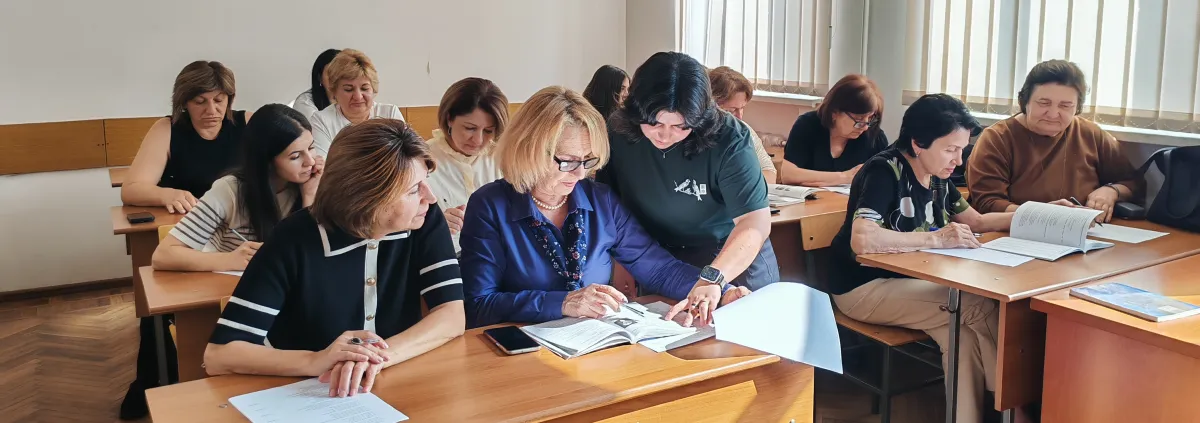
The emphasis was on doing, not just listening. There were real-world tasks, role-plays, brief presentations, and situations relevant to what VET teachers actually face. From the very beginning, everyone was using English.
Type of Learning Activities
Here’s what the learning involved:
- Guided discussions about teaching
- Preparing and delivering short introductions or talks about their own work
- Collaborative group activities
- Intercultural scenarios
- Reflection journals to help teachers understand how they learn
These activities provided opportunities for lecturers to use English in authentic professional and intercultural contexts, while also developing broader competences.
Impact of the Practice
Now the lecturers report feeling much more confident using English. They have a stronger sense of their professional identity and are genuinely enthusiastic about participating in international exchanges.
Some have already started preparing applications for mobility programs, giving presentations in English at their schools, and communicating with colleagues from other institutions.
The practice therefore supports not only improved language confidence, but also professional identity, international engagement, collaboration, and continuous professional development.
Potential for Replication
This isn’t just a one-time effort. The practice could be adopted by other VET institutions, especially where teachers need to enhance their skills to connect with European partners.
It’s adaptable, easy to expand, and can be used for other languages or subjects as well. By focusing on both language and broader competences, this course supports ongoing teacher development and gives them what they need to fully engage in international education.
Innovator: Mariana Harutyunyan - Gyumri State Technical College
Please, how I can integrate English learning program ?