
Dear colleagues,
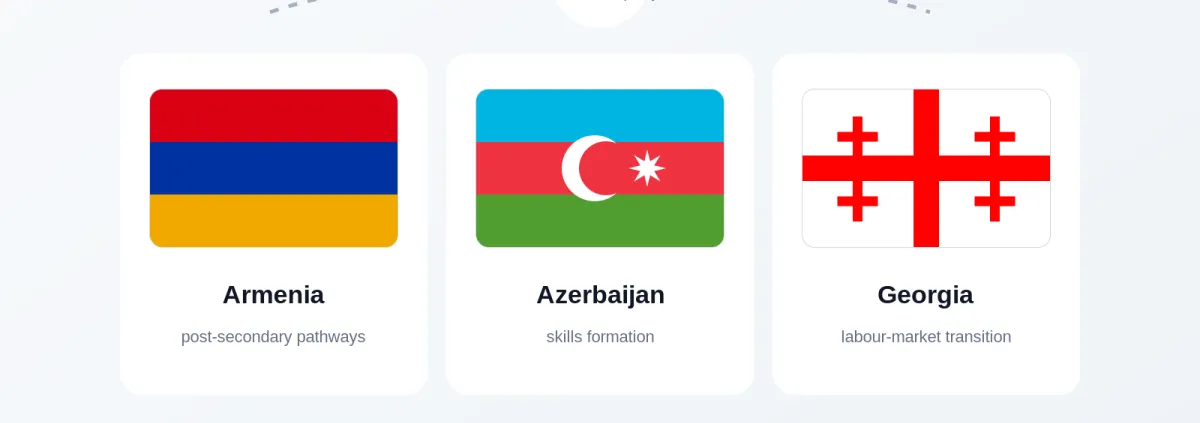
I am developing a comparative research project on post-secondary vocational and secondary specialised education in the South Caucasus, with a focus on Azerbaijan, Georgia, and Armenia.
The project examines a sector that has received less analytical attention than universities, general schooling, or basic vocational training. In the Soviet period, vocational-technical schools, tekhnikums, and secondary specialised institutions formed an important part of the skills formation system. They supplied the planned economy with skilled workers, technicians, and mid-level specialists. In the post-Soviet period, this institutional layer has been reshaped by labour-market restructuring, higher education expansion, migration, qualification frameworks, donor-led reforms, and changing social attitudes toward vocational pathways.
The central question of the project is:
What role does post-secondary vocational and secondary specialised education play in the South Caucasus today, and how has this role changed since the Soviet period?
The project is intended to move beyond the general policy claim that “VET requires reform”. The aim is to analyse what this sector has become in practice: a route into skilled employment, a residual pathway for students excluded from academic tracks, a mechanism for regional development, or a hybrid institutional space shaped by state policy, employer demand, and family expectations.
I am particularly interested in the following themes:
- Institutional continuity and change from the Soviet to the post-Soviet period.
- The position of post-secondary vocational education within national education systems.
- Links between vocational institutions, employers, and labour-market demand.
- Student trajectories, graduate outcomes, and perceptions of vocational status.
- The influence of international organisations, qualification frameworks, dual education, and work-based learning reforms.
- Comparative similarities and differences between Azerbaijan, Georgia, and Armenia.
I would welcome expressions of interest from colleagues working on Armenia, Georgia, Azerbaijan, post-Soviet education, VET policy, skills formation, youth transitions, labour markets, or comparative education policy. The collaboration could take the form of a comparative journal article, conference panel, policy paper, or research grant proposal.
I can contribute the Azerbaijani case, policy-document analysis, Azerbaijani- and Russian-language sources, and comparative framing. I am especially interested in colleagues who can bring country expertise, empirical data, archival or policy sources, or methodological perspectives relevant to the Armenian and Georgian cases.
Colleagues interested in exploring this project are welcome to contact me with a brief note on their research focus, country expertise, and possible contribution.
Regards,
Majid Bayramli
Please log in or sign up to comment.