
Back to main finalists pages
A student-led theatre and simulation initiative transforming classroom learning into real community action, proving that young people’s voices are already leading the way
What if a civic education lesson didn’t end in the classroom but in the village square, with students leading a heritage tour they had designed, campaigned for and won funding to make happen? At Vartsikhe Village Public School, in rural Georgia, this is exactly what happened, with local government officials taking note and following the students' lead. Teacher Nana Marghania has developed a structured, theatre-based approach to civic education that empowers students to identify and tackle real issues in their own communities and take meaningful action to address them. Using simulation methods, this practice transforms civic education from a passive, theoretical subject into a creative and powerful engine for community change driven by young people themselves.
This innovative practice creates a unique reversal of roles. By bringing parents, community leaders and local government officials directly into the learning process, students explore different perspectives, propose solutions and discover that their voices can create real change. In doing so, they demonstrate that young people can teach, guide and inspire the adults around them, honing important citizenship, entrepreneurial and transversal competences so vital for the future. And because the methodology can be adapted by any teacher, the impact on civic education is growing steadily, one classroom, one community at a time.
“After the simulation, I really knew how to negotiate with local government on community problems — and it actually worked." Student Malkhaz Margvelashvili Vartsikhe Public School, aged 16

Read on to find out why this initiative was selected as one of the nine finalists of the New Learning Award 2026.
The project
In rural Georgia, civic education is widely seen as a secondary subject – theoretical, passive and disconnected from daily life. Students showed little engagement and, more critically, did not believe their voices could create real change. Teachers, meanwhile, lacked practical tools to make civic learning active and meaningful.
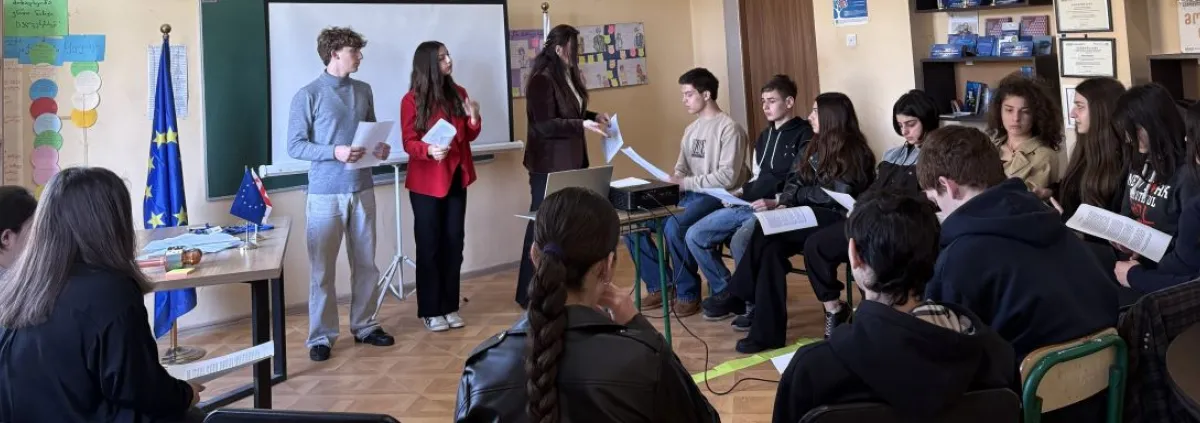
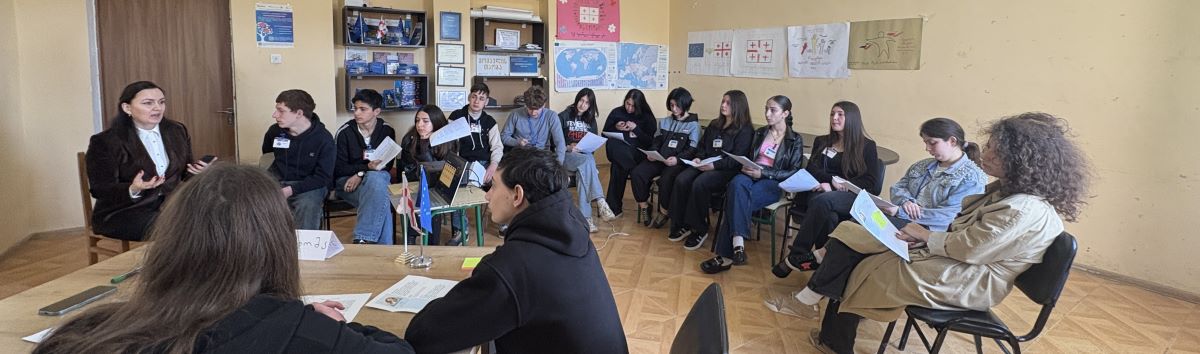
The practice developed by Nana Marghania addresses all of this at once. Grounded in Augusto Boal’s Theatre of the Oppressed, it combines theatre-based learning and simulation exercises into an integrated methodology that any teacher can use. Students begin by identifying real problems in their own community, then write scripts, take on civic roles and perform for authentic audiences – local officials and community leaders – before reflecting on what they have learned and what they will do next. This approach develops citizenship, personal and social competences, alongside entrepreneurial thinking and digital skills, with students creating digital materials, QR-coded resources and videos for YouTube.
The results are best illustrated by the flagship, My Village, My Pride project, in which students set out to reverse the neglect of Vartsikhe’s cultural heritage sites. Through student-led research, museum internships, digital content creation and successful advocacy to local government, five students became certified tourist guides and secured municipal funding for heritage signage, persuading local officials to act on evidence collated and presented by the students themselves. What began as a classroom exercise became a genuine act of community leadership, with young people showing adults what was possible. It won first place at Georgia’s National Civic Education Olympiad, but its deeper significance lies in what it proved: that students, when given agency and the right tools, can be the most powerful force for local change.
Why this practice stands out
The ETF and its partners have selected this initiative as one of the nine finalists for the New Learning Award 2026. Here is why this learning practice stands out:
- Students become the teachers – Through simulation and real community action, students develop the confidence and competence to negotiate with local officials, lead heritage tours and guide community decision-making, demonstrating that classroom learning can generate lasting impact
- Inclusive by design – Engaging all learners (including those with special educational needs and students from socially vulnerable communities) and community members, the practice creates direct dialogue between young people and local decision-makers
- A replicable toolkit any teacher can use – Already reaching 500+ students in 22 schools in the Imereti region, the methodology requires no expensive resources, just committed teachers and students
- Education across conflict lines – Civic education is already being taught online to children in occupied Abkhazia. The ambition to expand this further to other conflict-affected communities gives this practice a significance that reaches far beyond Georgia.
“Education is stronger than occupation. I teach this every day – including to children across a conflict line.” Nana Marghania, Civic Education Teacher, Georgia
The future
The methodology is already spreading, through teacher training, a USAID civic education grant, and a co-authored publication of simulation games for Georgian schools. Two new simulations are in development, and an international framework of partner schools is planned to co-create new scenarios across borders.
Most powerfully, the vision is to reach communities where the freedom to speak up matters most. At the heart of this vision is a simple but profound idea: that young people, given the agency to act locally and the tools to do so meaningfully, can guide, teach and inspire adults and institutions around them. One classroom, one community, one courageous student at a time.
VOTE FOR THIS PROJECT!
Your vote counts! Cast your vote for My Village, My Pride as an inspirational new learning practice.
- Back to: ETF New Learning Award 2026
ETF in partnership with

Nana, congratulations on reaching the finals! 👏 Well deserved and truly inspiring! 👏Your project stands out for its creativity, impact, and vision.
Dear Nana,
All of Georgia is proud of you! Your work is a powerful reminder that great things can come from small villages — and that Georgian educators can inspire the whole world.
Your students' voices are now echoing far beyond the classroom, and that is entirely because of your vision and dedication. We celebrate you!
With pride and admiration ,
Ruso
Nana, you are one of the most inspiring teacher I have ever met. Your creative and hardworking attitude makes me proud. You love your students very much, you aren't only the teacher but also a real friend for your students. I strongly believe that you deserve all the best in this competition ❤️🇬🇪
This is a powerful example of how education can truly transform communities. Here, students are not just learning — they are already shaping the future. This story reaffirms that young people’s voices are a real force, and when given the opportunity, they can turn even the impossible into reality. This is exactly the kind of education we need — one that equips students not only with knowledge, but with the ability to take meaningful action. As a teacher, I see in this project the future we should all strive for — one where students are leaders, initiators, and creators of change.
Wishing the teacher continued success and even greater impact in inspiring the next generation.
It's a very interesting project. I'm excited. Good luck! 3
This methodology is a brilliant example of how 'Theatre of the Oppressed' can be transformed into a practical tool for civic engagement. By shifting students from passive learners to active community leaders, this approach proves that education is most powerful when it transcends the classroom. The success of the 'My Village, My Pride' project is a testament to how agency and simulation can foster genuine social change and develop essential 21st-century skills
As a student who lived through these study game simulations, I can say they completely changed my perspective. It’s one thing to read about civic rights in a textbook, but it’s another thing entirely to step into the role of a council member while your peers act as various officials during the game.
The simulation gave us a safe space to fail, practice, and finally perfect how to speak with authority. This method didn't just teach us facts; it gave us the actual tools to win funding for our village's heritage. Proud to be part of Nana Marghania's transformative classroom.
Nana, congratulations! what a innovative and nesessary practices for students who wants to actively involved in their own communities life and solve real problems. A briliant way to develop students leadership skills and make them more confident. Good luck and all best wishies!
Please log in or sign up to comment.