
In the digital age, teachers are more indispensable than ever. They remain the human force enabling every learner to think critically, act autonomously, and navigate a society increasingly shaped by technology and artificial intelligence. Around the world, education reforms are making this clear: supporting teachers in developing strong digital competence is now a core priority.
A Study on Primary and Secondary Teachers’ Digital Competence in Montenegro
In this context, the ETF — together with the European Commission and Montenegro’s Ministry of Education, Science and Innovation — has launched a national study on the digital competence of primary and secondary teachers.
This initiative is aligned with Montenegro’s Education Reform Strategy 2025–2035, which places “competent and supported teachers and school staff” among its strategic pillars.
The kick-off event gathered more than 500 participants, marking an enthusiastic start to a process that will involve over 1,300 teachers, selected through a representative random sample covering both general and vocational education. Building on Montenegro’s progress with SELFIE for schools since 2019, this is the country's first system-wide use of SELFIE for Teachers, the European Commission’s self-reflection tool designed to help teachers assess their digital competence based on real classroom practice.
Teachers participating in the study will complete their SELFIE for Teachers self-assessment, enhanced with seven additional questions on their practical uses of AI in teaching and learning for professional development. This will provide fresh insights into how teachers are navigating emerging technologies and where further support is needed.
Data collection will take place in March. All responses will remain anonymous, and teachers will receive a personalised individual feedback report to guide their professional learning. Following analysis aggregated anonymised data, preliminary findings and policy‑relevant messages will be presented between later in 2026, with a full report and online dashboard for online consultation expected by autumn.
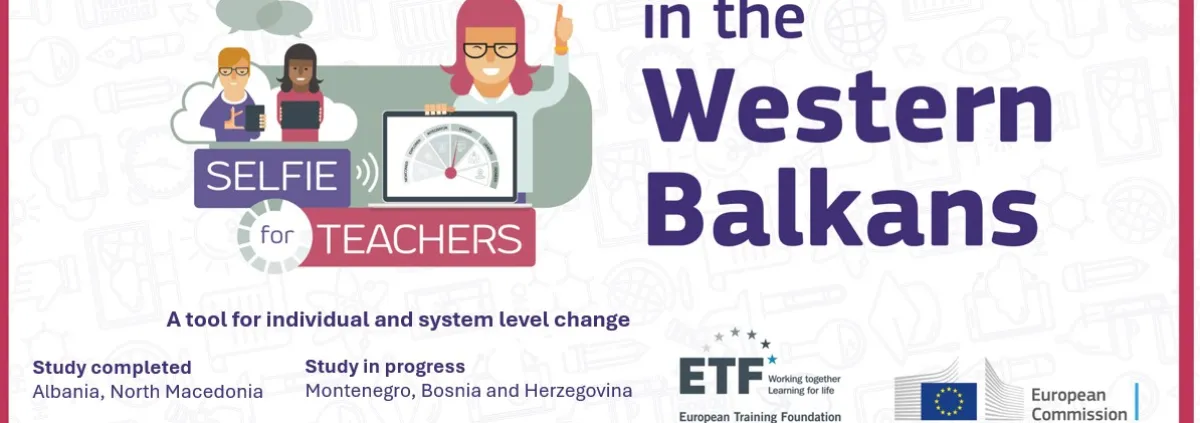
The Study as part of an ETF Regional Effort in the Western Balkans
This study is part of a broader ETF regional initiative to strengthen digital competence in the Western Balkans.
- Completed: Albania, North Macedonia
- Ongoing: Montenegro, Bosnia and Herzegovina
- Launching soon: Kosovo*
The initiative aims to build national capacity for evidence‑based digital education policies and support teachers across the region in becoming confident, creative and safe users of digital and AI‑powered tools.
Stay Tuned
Over the coming months, we will share emerging findings at both national and regional levels, offering new evidence to support policymakers, schools and teachers in shaping the future of digital education.
Resources of the kick-off event will be added soon.
I will follow the development of the project with interest, given that I participated in a major curriculum reform in Croatia.
Please log in or sign up to comment.