

The national reporting framework
Building block A: Country and VET overview
A.1: Country background
In 2018, approximately 165 500 students in Israel were enrolled in technological and vocational institutions run by the Ministry of Labour’s Department of Vocational Training. Of these, 155 000 were enrolled in Ministry of Education secondary schools and 10 500 were enrolled in vocational and technological secondary schools.
In the last three decades, following social criticism during the first decades of the state, major changes have taken place in the technological and vocational education provided to secondary school students in Israel. Despite this, disputes have continued regarding the status of technological and vocational education and the success it has had in achieving its goals. Complaints have been raised that it harms the equal opportunities of those studying in these systems.
Following changes in the labour market, a public and political debate erupted on the need to change the existing training and qualification system. While no strategic changes have been made in this regard at a national level, some organisations offer sectoral and/or targeted solutions that are relevant to the developing and future labour market.
Vocational training in Israel is mainly the concern of the labour-focused bodies operated by the Ministry of Labour. This includes the Department of Vocational Training, MAHAT and the Administration for Special Populations. These entities offer vocational studies for the entire population at technological colleges for adults. Technological education for students in post-secondary school programmes (13th and 14th grades) is run by the Ministry of Education. Most vocational training provided under the auspices of the Ministry of Labour is supervised by the Department of Vocational Training. Additional organisations and institutions offer professional courses in their fields. These include government ministries, such as the Ministry of Culture and Sport, the Ministry of Transportation, the Ministry of Tourism, the Ministry of Agriculture, the Ministry of Health and the Ministry of Immigration and Absorption, as well as education networks, industrial companies and private training companies.
A.2: Overview of Vocational Education and Training
Most technological education is provided in secondary schools that are run according to the Compulsory Education Law of 1949. In the last few decades, comprehensive reform of this law has resulted in the cancellation of education tracking programmes and greater flexibility in choosing study courses and sitting matriculation exams. Despite this, the public debate continues.
A comprehensive report on technological and vocational education in Israel, published recently by the OECD, focused on the weakness of technological education in Israel with regard to practical training. The report includes a recommendation to initiate new on-the-job programmes in workplaces as part of technological education programmes in secondary schools, and a recommendation to expand cooperation with employers.
The trend is to continue strengthening technological education, while methodically and consistently increasing the numbers of students in technological programmes, until the strategic goal of having 48% of all secondary school students in technological and vocational tracks is achieved.
Figure 1 shows the percentage of students aged 16 to 18 in technological education.
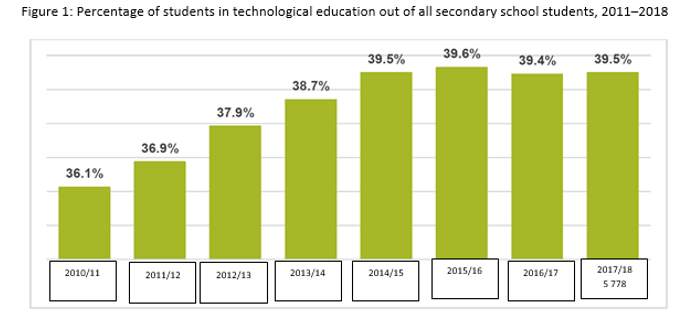
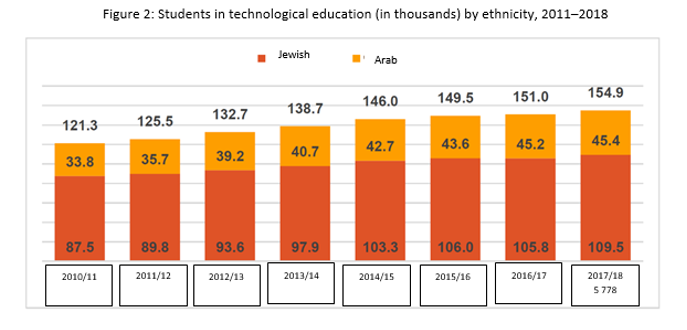
In 2018, 154 902 secondary school students, comprising 39% of all secondary school students in Israel, studied technology tracks. Of the total number of technology students, 51.5% were girls and 29.3% were from the Arab community.
Figure 2 shows the breakdown of students in technological education by ethnicity: Jewish and Arab.
For several years, technological and vocational training suffered a severe crisis and did not receive the required resources, despite its important role in the market, the high benefit from studies and the lack of practical engineers. In November 2018, a committee headed by the Director-General of the Ministry of Labour and the Director-General of the Ministry of Finance conducted an in-depth examination of the structure of the system, the pedagogic content and the budget. As a result, the government passed Decision No. 3419 regarding reform of the technological training system.
This reform will provide an opportunity to improve technology colleges and contribute to the training of skilled workers, which is required to meet market needs and increase productivity. To enable it to achieve the necessary objectives, the Ministry of Labour is due to receive an increased budget allocation of NIS 50 million in 2019/20, NIS 100 million in 2020/21, NIS 150 million in 2021/22 and NIS 200 million in 2022/23.
MAHAT operates 34 technology colleges and 30 training centres for ultra-Orthodox (Haredi) students, with 29 000 students studying in 23 major tracks (including civil engineering, mechanical engineering, electrical engineering, electronics, architecture and interior design). Of these students, 90% are studying for a practical engineering degree and the rest are studying for a qualified technician certificate.
In 2018, 54 040 secondary school students, comprising 35% of students in technological education, studied engineering; 60 006 students, comprising 39% of those in technological education, studied technology; and 40 709 students, comprising 26% of those in technological education, were enrolled in vocational programmes.
Since 2011, the number of engineering students has risen by more than 33%. Two main reasons for the impressive increase in the percentage of students in the technological tracks are: the high salary and the good working conditions guaranteed to graduates. The second reason is due to the fact that the image of technological education is improving, both as a result of demand in the labour market and an effective marketing campaign conducted by the Ministry of Education.
In addition, Israel is working to empower students and increase their practical experience in industry as an embedded part of the curriculum for technological programmes. The goal is to offer students the opportunity to participate in professional courses that are related to their area of study but are not part of the curriculum to enable them to better integrate into the workforce of the future. In addition, Israel's vocational education system aims to provide vocational certificates alongside a matriculation certificate. These certificates, such as those for the SolidWorks program (a computer-aided design program) and the LabVIEW program for mechatronics and robotics applications, will serve as additional tools to prepare young people for the workforce.
Apprenticeships give students a practical opportunity to learn about work and production processes in companies and to take part in projects with employers. The goal is to expand the programme so that 50% of all students will take part in the experience over the next five years. The original plan was for 4 500 students to participate in 260 courses.
Employers’ involvement in defining curricula:
- Twelve education programmes were updated and improved for 12th grade in secondary schools: in biotechnology, computer science, software and cyber engineering, communications technologies, health systems, electronic and computer engineering, construction engineering and architecture, hotel management, business management, design, mechanical engineering, aeronautics and robotics. In the 2019/20 school year, another 10 programmes will be updated.
- Technician and practical engineering programmes (13th and 14th grades) were written and updated for the following tracks: mechanics, car maintenance, electronics, industry and management, water technology, chemistry and software.
Israel’s national qualifications framework
As part of the cooperation between the EU and Israel, the EU allocated EUR 1.8 million to support the implementation of a twinning project between the Italian and Israeli ministries of education. The goal of this project is to design, establish and support a national qualifications framework in Israel. The project commenced in July 2018 and will end in July 2020 (total of 24 months). At this stage, the project is focusing on four main institutions that award qualification certificates: the Council of Higher Education, the Ministry of Education, the Ministry of Labour and the IDF. Other participants in this project include experts from Italy and other European countries; Israeli officials, including a ‘task force’ of representatives from various government ministries (Labour, Welfare, Education, Security, Justice) and the Central Bureau of Statistics; and the Council of Higher Education. Several meetings were conducted by the Israeli team and the Italian experts. The first educational tour was held in Italy to see first-hand the process of building the system. An education seminar was held at the European Training Foundation’s (ETF) office in Turin. The Ministry of Justice is examining the relevant legal aspects of the programme. Each body presented the qualifications that it holds in regard to certificates that it awards and qualifications that it approves. Each body also stated the relevant issues that might arise with regard to the legal structure of the national qualifications framework. After both teams studied the certificate system that exists in each of the bodies, they presented a recommendation for a ‘levels’ structure that correlates with the needs of the State of Israel. However, there is still disagreement about the number of levels in the model.
The project has now entered the second stage, which involves describing the characteristics at each level, based on the parameters of knowledge, skills and abilities, responsibility and autonomy and the study outputs expected for each level.
As stated above, the project is due to end in July 2020.
Within the technological education system, ORT Israel and Amal are leaders in their cooperation with the Ministry of Education in updating learning materials in the main technological subjects, e.g. electronics, biotechnology, medical sciences, electrical engineering, mechatronics, software engineering, communications, design, business management and hotel management. At a practical engineering level, Amal and ORT networks promote classroom projects that are closely correlated with the areas of study, training and skills that are needed for traditional industry and hi-tech professions.
A.3: The context of VET
Israel’s industrial sector is complex, advanced and highly technological. There is no clear-cut distinction between hi-tech and low-tech, but the sector includes modern industrial companies that manufacture advanced systems that affect all aspects of our lives – from consumer products to satellite and cyber technologies. Moreover, Israeli industry is on the point of transitioning to an Industry 4.0 generation – a process that is leading to the adoption of high-level technologies and robotics, a combination of online communication infrastructures, accelerated digitisation processes and the use of artificial intelligence in production and management processes. The current and future advanced Israeli industrial sector requires high-quality human resources with outstanding technology skills and talents. However, even today, Israeli industry is suffering from a severe lack of employees at all levels. From production floor level to technicians and practical engineers, software professionals and engineers in all fields, thousands of employees are required (see Figure 3). This shortage will only worsen with the lack of suitable infrastructure for the education and training of professional and high-quality human resources.
Figure 3 presents data on the percentage of industrial firms having difficulty recruiting professional workers between 2003 and 2018.
This table presents the percentage of industrial firms reporting difficulty in recruiting workers. According to the survey, almost two-thirds of industrial firms report having difficulty (and half of industrial firms having great difficulty) in recruiting workers.
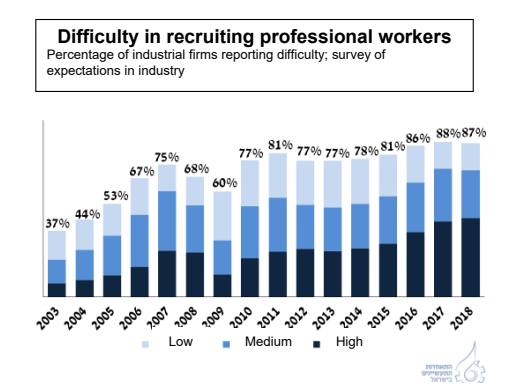
Source: Data from survey of industry expectations, Department of Economic Research, MAI
Examples of international cooperation
The Ministry of Labour has bilateral agreements with the German Federal Ministry of Education and Research (BMBF) for the exchange of professional knowledge. Within the framework of this agreement, students and lecturers participate in educational tours in other countries and international competitions in various fields. In 2019, a group of students studying chemical engineering will participate in an international competition of chemistry colleges based in 12 countries in Europe.
Ties with Finland: A group of 18 leading college directors participated in a professional seminar in Finland, funded by the Ministry of Labour.
Colleges: Initiatives and collaborations between colleges with professional representatives in other countries have taken place. This has been funded by the colleges.
Building block B: Economic and labour market environment
B.1: VET, economy, and labour markets
One of the most prominent challenges facing industry today is the significant lack of human capital. To ensure that education and training systems are adapting to the dynamic nature of reality and training the future generation in the skills and abilities required for the future workforce, mechanisms must be created that identify needs, professions and skills for the future.
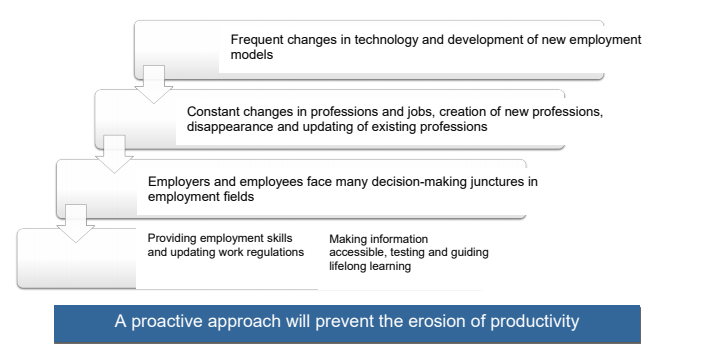
Source: Round table – recommendations of the changing labour market team, Employment Committee 2030 (Eckstein Committee)
Israel does not have structured, institutionalised mechanisms for identifying future needs. However, it is currently considering joining UNESCO's programme for predicting future human resource needs. Israel's participation will be led by the Ministry of Labour and the Ministry of Education, in cooperation with employers.
Educational content that uses advanced technology has been included in the curricula of technological programmes at all levels and in all tracks. This is evident in innovative study content and in student internships and apprenticeships in workshops and laboratories.
Another challenge facing the country is the greater inclusion of unique populations in the labour market, such as ultra-Orthodox men, Arab women and Bedouin people.
With regard to providing solutions to economically, socially and politically disadvantaged groups, the Ministry of Economy’s VET system provides a significant and comprehensive response to VET – the vocational schools in the Arabic-speaking community provide a very good opportunity for their graduates to be integrated into industry. Following the government resolution to integrate Arab girls into vocational training (Trachtenberg Report), the number of girls in vocational schools has risen significantly. In 2015, a vocational school for girls opened in East Jerusalem (200 girls); in 2016, the first vocational school for boys opened in East Jerusalem.
In addition, the Israeli economy is currently at full employment (frictional unemployment), but Israel’s productivity is one of the lowest in the OECD. According to the report, there is currently an average gap of 30% between Israel’s GDP per capita and that of the OECD countries, while the gap between the average productivity rate of the most advanced OECD countries and Israel over the last decade ranges between 35% and 40%.
In addition, government investment in employment programmes is low compared to the average in the OECD and stands at less than 8% of GDP per capita, compared to an average of about 16% in the OECD.
At the same time, we are witnessing a growing worldwide trend of a lack of human resources in core technological professions. Technological professionals who immigrated to Israel in the 1990s from the former Soviet Union and bridged the education and technological employment gaps have reached retirement age. They are leaving behind a large rift, both in knowledge and in professional experience, which affects staffing of these positions.
Tables 3 and 4 display data on professional staffing requirements in industry, based on data for 2018/19 provided by the Central Bureau of Statistics.
(See Tables 3 and 4 in the report in PDF p. 21-23)
Following a government decision of June 2015 on ‘nurturing and maximising human capital’, an inter-ministerial team established by the Director-General of the Prime Minister’s Office published a comprehensive report in July 2016 on improving the system of accreditation and mobility between education and training systems. The team focused on the lack of a lateral perspective and systemic approach to education and technological and vocational training in Israel. This situation is reflected, on the one hand, in the lack of training continuity, which would enable career planning, and, on the other hand, in the streamlining of training programmes. The various stages in the technological education and training system (including technological education in school, training procedures in the army and institutions of higher education) are not linked to each other, and there is no organised mechanism to recognise content and skills that have been acquired in previous training sessions.
As part of a strategic, economic and social assessment submitted to the government, and following the government decision of June 2015, an inter-ministerial team was established to streamline and align accreditation for the different training systems. This comprehensive national qualifications framework will facilitate transitions between vocational, technological and academic studies in the long run. All national certificates and accreditations awarded by Israel's TVET system will be ranked and made accessible to the public via the Prime Minister's Office. The team has now drafted its final recommendations, including reforms in the training of technicians and practical engineers.
In terms of technological and vocational education in secondary schools, the inter-ministerial team recommended that the Ministry of Education and the Ministry of Labour work together to maximise recognition of education and training obtained at secondary school level. This goal will be achieved by formulating a plan agreed by both the Ministry of Education and the Ministry of Labour to recognise Ministry of Education study tracks for a professional certificate. At the same time, system-wide adjustments will be made to enable vocational and technological school students to maximise their opportunities to complete their matriculation certificate requirements and obtain a higher education in technology or engineering.
In order to improve the level of inter-ministerial coordination and cooperation between the Ministry of Education and Ministry of Labour, the establishment of a permanent steering committee is recommended. This should include the relevant department heads of these ministries and the National TVET Committee, representing all the relevant stakeholders. The committee’s objective would be the mutual recognition of education and training programmes in secondary schools and workplaces and the linking of the relevant information systems of these two ministries.
In 2018, a comprehensive OECD report was published on professional specialisation, education and vocational training in Israel. The report presented a review of the technological education system for secondary school students. It described this system as having two main general goals. The first is to meet the labour market’s need for a wide range of technical, professional and commercial skills, especially in fields that do not necessarily require higher education. The second is to help students, who, for one reason or another do not aspire to take the academic route, achieve success in the world of employment. The report mentioned several main weak points in the technological and vocational education system and challenges faced by the system: most students in technological and vocational education are not prepared for specific career fields; compared to other countries around the world, very few students integrate practical experience and specialisation during their studies; a large number of technological education graduates, especially in certain social groups, lack basic language and mathematics skills.
Furthermore, the authors of the report determined that there is a need for strategic and streamlined reforms in technological and vocational education in Israel, including the following:
- developing tracks for work experience as part of technological education in secondary schools;
- expanding the collaboration between technological education frameworks and employers in the field, both for formulating and developing education programmes and tracks and as part of the studies themselves;
- increasing transparency and uniformity in the education and technological and vocational systems by establishing a national technology council for education and building a national system of certification and qualification;
- paying increased attention to the level of training in language literacy and basic mathematics in technological and vocational education programmes, especially in programmes intended for students in the Arab and ultra-Orthodox school systems.
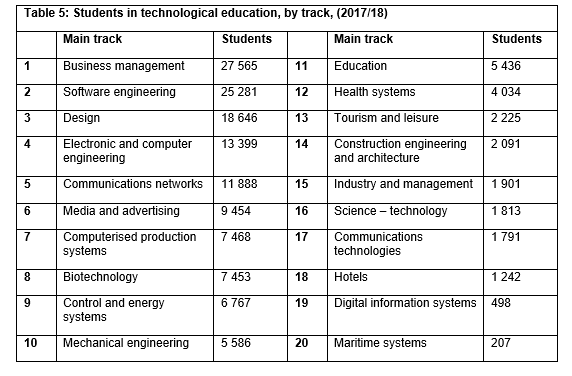
The Ministry of Education programmes that were presented to the Knesset committees over the last two years specified the ministry’s goals for technological education in the coming years. These are: building a vocational qualifications system for engineering, technological and vocational education; increasing the number of students who are entitled to a vocational qualification in secondary school and in advanced studies (technicians and practical engineers) to 43% of students (about 180 000 students in 2022); increasing the percentage of students who combine practical studies and experience in the workforce; making technological and vocational education accessible to all populations; increasing the number of available frameworks and programmes in technological and vocational education, especially in fields needed for the hi-tech industry. The Ministry of Labour’s MAHAT programme will be reformed, starting in the 2019/20 academic year. This will involve the updating of education programmes in seven fields. Table 5 below shows the number of students in technology tracks, which are supervised by the Ministry of Education in the 2017/18 academic year.
In the 2020/21 academic year, four additional programmes will be updated, and in 2021/22 all the other programmes will be updated. In addition, some of the study programmes will be available online.
B.2: Entrepreneurial learning and entrepreneurship
The Ministry of Labour’s vocational training system operates under the Apprenticeship Law of 1953 and the Youth Employment Law of 1953. It offers vocational training in secondary schools to young people aged 14 to 18. The vocational school programme is a four-year programme. Ninth grade is a general year, used to guide students towards technology studies. The second year focuses on a specific vocation. In the final two years, students attend classes three to four days a week, and on the other days they do paid work in fields relevant to their studies.
One example is the Amal Energy Tech secondary school, which is run by the Amal network in collaboration with Israel Electric Corporation (IEC), the state-owned electric utility. Amal Energy Tech is a new technological secondary school where the focus is on subjects related to energy, electrical engineering, mechanics and the environment. It is located at IEC’s training centre in Hadera. The establishment of a vocational secondary school that operates alongside IEC enables the teaching of values and soft skills that are in line with the values, culture and heritage of IEC, such as reliability, integrity and commitment to hard work.
The new school aspires to provide its graduates with a vocational certificate and government licence that is compatible with the Ministry of Labour’s degree. It also awards a technology-oriented matriculation certificate based on 14 study units, which forms the basis for acquiring an advanced technological education and a technological or practical engineering degree. IEC gives priority to the employment of the school's graduates after their IDF service. Employment is conditional on meeting the basic employment requirements. In addition to being eligible for a matriculation certificate, graduates of the various technological training tracks may also be eligible for a technological qualification certificate once they have completed their studies.
Amal also runs schools at IDF bases and conducts technological programmes for the Israeli Air Force and other corps. In addition, it forms partnerships with hi-tech companies, industrial companies and start-ups. Students take part in these programmes to work and gain experience and/or join projects with mentors in industry.
ORT runs six schools that operate adjacent to factories. Its students train in factory work for two days a week and also tutor younger students. In addition, industrial companies (such as Toyota) ‘adopt’ ORT schools and train and employ their students.
Other programmes that strive to connect industry and education are: Starter, a training and tutoring programme for industry; the Hachshara B’Hatama programme; the Shovarim L’Ma'asikim programme; and the Class in the Factory programme. The on-the-job training programme Miktzoa L’Chaim focuses on training soldiers in the technological and logistics corps of the IDF throughout their military service and in the period before release. The programme teaches them professions that are needed in the labour market and in industry, and helps with job placement in industry.
In addition, Israel has various programmes that promote technological education by linking up with the working environment. One of the programmes will establish three additional technology centres in 2020. Education programmes will be updated in collaboration with employers, and employers will be involved in the internship programmes for students in industry.
ORT has been leading the iSTEAM programme (innovation, science, technology, engineering, arts, mathematics) for the last three years. This programme combines learning in a multidisciplinary environment with entrepreneurship and ‘maker spaces’. Using the project-based learning (PBL) approach, students develop innovative and creative products that serve the needs of the community and society. In addition to PBL, the iSTEAM programme focuses on a multidisciplinary perspective of process: students are exposed to skills such as teamwork, meeting deadlines, presenting ideas and thinking about design. They are encouraged to be determined and daring, and to reflect on the process.
The entire iSTEAM learning process works hand-in-hand with ORT’s learning management system. This system provides a unique response to the pedagogical characteristics and needs of the students and teachers and helps to organise and structure the educational experience. In preparing the programme, significant emphasis was placed on teacher training and on-site coaching. This includes teacher leaders and school coordinators as well as the teaching staff. Some of the trained teachers will serve as process experts, while others will become content experts.
Over the last two years, ORT has collaborated with Open Valley (a company that supports and assists start-ups). This collaboration has enabled students to visit shared workplaces; study entrepreneurship and innovative and creative thinking; and obtain career guidance in their schools from mentors involved in start-ups. In addition, a course is held for teacher leaders. Students have benefited from tutoring by eight MIT students who have assisted the iSTEAM learning processes in all participating schools.
The technological education networks ensure the development of future-oriented learning programmes. In Israel, Amal was a pioneer in leading and establishing entrepreneurship centres for innovation, creativity and entrepreneurship.
In order to achieve groundbreaking results and maximise students’ potential, the Amal network provides a unique programme that accelerates studies and pushes students towards success, both in their area of expertise and in the skills that they need to establish start-ups and lead state-of-the-art companies in Israel.
Innovative and entrepreneurial education prepares young people for innovation in the business world and in industry. In its innovation centres, Amal works with students in two areas. The first area enhances their advanced technological abilities and teaches them advanced technological and scientific skills. The second area empowers and trains students in soft skills, which are also vital for students to succeed, realise their potential and compete at a global level. The innovation centres provide students with the following skills: public speaking (for potential investors, job interviews, elevator pitches) and spoken English; teamwork; an understanding of finance and marketing at a high level; digital proficiency; the ability to cope with clients’ questions and problems in the real world and, in particular, the ability to cope with failure and grow from it.
The connection between education and industry is a growth engine for creating young entrepreneurial leaders in Israel. The students turn original ideas into concrete enterprises, based on their own planning and development skills. They work with mentors from industry and business, and with representatives of specific technology units in the IDF and the academic world. For example, in the start-up centre in Be'er Sheva, Dr Nir Nissim, a world-renowned cyber expert and lecturer at Ben Gurion University, heads up the cyber studies department.
Each student in the entrepreneurship centres chooses a field to study at an advanced level. The fields available to the students are highly advanced and include artificial intelligence (AI), cyber technology, biomedicine, new media, drones, app development and product design using advanced technologies. The entrepreneurship centres encourage young people to think creatively and work as part of a team. They brainstorm to develop shared ideas based on the most advanced standards in academia and modern industry. The students gain experience with real-life problems and develop enterprises that enable them to bring about real change. The guiding principle is to help the community (and the outstanding students are expected to get benefit and contribute to their environment).
In each entrepreneurship centre, Amal chooses and offers two to three professional fields as anchors, depending on the school’s strong points, its opportunities for collaboration and regional needs. Each project or initiative developed by the students is in their anchor field of specialisation. The projects are conducted under the direct guidance of experts in these fields and with the professional assistance of the institutions leading the anchor field.
The Amal network specialises in providing high-quality technological education, while constantly renewing and adapting its programmes to the labour market. Amal works in collaboration with hi-tech companies, international businesses and advanced technology start-ups to provide significant added value to its students. Examples are the current collaboration with Cisco, which focuses on the entrepreneurship process and competition; cooperation with Microsoft to include AI studies in the curriculum; and cooperation with elite IDF corps on a big data and AI pilot study. Amal was the first network to form a partnership with Apple and integrate the use of iPads and iPhones as an integral part of its study programmes. Its cooperation with Check Point (a multinational provider of software and hardware products for IT security), which hires students at its innovation centre, has received many accolades. In another partnership, MIT students run innovation workshops in English for Amal students.
The network develops technological and scientific thought among its students, teaches them how to cope with complex technological and real-world problems, and ensures their success in this field. For example, Amal students won first place awards in the international SAGE youth innovation competition two years in a row (2017 and 2018).
Amal has vast experience in leading projects that combine diverse technological fields, as is common today in the engineering and academic world and in knowledge-based industries. This includes active participation in the Ministry of Education’s pioneering experiment to combine three advanced technology programmes (at the Amal Hadera Comprehensive for the Arts and Sciences and the Amal Ramot in Be'er Sheva). The ORT network schools also run this multidisciplinary educational programme, which combines several study tracks.
Building block C: Social environment and individual demand for VET
C.1: Participation in VET and lifelong learning
Students in technology programmes may pursue some 20 vocational fields. These are generally divided into three main types: engineering, technological and vocational. In the 2017/18 academic year, 54 040 secondary school students, comprising 35% of students in technological education, were enrolled in engineering tracks; 60 006, comprising 39% of students in technological education, were enrolled in technology tracks; and 40 709, comprising 26% of students in technological education, were enrolled in vocational programmes. Since 2011, the number of students in the engineering programmes has risen by more than a third.
In the 2015/16 academic year, 62.5% of 12th grade graduates in technology programmes in Jewish schools and 59.2% of 12th grade graduates in technology programmes in Arab schools were eligible for a matriculation certificate. The eligibility rate for technology programmes in both Jewish and Arab schools has risen since 2010 and in 2016 the eligibility rate in both communities was higher than the general average for students in that community. However, the differences between students in the Jewish technology programmes and students in the Arab technology programmes remained constant.
The eligibility rate for matriculation certificates among graduates of engineering programmes in technological education (89.2%) was significantly higher than the eligibility rate among students in technology (52%) and vocational (45.4%) programmes. Rates of eligibility for a matriculation certificate are highest in biotechnology and technological science. About 95% of 12th grade students who graduated from these tracks in 2016 were eligible for a matriculation certificate. On the other hand, in 2016, approximately 30% or fewer of 12th grade graduates in education, computerised production systems and hotel studies were eligible for a matriculation certificate.
Students who complete their education in technology tracks and meet the relevant Ministry of Education requirements are entitled to a technological qualification certificate at one of three levels. According to Ministry of Education data, in 2016/17, about 49.7% of 12th grade technological education graduates were entitled to a technological qualification certificate. About 38% were entitled to a qualification certificate at Level 1 or above, which also includes matriculation eligibility in a technology-related subject. Of students in engineering tracks, 58% were eligible for qualification certificates at the end of their studies, compared to 45% of students in technology tracks and 44% of students in vocational tracks. Some of the technological education programmes are delivered in vocational schools affiliated with the Unit for Youth Training in the Ministry of Labour’s Department of Vocational Training. Students at vocational schools combine their studies with paid work. In the 2017/18 academic year, 10 723 students were enrolled in vocational schools, including 2 514 girls and 5 775 boys in the Arab community. The number of students in vocational schools is on a downward trend.
C.2: Equity and equal opportunity in VET
The structure of study and training programmes in Israel offers structural equal opportunities in study courses and programmes offered to citizens. The education system provides a variety of study programmes in schools throughout the country and offers advanced technology programmes both in the centre of Israel and at the periphery. Israel defines some areas as ‘social periphery’ areas, so there are many examples of leading innovation and training centres in cities and villages in the Negev (e.g. Dimona, Rahat, Be'er Sheva, Hura) and the north (e.g. Kisra, Tiberias, Haifa, Nahariya) that offer educational solutions to diverse sectors of the population (e.g. ultra-Orthodox people, Bedouin people , women).
The Ministry of Labour runs many colleges throughout Israel, including at the periphery, for practical engineers. MAHAT offers practical engineering courses to Bedouins in the Negev, providing them with scholarships for living expenses. In addition, MAHAT runs preparatory programmes in the area of technology for ultra-Orthodox men and provides them with support scholarships during their studies.
Programmes for the 13th and 14th grades in colleges are an important tool for lifelong learning. On completion of their studies, graduates are awarded a Level 5 degree in practical engineering. This training is important for Israeli industry, given the severe lack of engineers in the labour market.
The IDF offers courses and post-graduate programmes that are partially recognised for technicians and practical engineers. Courses offered by software companies, such as Cisco or Microsoft, are also partially recognised for technicians and practical engineers. Once they have been released from the army and integrated into the workforce, young people and adults are offered study options through training centres located throughout Israel. For example, Amal and ORT colleges offer a variety of technological and vocational courses and post-graduate degrees.
Challenges to lifelong learning:
- lack of positions for apprenticeships and on-the-job training;
- severe shortage of practical engineers;
- attraction of weaker populations and minorities to advanced technology studies versus the tendency to offer vocational training courses in traditional subjects (such as those leading to qualification as a car mechanics or electrician for example).
C.3: Active support to employment
The integration of the Israeli market into the international economy demands a skilled and professional workforce that is adapted to the needs of industry. Israel must build systems that provide updated estimates and tools to plan the channelling of public investment into vocational education and training. These processes require the involvement of all factors and stakeholders in the design and implementation of policies, and the creation of knowledgeable communities and partnerships that work constantly to update vocational education. The education and training systems must be separated from the socio-economic situation and must rely on the personal abilities, talents and professional skills of each individual.
Vocational training must be treated as a social benefit to which each citizen is entitled and which accompanies the individual throughout their professional lifecycle. In parallel, the quality of training and content must meet the needs of industry and the market. These systems must create a continuity of responses, from vocational education to training processes and qualification for a profession, and continuing on to investment in updating and improving vocational knowledge and worker mobility.
Equal opportunities in technological and vocational education in Israel
In Israel, education is compulsory from the age of 3 until the age of 18. This requires the education system to use creative and revolutionary thinking regarding advanced and significant learning methods for students in Israeli society. One result of this is the very low dropout rate and the key fact that 96% of children and adolescents in Israel are enrolled in the education system.
The Israeli education system in general, and the Ministry of Education in particular, regards equal opportunity as extremely important and focuses much attention on this issue. All students have the opportunity to study for a high-level matriculation and obtain qualifications following their studies. The system offers a wide range of levels with a varying number of study units (between one and five), and students in all subjects and at all levels may register for these exams.
The vocational training system is the main alternative for young people who encounter difficulties in the Ministry of Education’s formal secondary school education system or are expelled from this system. It enables students to acquire a profession and vocational experience during their studies, thus improving their chances of occupational and social integration in the future. From an organisational perspective, the main activities covered by the vocational training programmes aimed at young people are offered in technological schools belonging to vocational education networks, while designated study programmes are offered to children from low socio-economic families.
The Israeli education system offers study programmes and special classes for students who need additional and personalised assistance. Special classes enable students to learn in smaller groups; more hours are devoted to certain subjects and there is an emphasis on passing the matriculation exams successfully. Even if students are not eligible for a full matriculation certificate, they can accumulate points over a period of time and combine subjects and collect units until they qualify for a secondary school graduation certificate. Thus, we see that the Israeli education system and networks work to preserve equal opportunities through diverse study tracks that are relevant to the students’ daily lives.
Weaker populations (such as ultra-Orthodox and Arab populations) that have the highest dropout rates are accepted in network schools that award vocational degrees and provide practical training. These schools offer studies in fields such as autotronics and automotive technology. Vocational training in the Arab community is very important, compared to the Jewish community, where greater accessibility to technology tracks is apparent.
The various frameworks offer scholarships to cover expenses, allocate hours for extra help, and encourage collaboration with non-profit organisations in an attempt to make educational opportunities accessible to the needy and to marginal populations in Israeli society.
MAHAT is a partner in the national programme for young people at risk, providing support and assistance to practical engineering students. The graduation rate from MAHAT programmes is 55%, and the number of students receiving diplomas is increasing at a constant rate each year.
As stated above, three levels of technological qualification certificates were adopted at the beginning of the 2016/17 academic year. Therefore, based on Ministry of Education statistics, 74,331 12th grade graduates (about 49.7%) were eligible for a technological qualification certificate in 2017/18. Of the 12th grade graduates, 18,800 (about 83%) were eligible for a Level 3 or higher qualification certificate, which includes eligibility for a matriculation certificate.
Accessibility at educational institutions in Israel
The Israeli Accessibility Law requires public spaces and businesses to provide full accessibility. For this reason, vocational training and study programmes are also required by law to enable accessibility to all students. Technological colleges have support centres with some funding for students with learning and other disabilities. There are two types of access through support centres: some colleges have their own support centres, while others take advantage of their proximity to academic institutions and use their support services.
In accordance with the Accessibility Law, all colleges are accessible to students with disabilities. There is widespread support for weaker populations (Bedouin, ultra-Orthodox, Arab women, young people at risk). The Association for Discharged Soldiers and the Ministry of Education’s assistance fund also offer support to students. College initiatives exist to fundraise and distribute scholarships to students.
Employment of graduates of the technological and vocational education system
On leaving secondary school, most Israeli students are drafted into military service. The standard period of service is two and a half years for women and three years for men. The technological education helps them integrate into technological corps and roles in the IDF. Once they have completed their military service, students may study at institutions of higher education, or attend MAHAT technological colleges to obtain technological or practical engineering degrees.
MAHAT has initiated reforms to improve the compatibility of training with employers’ needs and to encourage collaborations in training processes, so that graduates enter the workforce with the most relevant and up-to-date knowledge. MAHAT works closely with employers and runs programmes to integrate employers into training processes. This training enables graduates to obtain valuable experience in their professions while they study, and facilitates quicker integration into the workplace. These programmes improve the initial stages of work, shorten the on-the-job training period and enable graduates to become productive faster.
MAHAT also promotes training models that guarantee work placements. These models help to encourage employers to offer classes and influence learning content, so that, even during their studies, students acquire the relevant knowledge and experience they need for the jobs they are trained to do. In addition, MAHAT cooperates with companies in the market to develop work processes that will enable students to successfully complete their graduation projects in industry and ensure that they obtain practical experience. The Ministry of Labour’s career guidance centres are directed more at technology-related professions. They implement measures to establish partnerships and provide knowledge that will help to guide young people towards employment in the relevant fields.
In the past year, two studies were published on the effects of technological education on the success of its graduates in the labour market. In November 2017, an analysis published in the Ministry of Finance’s weekly review found that salaries for engineering graduates coming from technological education were higher than the salaries earned by graduates of theoretical education studies with similar characteristics, but the salaries earned by graduates of vocational tracks were lower. A Bank of Israel study published in December 2017 found that new technology tracks in Arab villages during the 1990s had a positive effect on reducing dropout rates, but did not affect the rate of eligibility for a matriculation certificate, the number of employees and the income level of graduates.
Continuing vocational education and training
Despite all the recent developments, a notable shortcoming is the lack of a system capable of making useful labour market information available to education and training planners. Israel collects data on the labour market, including data on job vacancies, and participates in the international labour market survey. However, although some of the data available is used for local or sectoral purposes, there is no formal national mechanism for processing such labour market data to make it accessible to education and training policy makers for the purposes of planning and supplying education and training.
The National TVET Committee was established in 2010 to respond to the need for better mechanisms to forecast and regularly monitor skills. This coordinating body, supported by the unions and technological education networks, aims to establish closer and more structured relations between the education and business sectors, including all the actors involved in human capital development (and the army). It plays a significant role in defining strategy and policy and in developing plans for advancing TVET, promoting research and ensuring employers’ active involvement at both central and local level. The EU's regional project Governance for Employability in the Mediterranean (GEMM) was the inspiration for Israel's National TVET Committee.
Building block D: Internal efficiency and operation of the VET system
D.1: Teaching and learning environment
Technical and vocational education in Israel uses a variety of educational methods that are adapted to specific subjects. These methods combine frontal teaching, project-based learning (PBL), computerised teaching and the integration of students in industry. They also involve splitting students into smaller groups for practical learning in laboratories, workshops and entrepreneurial centres. The goal is to create a diverse learning experience with updated content that is adapted to the 21st century. The purpose of all educational organisations in Israel is to create relevant study options and interesting, diverse content that is connected to ‘real life’.
About six months ago, Israel joined the OECD’s Future of Education and Skills 2030 programme, which aims to ensure high-quality, comprehensive and equal education and promote opportunities for lifelong learning by 2030. The OECD 2030 programme is highly likely to affect procedures in the education system, both directly and indirectly. In particular, it will affect curriculums and international exams. The R&D, Trials and Initiatives Department of the Pedagogic Administration will represent the State of Israel in this programme.
The project was initiated as a result of the need for sustainable development. This term describes a socio-economic process and relates to the principle of meeting human development goals while at the same time preserving the environment, so that, in addition to current human needs, future human needs in the near and distant future are also met. The Brundtland Commission’s definition of sustainable development is the most well-known and frequently quoted: ‘Sustainable development is development that meets the needs of the present, without compromising the ability of future generations to meet their own needs.’ Sustainable development includes three elements: environmental, economic and socio-political. Some add culture as the fourth element: cultural (and/or multicultural).
One of the greatest problems facing the Israeli education system today is the lack of teachers in primary, junior secondary and secondary schools, mainly in subjects such as science, mathematics and English. This results in schools not offering classes or appointing teachers who are not suitably qualified, resulting in direct harm to the students. In light of this shortage, the Ministry of Education recently issued updated memorandums addressing the process of obtaining a teacher’s licence in biology, chemistry and physics. The qualification requirements for teaching these subjects are being lowered. Possibilities for studying and obtaining a teacher’s licence will be expanded for this year only.
According to the State Comptroller’s report published last May, the Jewish community is due to experience a shortage of 3 065 teachers in the 2020/21 academic year: 626 English teachers, 383 mathematics teachers and 239 Hebrew language teachers. The situation in the Arab community is more positive, but a shortage of about 2 500 teachers is expected there. The State Comptroller also discussed the shortage of high-quality teachers in mathematics, English and Hebrew, noting that about 40% of mathematics and English teachers in primary and secondary schools had the appropriate training.
Israel suffers from a serious shortage of technology teachers, expert lecturers and tutors in technological and vocational subjects. This is because technological and vocational education generally requires teachers with an engineering degree and some experience in industry. However, potential salaries in the labour market are much more attractive than what the Ministry of Education can offer its teachers. The state offers no special monetary incentives to engineers and experts to teach. In the absence of such incentives, all teachers in the State of Israel earn a uniform salary, regardless of the subject(s) they teach and based only on their degree and years of experience. Some schools are unable to offer technology tracks because of the shortage of teachers. The Teachers’ Union in Israel cooperates with the Ministry of Education and the networks to improve teaching quality and teachers' salaries in technology-related subjects, but at this stage there is no real solution.
D.2: Teachers and trainers
The ‘Significant Learning’ reform was first introduced in the education system about three years ago. It combines innovative teaching methods, learning through research and project-based learning. The Department of Computerised Technology and Information Systems is preparing practical training sessions to train teachers to teach using state-of-the-art methods, mainly through projects. With this method, the students become the centre of the learning process, while the teacher becomes a tutor.
ORT and Amal have major teacher training centres, where they provide professional courses to improve the quality of teaching among thousands of teachers in the networks’ schools and throughout the education system by coordinating with technological education supervisors.
In recent years, online learning has become an increasingly popular methodology for all subjects, and teachers have undergone training in this area. Websites in each field are available to teachers to support online education and provide lesson material, presentations and other teaching material. This process was greeted with great enthusiasm, mainly within the technological education networks. From there, it has expanded to the rest of the education system. For example, the Ministry of Education’s technological and vocational education website provides lesson content, teaching methods and methodology, presentations and matriculation exams with solutions. The website enables teachers to share their own material and teachers receive monetary benefits for sharing relevant and high-quality material on the site.
For the past five years, the Amal network has been a pioneer in a community experiment conducted in 12 schools using the High Tech High (HTH) method. This method was developed in San Diego and focuses on technology projects with an emphasis on social involvement and connection with the community. Learning is connected to the real world and includes experience in developing real-life projects in industry. In Israel, this community experiment is operating as a six-year experiment. Some 7 000 students participate in a peer learning process that builds relationships with expanding circles in their communities and with their teachers.
The education networks are ensuring the development of study programmes that are adapted to future learning. Together with the Ministry of Education, they are creating new and relevant projects, such as cyber security, robotics, software engineering, medicine and other highly demanded and prestigious subjects, as well as arts fields, such as communications, industrial design and product design.
The Amal and ORT technological education systems emphasise relevant and current learning environments, and support them with high-level workshops on subjects such as electrical engineering, mechanics, autotronics, cooking and restaurant management. For example, the ORT IAI Technological Education Centre is located in a factory, where students study different subjects relating to the company’s products. Amal Ramat David, located in an Israeli Air Force base, has changed its face and is now a large education campus, which runs advanced workshops and provides shared spaces for innovative learning.
In the past two years, Amal, ORT and other technology networks have upgraded their learning spaces in technological schools and transformed them into appealing spaces that combine a variety of study opportunities. This includes offering students an opportunity to work on projects; providing apprenticeships in advanced technologies; and delivering a learning environment that conveys warmth, which is also of the utmost pedagogical importance and crucial in improving the image of vocational education. The schools are currently upgrading their automotive workshops and provide practical experience in hybrid vehicles, diagnostic tools and the most sophisticated improvements in this field.
Teachers in technological and vocational education have been exposed to three new fields:
- knowledge of engineering fields;
- comprehensive training in updating teaching methodologies, with a focus on project-based learning;
- integrating computerised pedagogy throughout all stages of teaching and learning.
The Ministry of Labour requires that every technology college for technicians and practical engineers meet the required criteria in terms of the profiles of their lecturers, laboratories and professional and physical infrastructure. If they do not meet these requirements, they do not receive a permit to offer their study programmes. Each college conducts training courses and professional seminars on teaching methods for its own lecturers.
Learning infrastructure
As the main supplier of technological education, the Ministry of Education invests considerable resources in improving workshops, laboratories and the learning environment, updating them to correlate with developments in content. At the same time, the ministry invests in training teachers to develop new and updated study programmes that can be adapted to the needs of the market, industry and the IDF in the 21st century.
The Ministry of Education gives priority to classes offered in technological and vocational education institutions, providing them with a bigger than that granted to theory-based classes. Students in workshops and laboratories enjoy working in small groups and receive personal support. In addition, in the past two years, the Ministry of Education has opened two technology centres, at a cost of NIS 25 million each, in Be'er Sheva and Haifa. In the coming year, it will open another three technology centres in Ashdod, Holon and Taibe. Due to the significant investment that has been made, these centres have been equipped with state-of-the-art industry-level equipment that could not be afforded by individual schools in those cities. The teachers and tutors in the centres are hand-picked and are leaders in their field. The centres are intended to offer practical experience and training to all students in those fields, and act as a bridge between the schools and industry in the areas in which the centres are located.
The technological education networks are also investing significant resources in the learning environment, both in the physical infrastructure and in teaching methods. They are developing learning programmes and materials that are appropriate to the demands of the 21st century. The networks are investing in building learning spaces, establishing entrepreneurial centres within the schools, and constructing state-of-the-art and computerised laboratories. They are integrating innovative technologies in their education systems, such as Google tools, iPads, 3D printers, laser cutters and equipment that allowing the establishment of ‘maker spaces’ and the creation of enrichment areas.
One example is the Shimon Peres Secondary School in south Tel Aviv (formerly Shevah Mofet), which is part of the Amal network and was established with an investment of NIS 120 million, the highest amount ever invested in one school in the country. As principal Max Sivan said, ‘I don’t want you to build a school – I want you to build a place where children will feel the atmosphere of Tel Aviv’, meaning an atmosphere of high-tech, start-ups and innovation.
The multidisciplinary school provides its students with a variety of study programmes, including biotechnology, physics, chemistry and biology, plastic arts, cinema and music. Some of the programmes involve cooperation with the IDF marine and intelligence corps, and with private companies such as information security giant Check Point, with the intention of recruiting talented students to join their staff.
Combining study and work
To date, industry has not received any monetary incentives from the state to integrate students into the workforce. Students have limited time to work, as they are drafted into the IDF immediately after leaving secondary school. Thus, a factory has no assurance that its investment will be returned three years later and that the graduate will return to work there after his or her release from the military. Even so, there has been a growing trend in the Ministry of Education to start integrating work-based learning as a valuable learning experience (not for monetary recompense). This is expressed in the integration of students in industry in all fields and at all study levels. Thus, for example, new models around the world are being examined and we are learning how to integrate them appropriately into the Israeli education system. Although technological education in Israel does not have a sufficiently positive reputation, its relevance and quality of performance have improved in recent years. There are still gaps between market demand and the skills learned by students in the technological and vocational system. These gaps will gradually diminish as progress is made in the implementation of reforms in the coming years.
D.3: Quality and quality assurance
Israel’s Ministry of Education is in charge of the assessment of students' skills and knowledge in all technology tracks. Each year, the ministry prepares a set of external matriculation examinations both at secondary school level and for the practical engineer certification (diploma).
Furthermore, the ministry is also in charge of licences for schools that provide training for technological education in secondary schools (10th to 12th s) and in junior technology college (13th and 14th grades). Licences are given to qualified teachers and qualified schools. A qualified school is a school that has qualified teachers to teach advanced technology subjects in both secondary schools and in technology colleges. In addition, each school is evaluated with regard to the quality of technology labs and workshops.
With regard to the availability and adequacy of quality assurance arrangements, measures and practices, the Ministry of Education has a unit dealing with the measurement and assessment of the entire education system: RAMA. The ministry has a pool of training and course providers that are carefully selected via tenders according to professional, pedagogical and legal criteria and standards. The Ministry of Labour uses ‘satisfaction surveys’ to assess and obtain feedback for its youth and adult training programmes. These surveys are completed by graduates of the training centres. Levels of student satisfaction, obtained via internet surveys, professional supervision and statistical reports, are ranked. System failures or initiatives that have been ‘too successful’ all vocational units are identified and the data is analysed in order to optimise existing training processes in the various study tracks for young people and adults. The large technology networks also have well-developed courses. Through Afikim, ORT provides teacher training for all teachers, including ORT teachers in conjunction with the Chief Inspectors for technology subjects. The budget is provided by the Ministry of Education. AMAL has its PTC (Pedagogical Technological Centre), which trains its teachers and offers in-service courses for all technology teachers. The courses cover content and the integration of advanced technologies in teaching practice.
The Ministry of Education requires that all teachers have at least a BA degree and a teaching certificate. Some exceptions are permitted in vocational education, mainly due to the lack of relevance of an academic degree and the requirement for extensive professional experience in a specific field. Nevertheless, the shortage of high-quality teachers who have professional experience and teaching skills and the difficulty in recruiting such teachers is apparent in some fields. In recent years, the Ministry of Education has developed a retraining course for engineers to enter the teaching profession. Next year, it plans to offer teaching courses for young practical engineers (outstanding graduates who have completed 14th grade) and mainstream teaching courses (for practical engineers with experience).
Technology networks have a strategic goal: to improve teaching and learning. The Ministry of Education has a unit responsible for the evaluation and measurement of the entire system – RAMA, the National Authority for Measurement and Evaluation in Education. It also has a database of suppliers for training courses and seminars. These suppliers have been carefully chosen by tender and meet all pedagogical, professional and legal criteria and standards. The Ministry of Labour runs a process of evaluation and feedback on the training system for adults and young people. This is done through online satisfaction surveys conducted among graduates of the training centres funded by the ministry; online satisfaction surveys conducted among students; professional supervision; measurement and evaluation procedures using statistical reports; identification of failures or initiatives that have been ‘too successful’ in the system; and analysis of data from professional units. This data is used to improve and upgrade the existing training processes in the various tracks for adults and young people. The large technology networks also run advanced training and seminar systems.
Key 21st century skills required by the EU have been integrated into various areas of reform (software engineering, electronic engineering, automotive engineering, computer-aided design and mechatronics, water technology engineering, chemical engineering, and industrial and management engineering), which will be implemented starting in the 2019/20 academic year. In the 2020/21 academic year, they will be integrated into additional areas of reform and in 2021/22, in all remaining areas of the programme.
Building block E: Governance and financing of VET
E.1: Institutional arrangements
There have been no significant changes in the division of government responsibility for the technological and vocational education system since the last Torino Process report. In Israel, the Ministry of Education is responsible for VET studies in about 1 000 secondary schools, and about 150 000 students are enrolled at all levels of technological education. The Ministry of Labour is responsible for about 11 000 students who study at various levels of VET in its respective educational institutions. In recent years, the Department of Vocational Training at the Ministry of Labour has strived to emphasise its role as an integrator of vocational training at a national level. As such, the Pedagogical Council and vocational committees organisational change in their department, which will institutionalise collaboration with employers and increase cooperation among all players in vocational training. In the case of young people, on the other hand, the Ministry of Education made a strategic request to have vocational schools transferred to its authority. The process commenced in 2015 with the transfer of eight schools. The ministry hopes that, by 2020, all students in Israel up to the age of 18 will be under its supervision as part of a programme entitled ‘Giving Equal Opportunities’ (mentioned in the last Torino Process report).
From the viewpoint of the State Institute for Technological Training at the Ministry of Labour, the initiative for a new policy comes from high-level decision makers, together with relevant stakeholders in industry, the labour market and workers’ unions. The quality of VET suppliers is being examined by the regulator, MAHAT, which is measuring general achievements, diploma percentages and dropout rates.
Many institutions and organisations want to take part in the advancement of technological education. They exhibit a positive attitude to collaboration, which will improve training procedures, entry to the labour market, system results and diploma levels, and limit dropout rates.
E.2: Involvement of non-state actors
About 90% of all TVET students in Israel are under the supervision of the Ministry of Education; about 10% are under the supervision of the Ministry of Labour. The distribution of functions between them is not as clear-cut as it should be. The lack of clear VET legislation plays a part in this and the situation has developed over the years in accordance with the changing power relations between the parties involved. Initially, the Ministry of Economy’s VET department was the main actor responsible for VET, especially when it came to adult training. In time, other actors entered the picture, including more established entities such as the large employers' associations, Not for Profit Organisations and philanthropic bodies wishing to meet the needs not met by the state. There is full transparency with regard to the Ministry of Education and maximum involvement both internally and externally. From the point of view of VET providers, there are good ties with the Chief Inspectors and other policy makers. However, beyond the partnership established to develop curricula, there is little influence on VET policy. Information is shared and ideas are exchanged, all of which affects strategy. However, the latest reform decided on by the Ministry of Education is detrimental to VET in several respects. For example, the elimination of matriculation exams in 10th grade is very disruptive for the Tech-Mat (Technicians with Matriculation) programme, which enables students to complete secondary school with both a matriculation certificate and a technician diploma.
Certain sectors of the economy are most active in shaping and participating in planning and implementing the provision of skills through VET: the corporate sector and the IDF are the most dominant. In addition there is an increase in the willingness of industrial entities to be involved in VET. Although a formal system of social partnership has not been established, employers are represented through the frequent involvement – both formal and informal – of the MAI in a wide range of TVET policy development, implementation and reform activities. In addition to significant and frequent informal contacts, the MAI is recognised by the government as the representative organisation of the industrial sector in the Israeli economy. It represents the country's larger employers and their organisations and thus makes a significant contribution to economic, labour market, social and educational decisions. It is often called on by the government to engage in training issues, and has built up its own organisation to handle certain TVET issues. It also has a considerable presence in national forums. Its activities range from lobbying to co-funding initiatives. It aims to increase the number of students learning in a range of TVET programmes in the TVET system through sponsorship and employer and business engagement across a wide spectrum of the economy, and to improve the quality and relevance of programmes. Thus, for example, the MAI is represented on the discipline committees mentioned above in connection with the Ministry of Education's curriculum development activity. It has also established induction and training arrangements for its representatives who take part in the discipline committees.
In spite of the extent to which the MAI is involved on an informal and case-by-case basis with the TVET authorities and networks, it has expressed the view that more formal and systematic partnership arrangements would improve TVET governance and improve the robustness of the current, more ad hoc arrangements.
Evaluating governance arrangements
In Israel, the Ministry of Education bears most of the responsibility for technological and vocational education. It is the second-largest ministry in the country (after the Ministry of Defence). The ministry is responsible for ensuring that the efficiency and relevance of all technological and vocational programmes are at maximum levels and are adapted to the needs of the market.
The entities involved in planning, implementing, supervising and evaluating the technological and vocational education system under the supervision of the Ministry of Education.
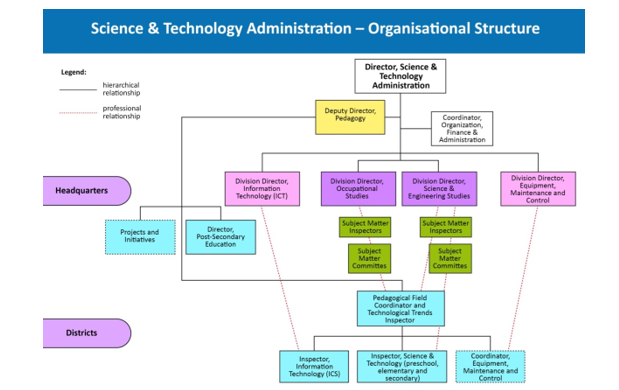
Organisational structure of Science & Technology Administration in the Ministry of Education
The Ministry of Labour is quite heavily involved in VET through the Department of Vocational Training. The department is increasing its level of involvement in VET at a national level. It has the authority to award vocational certificates on behalf of the state and does this in a wide range of fields. The department dictates the study programmes for these subjects and supervises their implementation. It sets and holds vocational exams, and decides which subjects will be included in the list of recognised subjects that will entitle graduates in these fields to a state-awarded qualification certificate. The department receives requests to recognise various levels of new fields and training courses that do not appear in the programme database and undertakes a comprehensive process to examine whether there is a need for these fields at a national level.
Organisational chart showing the breakdown of manpower training and development, Ministry of Labour (See Chart in the report in PDF p. 38).
The Department of Vocational Training is involved in training activities for other ministries, such as the driving theory course, which is performed under the auspices of the Ministry of Transportation. A qualification department was recently established at the Administration of Technological Education in the Ministry of Education. In order to ensure inter-ministerial coordination and cooperation between the Ministry of Education and the Ministry of Labour, the inter-ministerial team for improving the accreditation process recommended establishing a steering committee to enable mutual recognition between the education and training systems at secondary school level, and to formulate a programme to connect the relevant information systems of both ministries.
Technological education is about 40% more expensive than theoretical education. This is due to the following reasons: rapid changes in technology must be integrated into the curriculum and teachers’ seminars; investment in state-of-the-art equipment; study groups are smaller, mainly in internship programmes. For these reasons, a shortage of resources affects VET to a great extent. Israel suffers from a severe shortage of government resources for VET, as stated in many comparative reports and studies, including the previous Torino Process reports.
Even so, the problem in Israel is not only at resource level, but also in incentives, partnerships and the system structure. There is a belief that the question of resources is secondary to the matter of incentives and the division of responsibility. According to the Ministry of Education, only a ministry with high budgets, such as itself, can meet these demands.
The National TVET Committee is a mechanism designed to improve education and training governance. It is a platform that coordinates all stakeholders and coordinates the demand for and the supply of skills. Some possible scenarios could be elaborated for the future of this important committee.
The National TVET Committee was founded in 2010. It includes representatives from the Ministry of Education, Ministry of Economy, the ORT and AMAL educational networks, the MAI and the General Federation of Labour.
Another mechanism designed to improve education and training governance is the national qualifications framework working group.
E.3: VET budget
The state’s multi-year budgets for technological education are set by government decisions and in budgetary agreements with the Ministry of Finance. Budgets are continuously growing in the understanding that higher budgets are needed for technological education because of the importance of integrating various populations in the labour force and the shortage of technicians and practical engineers in the market.
The budgetary department at the Ministry of Finance, together with the Institute of Technological Training at the Ministry of Labour, determines the budget that supports about 60 technology colleges that train technicians and practical engineers throughout Israel.
Diploma rates are not high and are awarded to about 55% of graduates. In order to improve these rates, a budgeting model based on output has been built – a college receives a larger budget as its diploma rates increase. Budgetary sources for technological education include state support (most of the budget) and individual tuition fees.
Programmes to encourage industry involvement in the training of technicians and practical engineers by giving limited budgetary incentives have recently been implemented. These programmes include budgetary support for NGOs.
As stated above, the budget is allocated to 60 technology colleges according to a budgetary model that includes an output element – the diploma rate. In addition, as part of the reform recently approved for the technological education system, large colleges will receive additional budgets for training and infrastructure.
Israel now understands that its technological education and training system requires additional funding. Recently approved reforms therefore include significant budgetary increases. The budget is allocated in accordance with the principle of equality but is also based on the college’s results and performance.
Israel is also pursuing a policy of improving fairness in the allocation of financial resources, and grants for national priorities will be awarded to colleges located in geographically peripheral areas. In addition, increased budgets are given for training special populations, such as the Bedouin and ultra-Orthodox populations.
Summary of main findings and recommendations
Main findings per building block
A. Country and VET overview
In 2018, approximately 165,500 students in Israel were enrolled in technical and vocational institutions. Of these, 155,000 were enrolled in Ministry of Education secondary schools and 10,500 were enrolled in vocational and technical secondary schools.
In the last three decades, following social criticism during the first decades of the state, major changes have taken place in the technological and vocational education provided to secondary school students in Israel. Despite this, disputes have continued regarding the status of technological and vocational education and its success in achieving its goals.
As part of the cooperation between the European Union (EU) and Israel, the EU allocated EUR 1.8 million to support the implementation of a twinning project between the Italian and Israeli ministries of education. The goal of this project is to design, establish and support a national qualifications framework (NQF) in Israel.
The project has entered its second stage, which involves describing the characteristics at each level, based on the parameters of knowledge, skills and abilities, responsibility and autonomy, and studying the outputs expected for each level.
Israel’s industrial sector is complex, advanced and highly technological. There is no clear-cut distinction between hi-tech and low-tech, but the sector includes modern industrial companies that manufacture advanced systems that affect all aspects of our lives – from consumer products to satellite and cyber technologies.
B. Economic and labour market environment
One of the most prominent challenges facing industry today is the significant lack of human capital. To ensure that the education and training systems are adapting to the dynamic nature of reality and training the future generation in the skills and abilities required for the future workforce, mechanisms must be created that identify needs, professions and skills for the future.
As part of a strategic, economic and social assessment submitted to the government, and following the government resolution adopted in June 2015, an inter-ministerial team was established to streamline and align accreditation for the different training systems. In the long run, this comprehensive national qualifications framework will facilitate transitions between vocational, technical and academic studies. In this format, all national certificates and accreditations awarded by Israel's technological and vocational education and training (TVET) systems will be ranked and made accessible to the public via the Prime Minister's Office. The team has now drafted its final recommendations, including the reform of training of technicians and practical engineers.
Regarding technological and vocational education in secondary schools, the inter-ministerial team recommended that the Ministry of Education and the Ministry of Labour work together to maximise professional recognition of education and training that was obtained at secondary school stage. On the one hand, this goal will be achieved by formulating a working plan agreed by both the Ministry of Education and the Ministry of Labour for the purpose of recognising Ministry of Education study tracks for a professional certificate. At the same time, system-wide adjustments will be made to enable vocational and technological school students to maximise their opportunities to complete their matriculation certificate requirements and obtain a higher education in technology or engineering.
In order to enhance the level of inter-ministerial coordination and cooperation between the Ministry of Education and Ministry of Labour, the establishment of a permanent steering committee is recommended. This should include the relevant department heads of these ministries and the National TVET Committee, representing all the relevant stakeholders. The committee’s objective would be the mutual recognition of education and training programmes conducted in secondary schools and workplaces and the linking of the relevant information systems of these two ministries.
C. Social environment and individual demand for VET
Students in technology-related programmes may pursue some 20 vocational fields. These are generally divided into three main types: engineering, technological and vocational.
Challenges to lifelong learning:
- lack of positions for apprenticeships and lack of on-the-job training;
- severe shortage of practical engineers;
- attraction of weaker populations and minorities to advanced technology studies versus the tendency to offer vocational training courses in traditional subjects (such as those leading to qualification as a car mechanic or electrician).
The integration of the Israeli market in the international economy demands a skilled and professional workforce that is adapted to the needs of industry. Israel must build systems that provide updated estimates and tools to plan the channelling of public investment into vocational education and training. These processes require the involvement of all factors and stakeholders in the design and implementation of policies and the creation of knowledgeable communities and partnerships that work constantly to update vocational education. The education and training systems must be separated from the socio-economic situation and must rely on the personal abilities, talents and professional skills of each individual.
On leaving secondary school, most Israeli students are drafted into military service. The standard period of service is two and a half years for women and three years for men. The technological education helps them integrate into technical corps and roles in the IDF. Once they have completed their military service, students may study at institutions of higher education, or attend MAHAT (the government-run Institute for Technology and Science Training) technological colleges to obtain technological or practical engineering degrees.
The National TVET Committee was established in 2010 to respond to the need for better mechanisms to forecast and regularly monitor skills. This coordinating body, supported by the unions and technological education networks, aims to establish closer and more structured relations between the education and business sectors, including all the actors involved in human capital development (and the army). It plays a significant role in defining strategy and policy and in developing plans for advancing TVET, promoting research and ensuring employers’ active involvement at both central and local level. The EU's regional project Governance for Employability in the Mediterranean (GEMM) was the inspiration for Israel's National TVET Committee.
D. Internal efficiency and operation of VET
Technological and vocational education in Israel uses a variety of educational methods that are adapted to specific subjects. These methods combine frontal teaching, project-based learning (PBL), computerised teaching and the integration of students into industry. They also involve dividing students into smaller groups for practical learning in laboratories, workshops and entrepreneurial centres. The goal is to create a diverse learning experience with updated content that is adapted to the 21st century. The purpose of all educational organisations in Israel is to create relevant study options and interesting, diverse content that is connected to ‘real life’.
One of the greatest problems facing the Israeli education system today is the lack of teachers in primary, junior secondary and secondary schools, mainly in subjects such as science, mathematics and English. This results in schools not offering certain classes or appointing teachers who are not suitably qualified, resulting in direct harm to the students.
Israel suffers from a serious shortage of technology teachers, expert lecturers and tutors in technological and vocational subjects. This is because technological and vocational education generally requires teachers with an engineering degree and some experience in industry. However, potential salaries in the labour market are much more attractive than what the Ministry of Education can offer its teachers. The state offers no special monetary incentives to engineers and experts to teach. In the absence of such incentives, all teachers in the State of Israel earn a uniform salary, regardless of the subject(s) they teach and based only on their degree and years of experience. Some schools are unable to offer technology tracks because of the shortage of teachers.
Teachers in technological and vocational education have been exposed to three new fields:
- knowledge of engineering fields;
- comprehensive training in updating teaching methodologies, with a focus on project-based learning;
- integrating computerised pedagogy throughout all stages of teaching and learning.
The Ministry of Labour requires that every technology college for technicians and practical engineers meet the required criteria in terms of the profiles of their lecturers, laboratories and professional and physical infrastructure. If they do not meet these requirements, they do not receive a permit to offer their study programmes. Each college conducts training courses and professional seminars on teaching methods for its own lecturers.
The Ministry of Education requires all teachers to have at least a BA degree and a teaching certificate. Some exceptions are permitted in vocational education, mainly due to the lack of relevance of an academic degree and the requirement for extensive professional experience in a particular field. Nevertheless, the shortage of high-quality teachers who have professional experience and teaching skills and the difficulty in recruiting such teachers is apparent in some fields.
E. Governance and financing of VET
In Israel, the Ministry of Education bears most of the responsibility for technological and vocational education. It is the second-largest ministry in the country (after the Ministry of Defence). The ministry is responsible for ensuring that the efficiency and relevance of all technological and vocational programmes are at maximum levels and are adapted to the needs of the market.
About 90% of TVET students in Israel fall under the supervision of the Ministry of Education; about 10% are under the supervision of the Ministry of Labour. The distribution of functions between the two ministries is not as clear-cut as it should be. The lack of clear VET legislation plays a part in this and the situation has developed over the years in accordance with the changing power relations between the parties involved.
The state’s multi-year budgets for technological education are set by government decisions and in budgetary agreements with the Ministry of Finance. Budgets are continuously growing, with the understanding that higher budgets are needed for technological education because of the importance of integrating various populations in the labour force and the shortage of technicians and practical engineers in the market.
Israel now understands that its technological education and training system requires additional funding. Recently approved reforms therefore include significant budgetary increases. The budget is allocated in accordance with the principle of equality but is also based on the college’s results and performance.
Israel is also pursuing a policy of improving fairness in the allocation of financial resources, and grants for national priorities will be awarded to colleges located in geographically peripheral areas. In addition, increased budgets are given for training special populations, such as the Bedouin and ultra-Orthodox populations.
Recommendations for action
Recommendations:
Formulate and apply a multi-year governmental strategic programme to promote technological and vocational education. Reform the technological education and training systems, and strengthen cooperation between the higher education system and employers.
Vocational training should be a social right given to all citizens that accompanies them throughout their professional lifecycle. In addition, the quality of training and curriculum content must derive from the current and future needs of industry and the job market. These systems must create a continuity of responses, from technological-vocational education to training and qualification processes for each profession; invest in updating and improving professional knowledge; and facilitate the mobility of employees between different industrial sectors.
Close cooperation between employers and the entire education system, and their adaptation to the emerging labour market, will enable graduates to integrate and succeed in the labour market of tomorrow. This cooperation should be expressed in the institutionalisation of a joint system of government ministries, employers, vocational and technological education training systems, workers’ unions and other relevant factors. This system should continuously examine the short- and long-term needs of the labour market in general, and industry in particular, and adjust and update as needed. One of the mechanisms to improve education and training governance is the National TVET Committee. It is a platform that coordinates all stakeholders and coordinates the demand for and the supply of skills. Some possible scenarios could be elaborated for the future of this important committee. It was founded in 2010 and includes representatives from the Ministry of Education, Ministry of Economy, the ORT and AMAL educational networks, the MAI and the General Federation of Labour.
Guidelines for the entire education system
- Ensure continuity, mobility and accreditation, beginning at the technological l education stage in secondary schools, and continuing through training during Israeli Defence Force (IDF) service, advanced vocational training, training for qualifications for technicians and practical engineers and academic degrees.
- Implement systems that are adapted to the needs of Israel’s economy and industry, including processes to map human resource needs; define new and extinct professions and constantly update curricula.
- As a general approach for all education systems, it is vital to include skills and abilities required in the professional world. These include self-learning skills (which will enable every individual to learn and update knowledge through their professional lives), the ability to solve complex problems, critical thinking, creative thinking, entrepreneurship, innovation and teamwork.
- Emphasise practical experience, both in training and workshop centres and in the workplace, and the use of study methods based on experiential learning, project-based learning (PBL) and solving real-world problems.
- Pool resources – use training infrastructures and teaching personnel for a variety of populations and pedagogical needs.
- Focus intensively on the public image of technological education and training, reinstating the prestige of technological education and the exposure to the world of opportunities available to those who choose this field. This requires investment in an ongoing, detailed marketing campaign, which includes lectures given by leaders in industry and business in educational institutions and at open days and job fairs at colleges and institutions of higher education.
Short term:
Professional training courses adapted to employers’ needs
The budget and scope of professional training courses for industry must be increased significantly. Training courses must be conducted in cooperation with employers and adapted to the needs of Israel's economy, particularly industry.
- Expand the scope of professional training and combine with internships and apprenticeships. Involve employers at all stages of the process (defining needs, identifying and screening candidates, providing support and placements). Examples are the Starter programme, run by the Ministry of Labour, and Hachshara B’Hatama, run by the Employment Bureau.
- Create flexible training tools and encourage module-based training. This includes advanced training for existing employees (based on the lifelong learning approach), in cooperation with employers and with state funding and/or subsidies.
- Expand professional training and retraining for academics. This includes training in non-academic institutions for professionals from a variety of educational backgrounds (including retraining for academics), to enable graduates to integrate into hi-tech positions in industry.
Medium term:
Technological education (training of technicians and practical engineers) and higher education
- Increase the number and improve the quality of students in engineering and practical engineering fields, with a focus on the professions required in Israel's economy, particularly in industry. Integrate specialisation and on-the-job experience as a structured part of the curriculum. Fundamentally address the lack of hi-tech professionals in industry, and respond to the unique obstacles and challenges that characterise the innovation industry. Strengthen the connection between industry and employers, and the world of academia and research.
- Implement comprehensive reforms in technological education for technicians and practical engineers. Implement reforms in full collaboration with employers (based on a government decision), incorporating the following principles: strengthen the Council for Technological Education; develop and validate education programmes and adapt them to the needs of Israel's economy, particularly industry; create a modular education programme that includes some technological subjects; integrate specialisation as an integral part of the curriculum; rebrand the professions of technician and practical engineer; and significantly increase the educational budget for students attending technology colleges.
- Increase the number of students in engineering and computer subjects at institutions of higher education. Implement a multi-annual programme in the higher education system to increase the number of BA/BSc students in relevant hi-tech subjects (as part of the national programme to increase personnel and funding for hi-tech industries). Increase the number of engineering students in additional subjects, such as mechanics and aeronautics, according to industry needs.
- Establish joint research institutes to promote Industry 4.0. Establish applied research institutes in cooperation with the business sector and academia. Use government support as a tool for securing the ties between academia and industry. The research institute will serve as a centre of knowledge in its field, provide studies commissioned by industrial and R&D companies, and help with checking and building prototypes for companies.
Long-term:
Technological and vocational education
- Expand activities to increase the number and improve the quality of students in technological and vocational education. Implement holistic and comprehensive programmes that include investment in students and exposure to technology, science and entrepreneurship at a young age. At the same time, preserve the relevance of educational programmes in all technology fields; develop professional qualifications in parallel with the matriculation certificate; and invest significantly in teachers, infrastructure and updated, experiential and innovative teaching methods.
- Expose students to technology and innovation from a young age. Today, the Ta'asiyeda organisation (the educational wing of the MAI) conducts activities among 300 000 students in junior secondary schools and preschools. Its programme exposes students to industry, technology and innovation and develops projects that are relevant to young children. The goal is to significantly increase the number of children's programmes for studying science, robotics and computers and writing code.
- Increase the number of students in technology programmes in secondary schools from 150 000 to 180 000 (from 38% to 48% – the average in the OECD countries) in a five-year programme. This includes increasing the number of students studying for the five-point (highest level) matriculation programme in mathematics and science to enable them to pursue advanced academic studies in engineering and science.
- Provide opportunities for students to gain experience in the labour market. Apprenticeship programmes for students in all areas of Israel's economy, particularly industry (factories, hotels, garages) are currently run in 840 classes. Apprenticeships are available across the entire range of professions and offer students a practical opportunity to learn about work and production processes in companies and to work on projects with employers. The goal is to expand the programme so that 50% of all students will participate in apprenticeships in the next five years.
- Establish and operate technology centres to provide practical experience for young people, deliver adult training and host teachers’ seminars. In the last two years, the Ministry of Education has established new technology centres: one centre in Be'er Sheva (specialising in mechatronics, biotechnology, media and advertising) and another in Haifa (specialising in mechatronics and design). Three more technology centres are planned for 2020: in Holon (specialising in design, media and space), Taibeh (specialising in biotechnology and electrical engineering) and Ashdod (specialising in mechatronics, biotechnology and electrical engineering). These centres promote vocational and technological excellence.
A. Country and VET overview
Update curricula and acquired skills in subjects threatened by automation. Because professions at low risk of automation require skills such as creativity, emotional intelligence, complex perception and negotiation, known as ‘soft skills’, we recommend including these as an integral part of the curricula and evaluating them separately. In parallel, we recommend including ‘entrepreneurship as a key skill’ as part of required studies and system-wide educational programmes.
Develop student apprenticeships in various subject fields in the technology tracks in schools as an integral part of the curriculum and expand cooperation with employers. This is vital in ensuring the stable and professional integration of students into the employment market once they have completed the secondary school training programme.
B. Economic and labour market environment
Identify the skills that are required. Israel has a partial system in place for collecting data on the current gap between supply and demand. The Central Bureau of Statistics conducts surveys on available jobs, while the Ministry of Economy conducts surveys of needs. Employer organisations also conduct surveys: for example, the MAI conducts surveys of expectations and personnel needs. Yet there are no national mechanisms for defining long-term needs, professions and skills.
Adapt the necessary skills to market needs. The necessary preparation for the changing employment market should include expanding the use of professional training tools, focusing these tools on the relevant characteristics of those who drop out of the job market and preparing for the future job market. Gaps in the job market should be mapped. The subjects studied in school should be adapted and refreshed accordingly, and programmes to improve the skills required for these positions should be implemented.
C. Social environment and individual demand for VET
Ensure continuity. Once graduates of professional and technological secondary schools are released from the military and join the job market, Israel has no data that could analyse the continuity of their progress. This is because secondary schools do not stay in contact with their graduates after they have completed military service. Creating a mechanism for MAHAT and the military to connect graduates to colleges following their release from military service will enable follow-up and development of graduates in academic studies and the job market.
D. Internal efficiency and operation of VET
Allocate a dedicated budget. The government must offer an attractive monetary incentive to engineers and industry experts to encourage them to join the teaching profession. In light of the rapid changes in technology, the government must provide funding to equip classrooms for the various subject areas.
Annexes
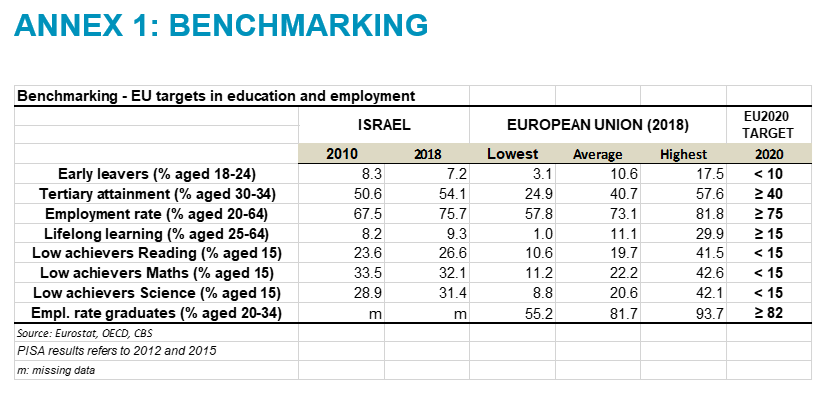

With many thanks to the Israeli TVET Committee for ensuring the participatory approach, we are happy to share the Israeli national report. A main issue emerges, that is the need to better identify skills needed in the future by the labour market. Enjoy the reading
Excellent news! The report findings are fully in line with our ongoing work on the future of skills.
Israel was selected as first pilot to implement our new methodology on documenting skills demand change in specific economic sectors. The agri-tech sector is the one selected for Israel.
Very interesting preliminary findings will be shared with Israeli counterparts through a digital event and a country report will be published soon. It will be of course also posted here in Open Space!
Please log in or sign up to comment.