
User account menu

  • User menu User menu
    • Sign up
    • Log in
Open Space
  • Topics
    • Digital skills and learning
    • Employability and fair transition to work
    • Governance and financing of lifelong learning
    • Innovative teaching and learning
    • Policy analysis and progress monitoring (Torino Process)
    • Qualifications systems
    • Quality assurance in vocational training
    • STEM
    • Skills and migration
    • Skills demand analysis
    • Skills for the green transition
    • Vocational excellence
  • ETF Networks
    • ENE - ETF Network for Excellence
    • ETF Community of Innovative Educators
    • GLAD - Governance, Learning, Action, Dialogue
    • Quality Assurance Forum
    • Skills Lab Network
  • Resources
    • Database of Innovative teaching practices
    • Digital Education Reform Framework (DERF)
    • ENE Atlas
    • Green skills articles collection
    • Guides and toolkits for skills anticipation
    • Registry of certified Vocational Excellence providers
    • Skills anticipation and matching e-toolkit
    • Unlocking AI in education: A Teacher's Guide to AI Literacy
    • Vocational Excellence e-Library
  • About
Search
ETF Moderator
Open Space Member
5 years ago Public

? Handicrafts are experiencing a surge in popularity over the past several decades. We usually consider handmade things to be of a high quality and better value?.

❓But how do you see their place in the labour market of the future❓Will the traditional handicrafts survive❓

❓What is the economic, financial and social weight of the handicraft in your country❓
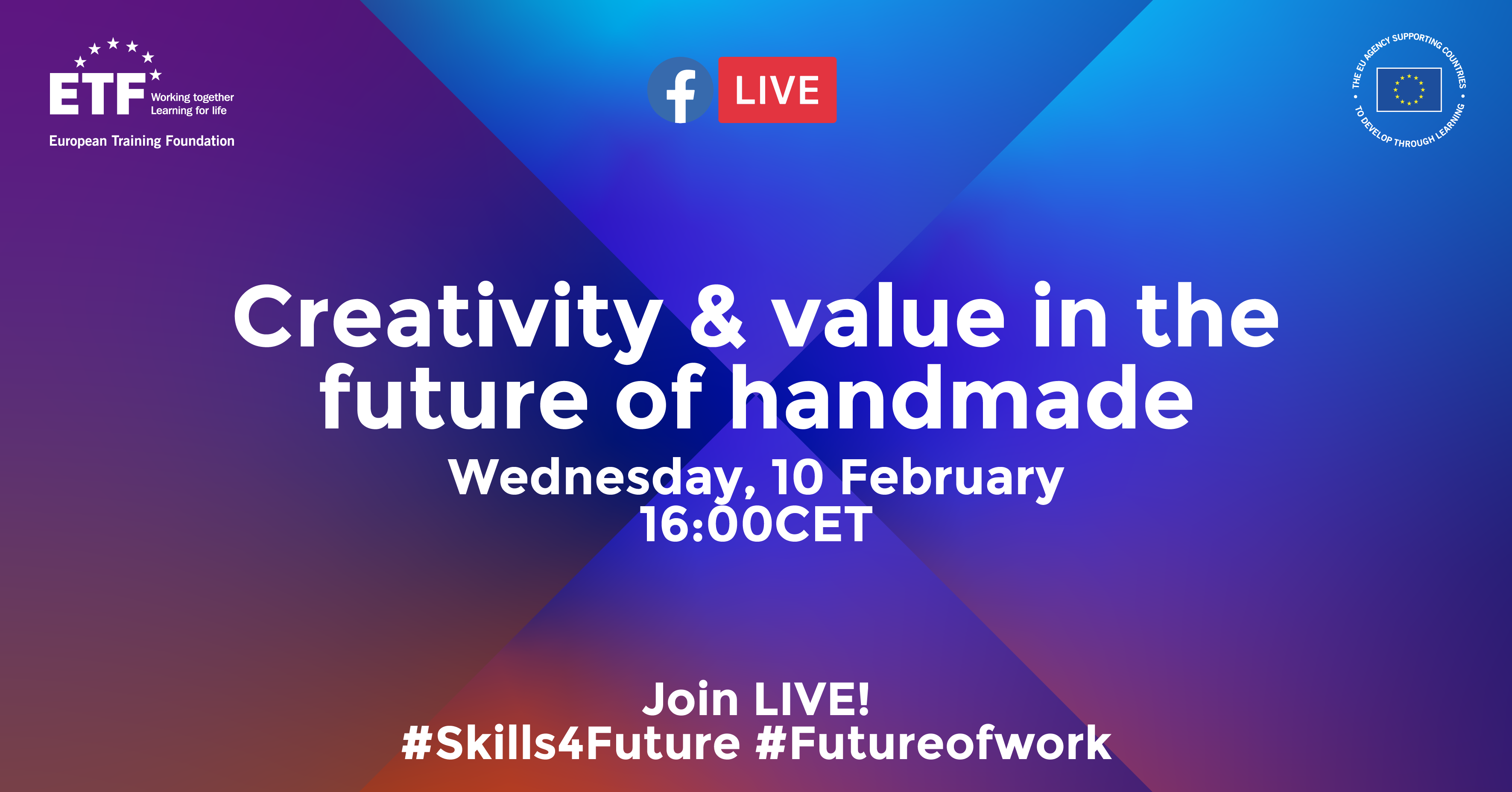
✅ Join our discussion and make your questions to the experts this Wednesday on ETF Facebook: https://www.facebook.com/etfeuropa

Total amount of likes
4
Dislike 0
ETF Open Space Logo
ETF Logo

Footer

  • Contact
  • Privacy statement
  • Network of ETF alumni - Privacy statement
  • Legal notice
  • Cookies notice
  • ETF website