
User account menu

  • User menu User menu
    • Sign up
    • Log in
Open Space
  • Topics
    • Digital skills and learning
    • Employability and fair transition to work
    • Governance and financing of lifelong learning
    • Innovative teaching and learning
    • Policy analysis and progress monitoring (Torino Process)
    • Qualifications systems
    • Quality assurance in vocational training
    • STEM
    • Skills and migration
    • Skills demand analysis
    • Skills for the green transition
    • Vocational excellence
  • ETF Networks
    • ENE - ETF Network for Excellence
    • ETF Community of Innovative Educators
    • GLAD - Governance, Learning, Action, Dialogue
    • Quality Assurance Forum
    • Skills Lab Network
  • Resources
    • Database of Innovative teaching practices
    • Digital Education Reform Framework (DERF)
    • ENE Atlas
    • Green skills articles collection
    • Guides and toolkits for skills anticipation
    • Registry of certified Vocational Excellence providers
    • Skills anticipation and matching e-toolkit
    • Unlocking AI in education: A Teacher's Guide to AI Literacy
    • Vocational Excellence e-Library
  • About
Search
Alastair Macphail
Open Space Member
6 years ago Public

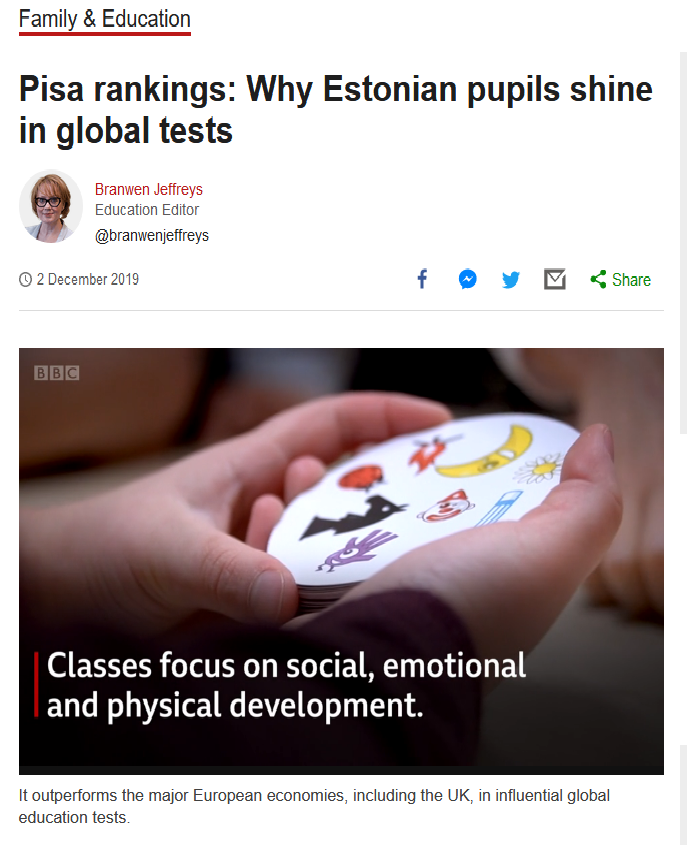
With Estonia coming top among western countries in the PISA rankings, the BBC compares the experience of Estonian students with that of their peers in the UK. While in England, children are being coached for their first national tests at 6 and 7, Estonia is concentrating on their physical, social and emotional readiness to learn. Does quality early years education explain Estonia's outstanding PISA results? Or are other factors at play? What do you think?
Total amount of likes
8
Dislike 0
ETF Open Space Logo
ETF Logo

Footer

  • Contact
  • Privacy statement
  • Network of ETF alumni - Privacy statement
  • Legal notice
  • Cookies notice
  • ETF website