
The Challenge Addressed
In the construction and real estate sector, education and training systems face a dual challenge: responding to rapid technological and regulatory change (digitalisation, sustainability, safety) while ensuring that learners develop transversal competences applicable across professional contexts.
Traditional training approaches remain largely discipline-based and insufficiently connected to real-life practice, resulting in limited transfer of learning outcomes to the workplace.
This practice addresses the need for integrated, competence-based learning pathways that connect education, professional ecosystems and labour market needs.
Why the Practice is Innovative
The innovation lies in the design and implementation of competence-driven learning experiences embedded in authentic professional projects.
We deploy multimodal training frameworks integrating in-person training, hybrid learning models, and fully digital programs, tailored to learners’ profiles and organizational constraints.
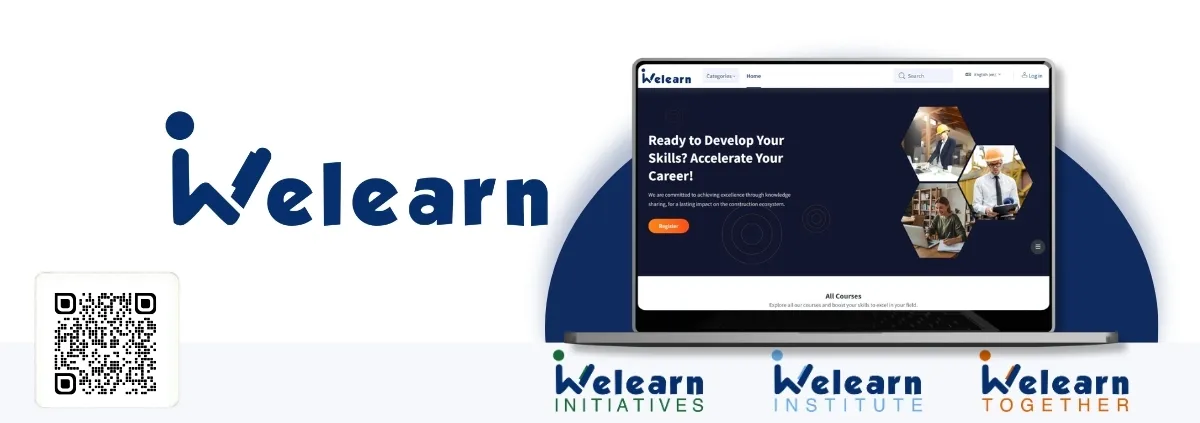
The practice leverages digital learning solutions as enablers (e-learning platforms, MOOCs, SPOCs, etc) to support personalisation, collaboration and continuous feedback, ensuring that learning remains inclusive and scalable.
Our innovative approach brings content, pedagogy, and digital learning tools into perfect alignment, creating engaging, scalable, and future-ready learning experiences.
Type of Integration and Key Competences
- Digital competence: learners use collaborative learning platforms, digital content creation tools and sector-specific digital workflows (e.g. BIM-based learning scenarios).
- STEM / STEAM competences: applied through technical problem-solving, analysis of construction systems, materials and processes.
- Entrepreneurial competence: developed through project planning, decision-making, risk analysis and value-oriented thinking.
- Personal, social and learning to learn competence: strengthened through teamwork, self-assessment, peer feedback and reflective learning activities.
This integration is implemented through cross-curricular project-based learning, adaptable to different learner profiles (owners, engineers, specialist, contractors, workers,etc).
Role of the Teacher/Trainer
Teachers and trainers act as learning designers, facilitators and coaches.
Their role is to frame learning challenges, guide learners through inquiry-based processes, support collaboration and inclusion, and ensure alignment between activities and competence-based outcomes.
Type of Learning Activities
Learning activities are structured around real-life, sector-specific projects drawn from the built environment. Examples include:
- MOOCs and SPOCs on topics such as digital construction (BIM), construction materials (concrete, waterproofing, etc).
- Executive and certification programmes integrating case studies, simulations and applied projects.
- Hybrid learning pathways mixing online modules, workshops and workplace-related challenges.
Learners engage in collaborative problem-solving, digital production, simulations, case analysis and presentations.
Impact of the Practice
The practice has generated measurable impact at both learner and organisational levels, extending beyond individual skill acquisition to tangible transformation of real projects and professional practices.
Graduates, particularly in digital construction and BIM-related programmes, have successfully contributed to and led large-scale, real-life projects.
At organisational level, the practice supports strategic transformation and maturity progression. Trained professionals act as internal change agents.
Potential for Replication
The practice is built on a modular, competence-based framework that can be easily adapted across sectors, education levels and countries.
It integrates seamlessly into formal, vocational and lifelong learning systems, by aligning learning outcomes with real projects and organisational strategies.
Innovator: Oumaima Dakir - WeLearn