The Challenge Addressed
The project “Plants in My Environment” was implemented using the STREAM model with the aim of developing knowledge about nature, encouraging an investigative spirit, teamwork, creativity, and a responsible attitude toward the environment.
The activities were designed to connect science, technology, reading and writing, engineering, art, and mathematics through experiential learning.
Why the Practice is Innovative
At the beginning of the project, through parallel associations, students reinforced basic knowledge about nature and its division into living and non-living components.
By using video materials and discussion, they became familiar with the beauty of nature and the common characteristics of living beings.
After watching an educational film about plants, students classified plants through discussion into woody and herbaceous, coniferous and deciduous, wild and cultivated, as well as medicinal and ornamental plants.
Type of Integration and Key Competences
As part of a math and movement-based activity, students were divided into two teams.
They moved along a broken line while maintaining balance, reached cards marked with numbers (the product of two numbers), and, based on the plant name, sorted them into the appropriate categories:
- Woody–wild
- Herbaceous–wild
- Woody–cultivated
- Herbaceous–cultivated
On March 12, the International Day of Planting Plants and Flowers, a practical planting workshop was conducted.
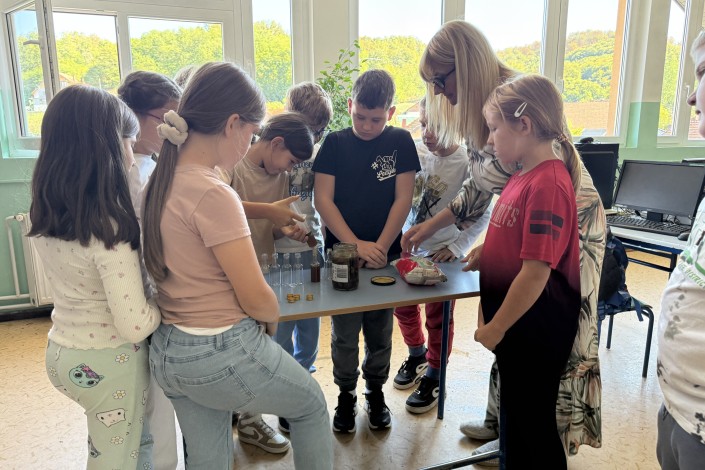
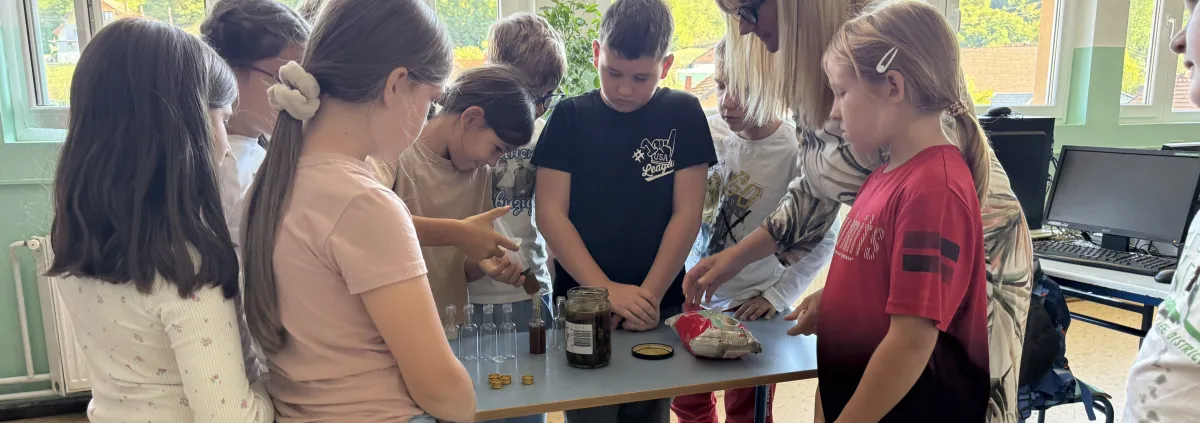
Students brought flower pots, soil, plants, and cuttings, as well as natural ingredients for preparing organic fertilizer (banana peels, coffee grounds, eggshells, and ash).
Through planting, making natural fertilizer, and creating a simple irrigation system from a plastic bottle, students developed environmental awareness and technical skills.
They also learned about plant care through pruning, cleaning, and protecting plants from insects.
Role of the Teacher/Trainer
The activities were designed to support students through experiential learning, discussion, exploration, practical work, teamwork, and creative expression, enabling them to actively participate in the learning process.
Type of Learning Activities
The project was enriched by a field trip to a nearby forest, where students collected early signs of spring, became familiar with edible and medicinal wild plants (primrose, dandelion, mint, nettle, wild garlic), and learned about their uses.
They prepared juices, syrups, creams, and medicinal oil.
By pressing plants and creating artistic pictures, as well as writing stories and poems, students connected nature with artistic expression.
The study of plants continued through collecting and drying medicinal herbs and preparing teas, drinks, and creams according to traditional recipes, thus nurturing a connection between ancestral knowledge and a modern, responsible approach to nature.
The products will be sold at children’s bazaars.
The project is planned to continue throughout the entire year, across all seasons, using nature as a valuable learning resource.
Impact of the Practice
The project enabled integrated learning through play, work, and exploration, fostering in students a love for nature and science.
Potential for Replication
The project is planned to continue throughout the entire year, across all seasons, using nature as a valuable learning resource.
Its integration of experiential learning, STREAM, practical activities, environmental awareness, traditional knowledge, mathematics, science, technology, engineering and art provides a flexible approach that can be continued and adapted through different seasonal and educational activities.
Innovator: Snezana Cvetinovic - Primary School “Vera Blagojevic”