
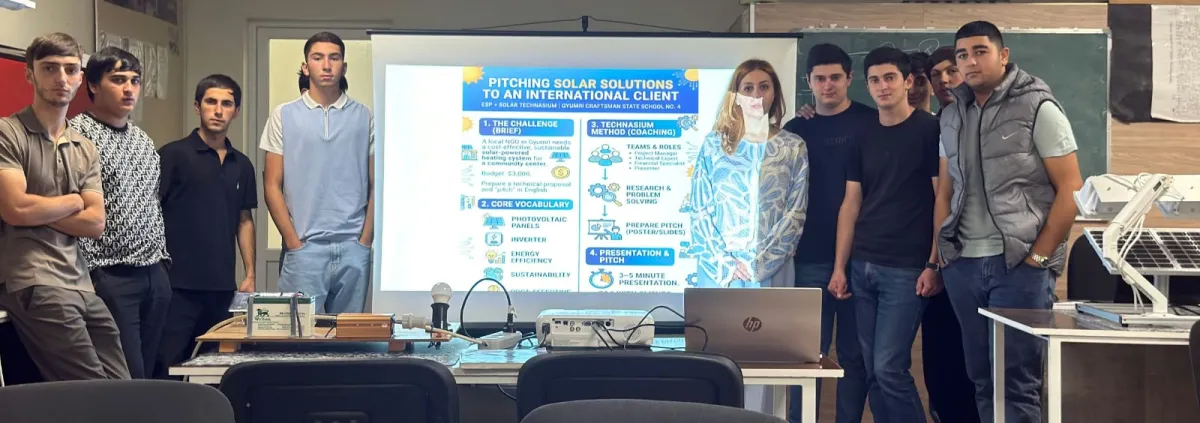
The Challenge Addressed
As a mentor supporting the localization of the Dutch Technasium model at Gyumri Craftsman State School No. 4, my practice addresses the pressing challenge of strengthening STEM and project-based learning within Armenia’s vocational education system.
Many teachers and trainers in VET lack structured experience in guiding open-ended research projects, facilitating interdisciplinary teamwork, and applying real-life problem-solving approaches—core elements of the Technasium philosophy.
My role aims to bridge this gap and empower educators to confidently implement this innovative model.
Why the Practice is Innovative
The practice is innovative because it introduces Research and Project Work as a structured learning methodology, guided not by traditional instruction but by coaching.
Instead of delivering content, teachers facilitate student-driven inquiry, collaboration with industry partners, and solution-oriented thinking.
This shift from teacher-centered to learner-centered pedagogy is still new in Armenian VET institutions, making the mentoring process both transformative and pioneering.
Type of Integration and Key Competences
The integration process involves aligning Armenian VET curricula with Technasium principles, ensuring that students develop key competences such as critical thinking, creativity, teamwork, communication, digital skills, and problem-solving.
The practice also supports cross-curricular integration by connecting technology, design, science, and entrepreneurship in authentic projects developed with local stakeholders and companies.
Role of the Teacher/Trainer
As a mentor, my role is to guide coaches in adopting these new methodologies, support them in planning and supervising research projects, and help them create a motivating and safe learning environment where students explore real challenges.
I provide ongoing professional development through workshops, co-teaching sessions, reflective meetings, and practical demonstrations of coaching techniques.
I also help teachers build partnerships with local industries, ensuring that project assignments are realistic, relevant, and responsive to regional needs.
Type of Learning Activities
The learning activities within this practice are rooted in hands-on, experiential, and inquiry-based approaches.
Students work in teams, conduct research, design prototypes, meet industry experts, present their findings, and manage their projects from idea to implementation.
Coaches guide them in defining problems, setting goals, organizing tasks, evaluating data, and presenting solutions—mirroring real professional workflows.
Impact of the Practice
The impact of this mentoring practice is already visible.
Teachers report increased confidence in project-based methods, improved collaboration within the school, and stronger connections with external partners.
Students show higher engagement, improved problem-solving abilities, and a deeper understanding of STEM concepts through practical application.
The school benefits from a more modern, dynamic, and innovative learning culture aligned with European educational standards.
Potential for Replication
The potential for replication is high.
The mentoring model can be adapted by other VET institutions in Armenia or the region that aim to modernize teaching practices, strengthen STEM education, or introduce project-based learning.
With proper guidance and capacity building, the Technasium-inspired approach can support long-term improvements in vocational education quality and better prepare students for the demands of the modern labor market.
Innovator: Heriknaz Aharonyan - MESCS of RA "Gyumri Craftsman State School N4" SNPO