The Challenge
The project addresses several interconnected challenges associated with the growing elderly population: social isolation, weakened intergenerational transmission of cultural heritage, low health literacy and the digital divide.
Rather than treating older people simply as recipients of support, the practice creates a reciprocal learning model in which both generations have something to teach and something to learn. Middle school students and older people become active participants in a shared learning experience, creating opportunities for social connection, mutual understanding and personal growth.
Why the Practice Is Innovative
The innovation lies in adapting the international “Human Library” concept to older people, who become “living books” sharing their life experiences, memories and cultural knowledge with younger generations.
The approach moves beyond passive knowledge transfer towards meaningful personal and emotional interaction.
Its distinctive feature is its two-way learning model:
Young people mentor older adults in basic technology and health information, while older adults mentor young people by sharing life experience, wisdom and cultural heritage.
This reciprocal approach brings together Values Education, Digital Literacy and Health Literacy, creating a holistic model that goes beyond traditional social or educational programmes.
Key Competences
The practice combines several key competences through an interdisciplinary and values-centred approach:
- Personal, Social and Learning-to-Learn Competence: students develop empathy, respect, communication skills and a sense of social responsibility by connecting values education with real-life experiences.
- Digital Competence: students support older participants in using technologies and services such as e-Government, e-Nabız (e-Health) and basic AI applications.
- Citizenship and Health Competence: participants develop greater awareness of informed decision-making through activities and materials addressing health literacy, nutrition and medication management.
- Cultural Awareness and Expression: intergenerational activities facilitate the transmission of traditional crafts, music, stories and proverbs.
Role of the Teacher/Trainer
The teacher acts as a facilitator, coach and ethical coordinator.
Before the activities, students receive training in gerontology, empathy and prejudice reduction, preparing them to interact respectfully and confidently with older participants.
Teachers also ensure the necessary ethical safeguards and permissions, carefully match students and older participants, coordinate workshops and support the collection of qualitative evidence on the learning and social experience.
Learning Activities
The practice is based on active participation, reciprocal learning and meaningful interaction.
“Human Library” Sessions:
Students conduct structured interviews with older participants, documenting their experiences and transforming their stories into three themed e-books for a “Digital Books Gallery”.
Digital and Cultural Workshops:
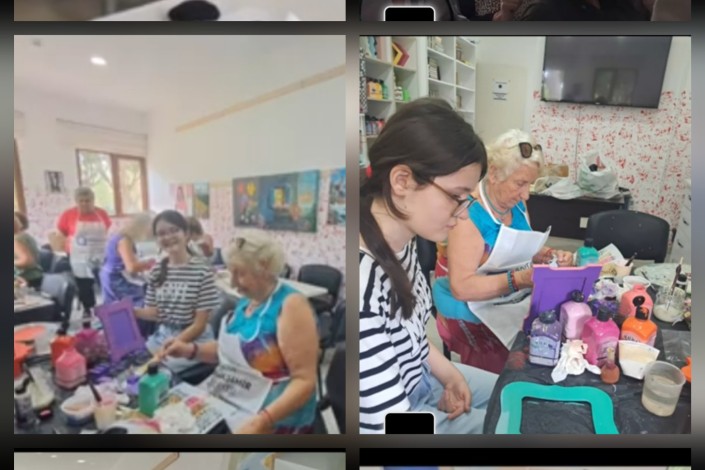
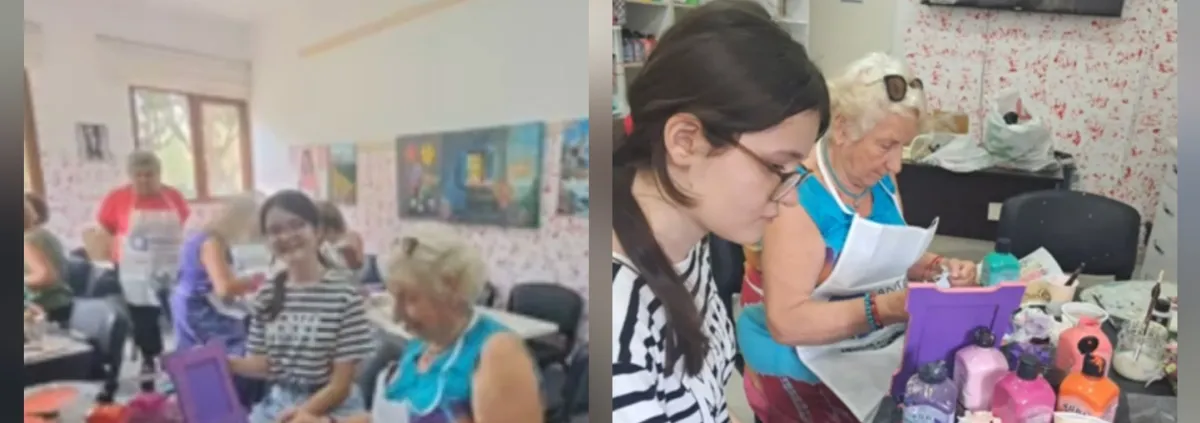
Students provide practical technology training, while joint workshops involving music, handicrafts and other cultural activities allow older participants to share their knowledge and traditions.
Reflection and Documentation:
Students maintain “Emotion and Experience Diaries”, recording their feelings, discoveries and personal lessons throughout the project. This encourages reflection and strengthens the connection between experience and learning.
Impact of the Practice
The project uses a mixed-methods research approach, combining the PNYAÖ scale and questionnaires to measure changes in participants' attitudes and experiences.
The results indicate significant impact:
- Students' negative prejudice towards older people decreased from 65% to 10%.
- 95% of students reported valuing the spiritual heritage gained — including patience and wisdom — more highly than the technical digital knowledge transferred.
- Older participants experienced a reduction in feelings of loneliness and increased social participation.
- Participants also demonstrated improvements in digital skills and awareness of health literacy.
These findings highlight the value of treating intergenerational learning as a reciprocal process, rather than a one-way transfer of knowledge or support.
Potential for Replication
The model has strong potential to develop into long-term and sustainable intergenerational programmes, particularly through cooperation between schools, municipalities and other local institutions.
Its relatively simple structure — combining reciprocal mentoring, “Human Library” sessions, practical workshops and measurable outcomes — makes it adaptable to different communities and cultural contexts.
At its heart, the practice offers a powerful principle for replication: every generation is both a learner and a teacher. By transforming social interaction into structured learning, the model connects values education with meaningful community participation, while simultaneously addressing digital inclusion, health literacy, cultural heritage and social isolation.
Innovator: Nasiye Yamaç Şahin - Antalya Science and Art Center