The Challenge Addressed
Students in Palestine may face limited access to modern learning environments, technological tools and entrepreneurship support, which can restrict their opportunities to develop the competences required for today’s labour market and active participation in society.
Many learners come from vulnerable backgrounds and need additional opportunities to strengthen their digital, entrepreneurial, sustainability-related, personal and social competences.
In response, Smart University College for Modern Education (SUME) has developed an integrated competence-based education model that combines these areas across its diploma and bachelor programmes. The practice aims to ensure that all students have opportunities to acquire future-ready skills through practical, inclusive and applied learning experiences.
SUME is a young and rapidly developing higher education institution that has been recognised by the European Training Foundation (ETF) as one of the leading emerging higher education institutions in Palestine, according to the information provided.
Why the Practice is Innovative
The innovation lies in SUME’s fully integrated, interdisciplinary and competence-based education model, which brings digital skills, entrepreneurship, sustainability, citizenship and personal and social learning into different study programmes.
The approach moves beyond traditional subject-based learning and encourages students from different disciplines to collaborate on real-world challenges and practical assignments. For example:
- IT students work on sustainability-related challenges;
- Business students develop digital prototypes;
- Multimedia students create social awareness campaigns;
- Fashion students integrate green design and digital embroidery.
This interdisciplinary structure allows students to develop multiple key competences simultaneously, while understanding how knowledge and skills from different fields can be combined to address authentic needs.
The practice also connects learning with social relevance and community engagement, encouraging students to consider not only what they are learning and creating, but also why it matters to society.
Type of Integration and Key Competences
SUME’s model integrates digital, entrepreneurial, green, personal, social and citizenship competences across diploma and bachelor programmes.
The main competence areas include:
- Digital competence: Through the use of design tools, multimedia applications and AI-based technologies;
- Entrepreneurial competence: Through idea development, teamwork, pitching and the creation of start-up concepts;
- Green competence: Through resource-saving practices, sustainable design and environmental awareness activities;
- Personal, social and learning-to-learn competence: Through communication, resilience, teamwork and practical problem-solving;
- Citizenship competence: Through community service, social awareness campaigns and activities addressing local needs.
The approach encourages students to connect technical and professional skills with social responsibility, sustainability and community participation.
Role of the Teacher/Trainer
Teachers act as facilitators, mentors, learning designers and professional coaches.
Rather than relying exclusively on lectures, instructors design practical assignments, coordinate interdisciplinary activities and guide students through the process of addressing authentic problems.
Their role includes:
- Creating real-life learning tasks;
- Supporting applied projects and practical experimentation;
- Facilitating collaboration between different study programmes;
- Coaching students in problem-solving and idea development;
- Encouraging reflection on the social and professional relevance of learning outcomes.
This approach places the learner at the centre of the educational process and enables teachers to connect theoretical knowledge with practical application and competence development.
Type of Learning Activities
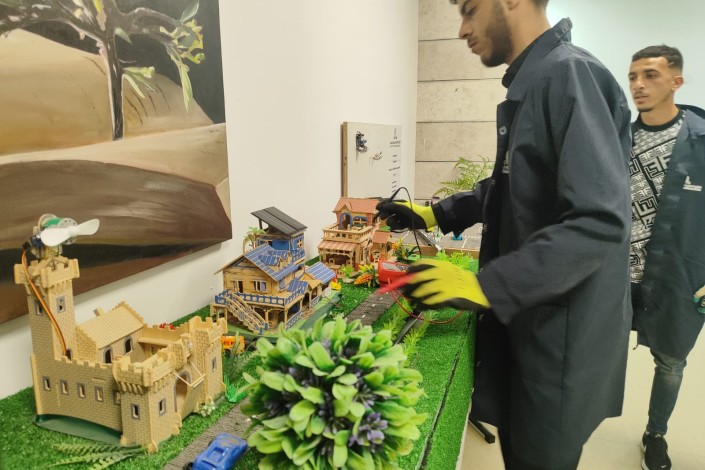
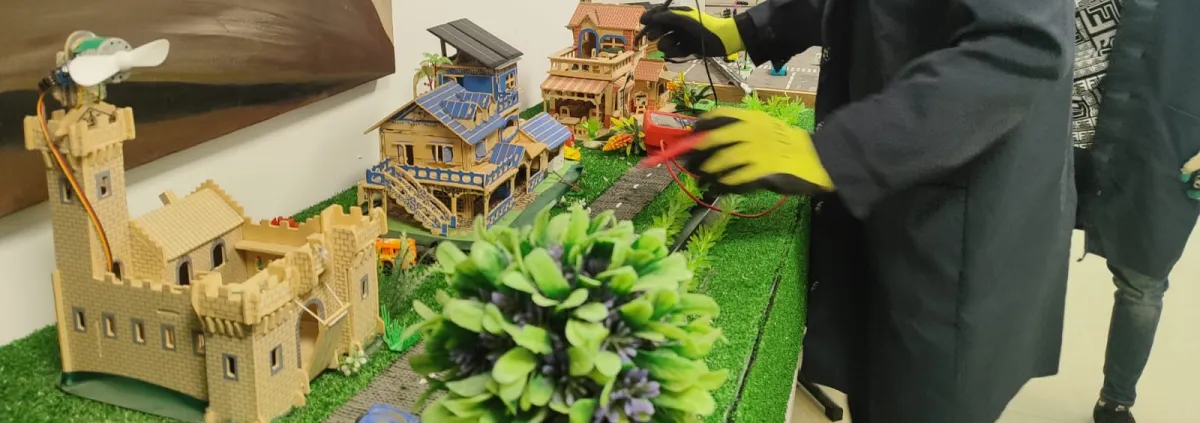
Learning at SUME is hands-on, learner-centred, experiential and highly applied.
Students participate in a range of activities, including:
- Digital prototyping: Creating digital prototypes and multimedia products;
- Entrepreneurship projects: Designing mini start-ups and presenting or pitching ideas to panels;
- Green campus actions: Implementing initiatives related to laboratory efficiency, resource use and environmental awareness;
- Community projects: Supporting vulnerable groups through practical activities and socially relevant initiatives;
- Interdisciplinary collaboration: Working across programmes, such as IT, business and media, to develop integrated solutions.
These activities provide students with opportunities to apply knowledge, collaborate across disciplines, develop practical products and respond to real-world challenges.
Impact of the Practice
The practice contributes to student development, institutional innovation and community engagement.
Student Development and Employability
According to the information provided, SUME reports an 87% employability rate among graduates, indicating a positive outcome in relation to labour market integration. The figure should be supported by the relevant graduate tracking methodology and reporting period when used in a formal publication.
The integrated learning model supports the development of digital readiness, entrepreneurial skills, teamwork, communication and practical problem-solving, helping students prepare for professional contexts.
Inclusion and Female Student Participation
The practice encourages female students to participate more confidently in entrepreneurial and digital activities, supporting greater inclusion and participation in fields where gender-related barriers may exist.
Institutional Development
SUME’s recognition by the European Training Foundation as a leading emerging higher education institution, as stated in the source, provides an indication of the institution’s visibility and development within the higher education context.
Community Engagement
The wider community benefits from student-led digital products, awareness campaigns, community initiatives and green actions. These activities create opportunities for students to contribute to local needs while gaining practical experience.
Potential for Replication
The SUME model has strong potential for adaptation and scaling across higher education institutions, vocational education and training centres and community learning environments.
Its main transferable elements include:
- Integration of key competences across different study programmes;
- Interdisciplinary collaboration based on real-world challenges;
- Practical and project-based learning;
- Use of accessible digital tools and applied technologies;
- Connection between employability, sustainability and citizenship;
- Engagement with community needs and vulnerable groups.
The model can be adapted to different curricula and institutional contexts because it focuses on real needs, practical assignments and flexible interdisciplinary cooperation.
Its replication potential will depend on the availability of appropriately trained educators, institutional coordination and access to the minimum technological and learning resources required for the activities. Nevertheless, the approach provides a useful framework for institutions seeking to strengthen competence-based education, inclusion, employability and community engagement.
Innovator: Dr. Asia Alqawasmi - Smart University College for Modern Education