The Challenge Addressed
As a teacher of Russian language and literature with one year of teaching experience, I became interested in modern educational approaches after being introduced to the Scaffold Cards methodology.
This experience led me to reflect on the following question: “How can I make the learning process more interesting and interactive?”
The Scaffold Cards—particularly those focused on Planning, Teaching Methods and Assessment Methods—provided a practical tool for addressing this challenge. They helped simplify lesson preparation, formulate clear learning objectives and select appropriate teaching and assessment methods.
The practice also responds to the need to prepare future teachers to plan and deliver engaging, competency-based lessons. As I also teach the course Methods of Teaching the Russian Language in School, I introduced the Scaffold Cards approach to my students and plan to integrate it systematically into the course so that future teachers can use the methodology in their own classroom practice.
Why the Practice is Innovative
The innovative aspect of the practice lies in the practical integration of Scaffold Cards into everyday lesson planning, teaching and assessment.
Rather than treating lesson preparation as a fixed sequence of activities, the cards support a structured process through which the teacher can:
- Identify the competences to be developed;
- Assess learners’ levels of preparedness;
- Select appropriate teaching methods;
- Define expected learning outcomes;
- Choose suitable assessment approaches;
- Identify the necessary resources;
- Plan the duration of the lesson.
The methodology promotes a shift towards more intentional, learner-centred and competency-based teaching. It also allows students to use the cards themselves when preparing presentations, encouraging them to apply structured planning principles and take greater responsibility for their learning.
An additional innovative element is the transfer of the approach from the teacher’s own practice to teacher education, allowing future teachers to become familiar with Scaffold Cards as part of their professional preparation.
Type of Integration and Key Competences
The practice integrates subject-specific learning, pedagogical methodology and competence development.
In the example lesson on Types of Complex Sentences, the selected competences were:
- Creativity, through the preparation and delivery of original presentations;
- Teamwork, through collaborative work in micro-groups;
- Problem-solving, through the challenge of explaining complex grammatical concepts clearly and effectively;
- Communication, through oral presentations and peer interaction;
- Pedagogical competence, as students practise explaining learning content to others;
- Learning to learn, through preparation, peer feedback and reflection.
The approach also integrates formative and authentic assessment, allowing students to evaluate their peers while the teacher assesses the quality and validity of the learning outcomes.
Role of the Teacher/Trainer
The teacher acts as a learning designer, facilitator, mentor and assessor.
During lesson preparation, the Scaffold Cards support the teacher in defining objectives, selecting teaching methods and planning assessment. During the lesson, the teacher creates the conditions for active student participation and guides learners through the collaborative task.
The teacher also takes responsibility for monitoring learning outcomes through Authentic Assessment, evaluating each group according to the following criteria:
- Creativity;
- Logical structure;
- Scientific validity of the explanation.
At the same time, the teacher encourages students to use the Scaffold Cards independently, helping them develop the ability to plan and organise their own learning activities.
The teacher’s role extends beyond the individual classroom: by introducing Scaffold Cards into the Methods of Teaching the Russian Language in School course, the practice contributes to the professional development of future teachers.
Type of Learning Activities
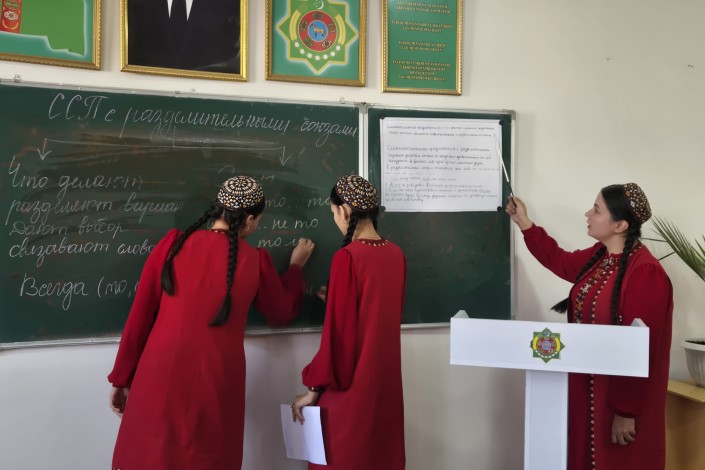
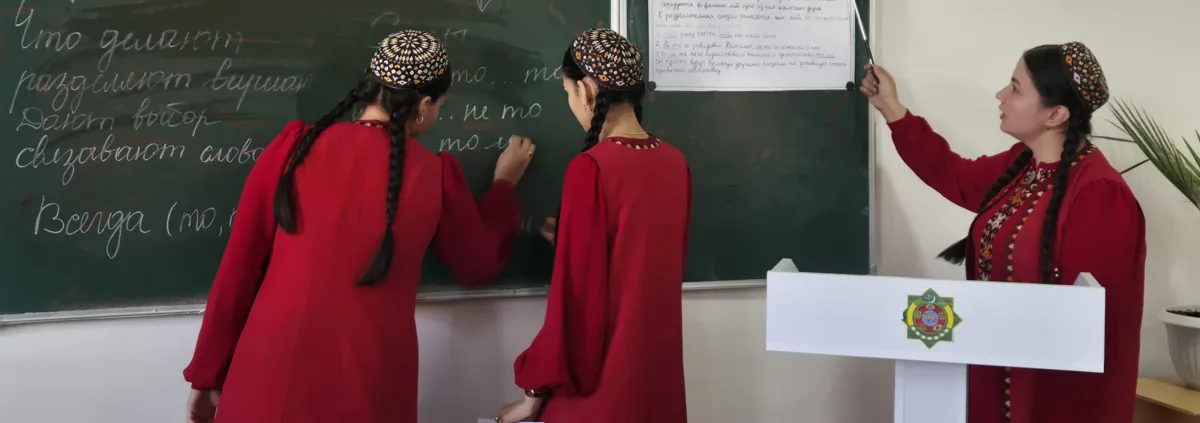
The practice was implemented through a project-based, collaborative and peer-learning lesson on the topic Types of Complex Sentences, involving 25 second-year students.
The lesson was planned using the Scaffold Cards, as follows:
| Scaffold Card | Application |
|---|---|
| Competencies | Creativity, teamwork and problem-solving |
| Student Preparedness Level | Average |
| Teaching Method | Project-Based Learning |
| Expected Outcomes | Students explain the topic to their peers, strengthen communication skills and develop pedagogical abilities |
| Assessment Methods | Peer Feedback and Authentic Assessment |
| Resource Gathering | Student engagement |
| Lesson Duration | 40 minutes |
The students were divided into three micro-groups, with each group assigned a specific topic:
- Compound Complex Sentences;
- Subordinate Complex Sentences;
- Asyndetic Complex Sentences.
Each group was required to prepare a presentation explaining its assigned topic. Students were given 10 minutes for each presentation and were allowed to use the Scaffold Cards during the preparation process.
The activity encouraged learners to work collaboratively, identify creative approaches and solve the challenge of explaining complex material in a clear and accessible way.
Following each presentation, the teacher implemented Peer Feedback. Students who had listened to the presentation evaluated it on a five-point scale and recorded their scores on the slips of paper provided.
At the same time, the teacher assessed each group using the Authentic Assessment criteria of creativity, logical structure and scientific validity. The scores were then combined, the winning team was identified and grades were assigned.
Impact of the Practice
The use of Scaffold Cards helped the teacher achieve the planned learning objectives and make the lesson more interactive and participatory.
Students developed their understanding of complex sentence structures not only by preparing and delivering their own presentations, but also by actively listening to and learning from their peers. The presentation format encouraged them to reinforce their knowledge, practise communication and develop confidence in explaining subject content.
The activity also strengthened:
- Teamwork and collaborative problem-solving;
- Creativity and communication;
- Students’ ability to explain academic content;
- Peer assessment and constructive feedback;
- Learner engagement and responsibility.
For the teacher, the methodology simplified lesson planning and provided a clear structure for aligning competences, learning outcomes, teaching methods and assessment.
The practice also has a broader impact through its integration into teacher education, where students can begin developing the planning skills they will need as future teachers.
Potential for Replication
The practice has strong potential for replication in language education and across other subject areas.
Scaffold Cards can be adapted to different learning objectives, age groups and classroom contexts. Their structured format supports teachers in designing lessons that integrate competence development, active learning and appropriate assessment methods.
The approach can be replicated through:
- Teacher training and professional development programmes;
- Initial teacher education courses;
- Collaborative lesson planning;
- Project-based and presentation-based learning;
- Peer feedback and authentic assessment activities.
Introducing Scaffold Cards into teacher education is particularly valuable because it enables future educators to become familiar with the methodology before entering professional practice.
Continued participation in Scaffold-related professional development activities can further strengthen teachers’ capacity to experiment with innovative approaches and improve their pedagogical practice.
Teacher’s Reflection
The experience has reinforced my commitment to continuous professional development and the ongoing improvement of my teaching practice. I aim to continue exploring innovative methods that make learning more engaging, interactive and meaningful for students.
My motto is:
“Learning should inspire.”
Innovator: Enegul Abdullayeva - Pedagogical school named after Hydyr Deryayev