
1. The Challenge Addressed
The practice responds to the need to create more inclusive, tolerant and culturally diverse learning environments, particularly in contexts where learners come from different cultural and linguistic backgrounds.
Traditional language teaching can sometimes focus mainly on language structures and content, without sufficiently addressing the cultural contexts, values and perspectives through which language is experienced and communicated. The practice therefore aims to help learners develop not only their English language skills, but also respect, acceptance and appreciation of cultural diversity.
It is based on the principle that “Tolerance is harmony in difference” and recognises that knowledge of different cultures can contribute to friendship, mutual understanding and social cohesion.
2. Why the Practice is Innovative
The Story Maze method creates an active learning environment in which learners participate in interactive scenarios, challenges, simulations, peer feedback and reflective activities, rather than primarily receiving information through traditional lectures or passive instruction.
The approach is innovative because it combines digital tools with competency-oriented learning, allowing learners to engage with content through authentic and meaningful situations. The method is also highly flexible and adaptable, making it possible to use it with different subjects, levels of competence, educational settings and cultural contexts.
A particular strength of the approach is its capacity to integrate cultural diversity into language learning, enabling learners to explore different perspectives while developing their ability to communicate and interact respectfully with people from different backgrounds.
3. Type of Integration and Key Competences
The Story Maze method integrates subject-specific and cross-curricular competences, combining language learning with cultural awareness, communication, collaboration and problem-solving.
The main competences developed include:
- Multilingual competence, through the active use of English in meaningful situations;
- Cultural awareness and expression, through exploration and appreciation of different cultures and ways of expressing ideas and experiences;
- Personal and social competence, through collaboration, empathy and respectful interaction;
- Citizenship competence, through an emphasis on tolerance, acceptance, diversity and social participation;
- Digital competence, through the use of digital tools as part of the learning process;
- Critical thinking and problem-solving, through challenges, simulations and authentic scenarios;
- Learning to learn, particularly through reflection and the analysis of learners’ own learning processes.
The approach is closely aligned with the European Key Competences for Lifelong Learning, particularly the competence of cultural awareness and expression and the ability to express and interpret ideas, experiences and emotions with empathy.
4. Role of the Teacher/Trainer
The teacher takes on the role of facilitator, coach and guide, rather than acting primarily as a traditional instructor.
The teacher designs the learning environment, selects or creates appropriate scenarios and activities, supports collaboration and provides guidance throughout the learning process. This allows learners to take greater responsibility for their own learning and encourages active participation, experimentation and problem-solving.
The teacher can also adapt the Story Maze structure according to the learning objectives, learners’ level, subject area and cultural context, making the method suitable for a wide range of educational environments.
5. Type of Learning Activities
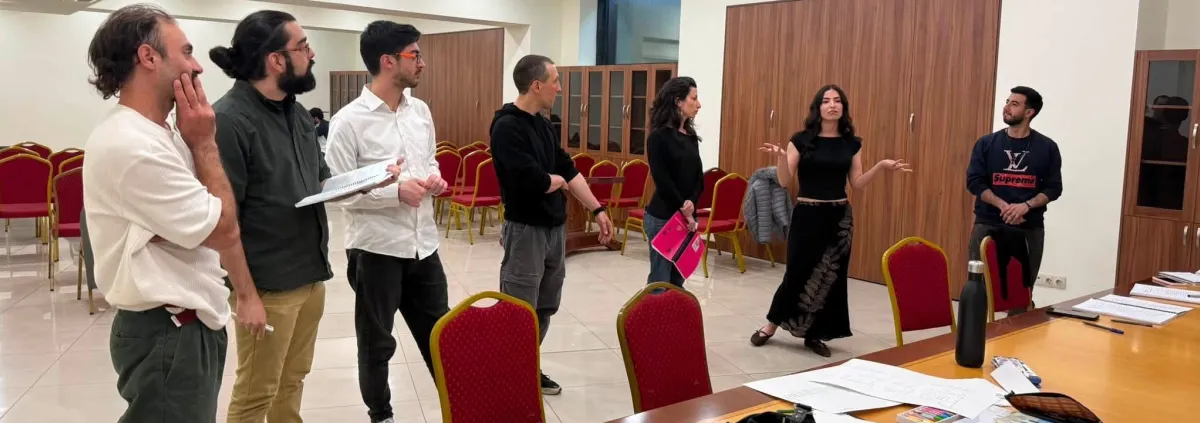
The Story Maze method is based on a sequence of active, collaborative and reflective learning activities.
Depending on the learning objectives, learners can engage in:
- Interactive stories and scenarios requiring learners to make choices and respond to challenges;
- Simulations and authentic situations, connecting language learning with real-life contexts;
- Problem-solving activities, encouraging learners to analyse situations and identify possible solutions;
- Collaborative tasks, in which learners work together and exchange perspectives;
- Peer feedback, supporting communication, cooperation and learning from others;
- Digital activities, integrating technology into the learning process;
- Reflection activities, enabling learners to analyse what they have learned and how they have approached the tasks.
The reflection stage is particularly important and draws on Bloom’s Taxonomy, encouraging learners to recall, understand, apply, analyse and evaluate what they have created and experienced.
6. Impact of the Practice
The practice supports a shift from passive learning to active and meaningful participation, helping learners engage more deeply with both language and content.
It contributes to the development of communication, collaboration, problem-solving, cultural awareness and empathy, while creating opportunities for learners to encounter perspectives different from their own.
The method also helps learners connect language with real-life experiences, cultural identity and social interaction, strengthening their ability to understand and communicate ideas, experiences and emotions in an increasingly diverse society.
For the teacher, the flexible structure provides a practical framework for designing engaging and competency-based lessons without being restricted to a single subject, textbook or teaching environment.
7. Potential for Replication
The Story Maze method has strong potential for replication because it is not dependent on a specific curriculum, subject or learner profile.
Its clear structure, flexible activity formats and competency-based approach allow educators to adapt it to different educational levels, languages, subjects and cultural contexts. Digital tools can also be selected according to the resources available in a particular learning environment.
The method can therefore be transferred to universities, colleges, educational centres and other formal or non-formal learning environments, while maintaining its central principles of active participation, collaboration, cultural diversity, reflection and competency development.
Innovator: Anna Sinanyan - "Sportus" college at Armenian State Institute of Physical Culture and Sports