
About
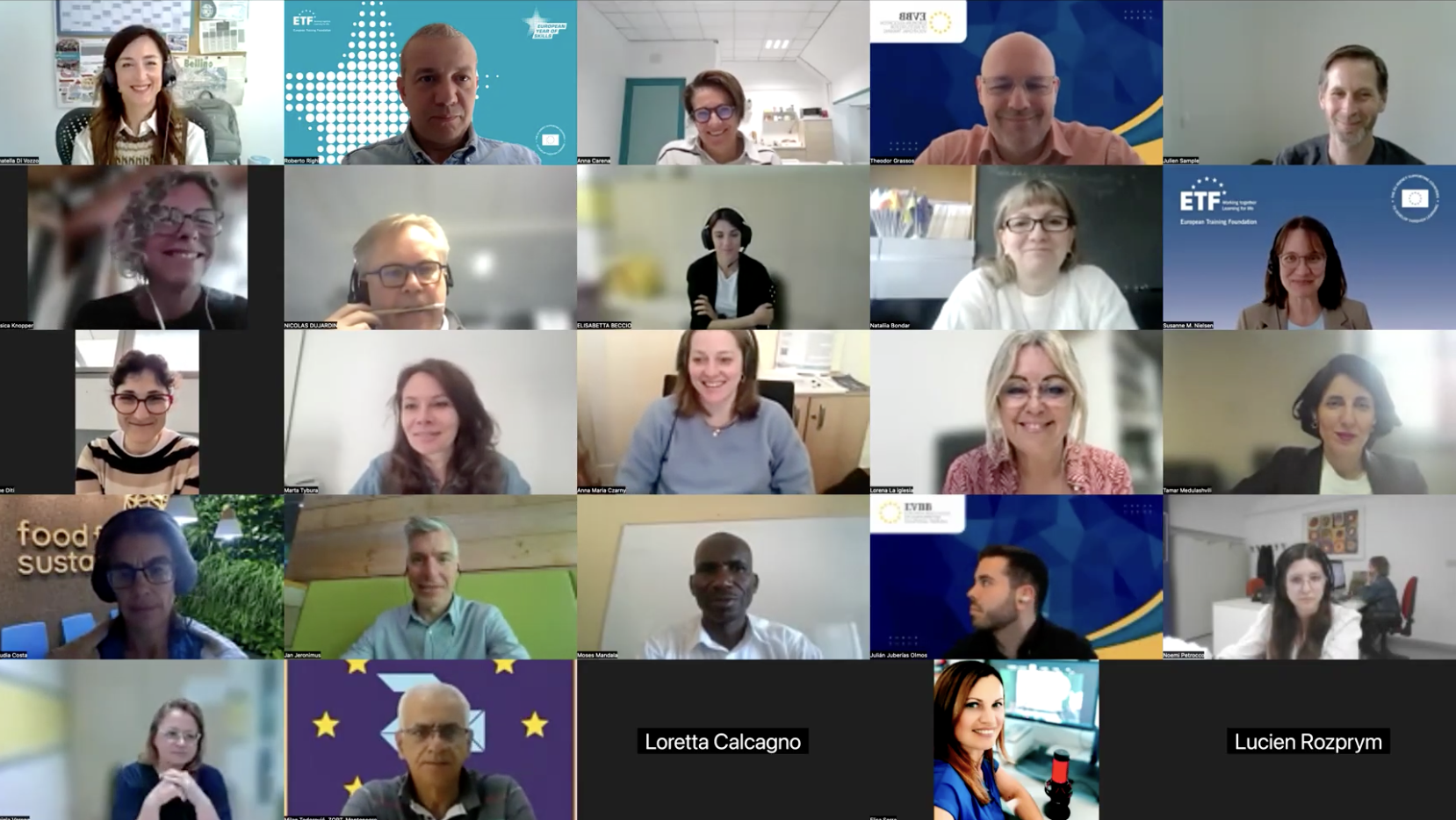
On 28th April 2026 an ENE webinar on financing vocational excellence brought together nearly 100 participants from across the globe, reflecting the growing urgency of investing in skills systems. Organized by the ETF Network for Excellence (ENE), the session served as a platform for policymakers, educators, and industry representatives to explore innovative financing models and collaborative approaches to strengthening vocational education and training (VET).
Setting the stage for systemic change
Susanne Nielsen, ETF Expert introduced the Network for Excellence and outlined the session's focus on financing Centers of Vocational Excellence. She emphasized the need to shift from fragmented funding to a systemic approach, involving stable and diversified financing models that support regional skills ecosystems. Participants were encouraged to think in terms of long-term investment in skills ecosystems, where vocational institutions act as active contributors to economic development.
This webinar formed part of its broader Network for Excellence (ENE) initiative, which promotes peer learning, international cooperation, and knowledge sharing across more than 50 countries.
You can find here the Presentation
Rethinking financing models for Vocational Excellence
A central theme of the webinar was the need for diversified and stable funding streams. Traditional reliance on public funding alone is increasingly seen as insufficient. Instead, speakers highlighted a mix of approaches.
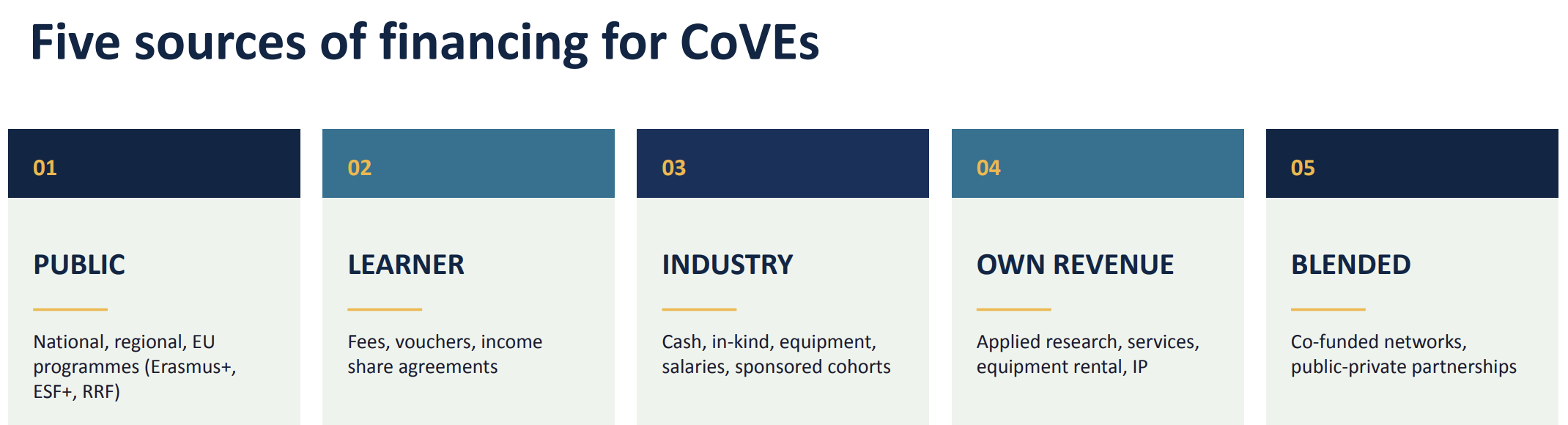
Theodor Grassos, Secretary General EVBB, discussed the importance of sustainability and introduced various funding sources, including public funding, industry-driven financial models, and blended approaches.
Collaboration emerged as a key driver of effective financing. Several case studies showcased how partnerships between vocational institutions and industry can unlock new funding opportunities and improve outcomes.
Examples included:
- Hospitality FORWARD initiative in Greece focused on sector-specific skills development,
- LIDL UP: a retail-sector program supporting youth employment through integrated learning and work experiences,
- CMQ AÉRONAUTIQUE & SPATIAL × AIRBUS: Aerospace collaborations in France linking vocational training with high-tech industry needs
- TKNIKA: particularly notable model from the Basque Country, where VET institutions engage in applied research in partnership with industry. This approach repositions vocational schools as innovation hubs rather than purely educational providers.
You can find more information in the presentation.
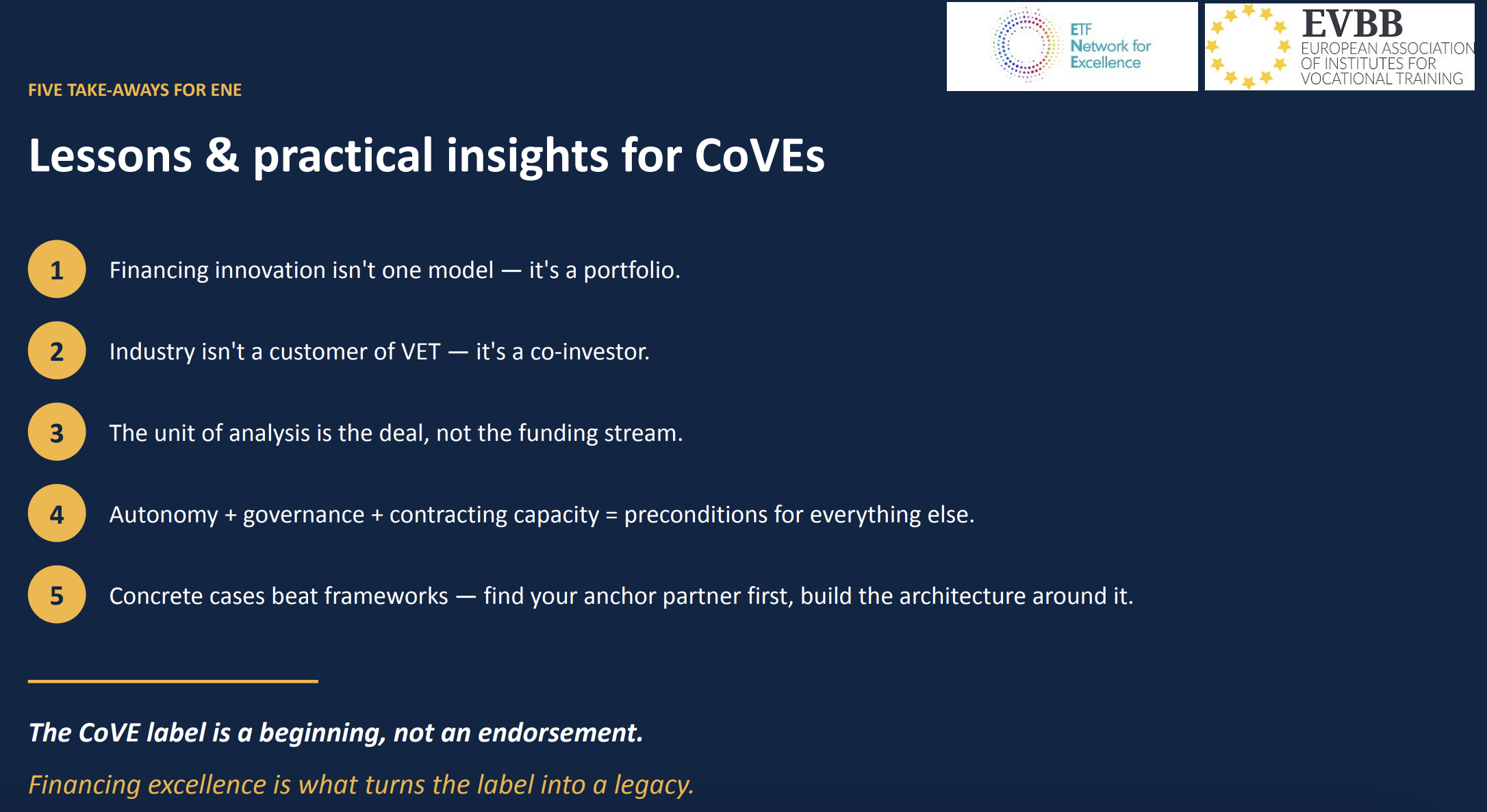
The takeaway was clear: VET institutions must evolve from passive recipients of funding into proactive service providers and co-investors, capable of generating value for both learners and industry partners.
The evolving role of International Financial Institutions
Donatella Di Vozzo, ETF Expert presented on the evolving role of international financial institutions (IFIs) in supporting vocational excellence centers, explaining how IFIs are shifting from building infrastructure to focusing on institutional performance and skills development. She outlined four key functions where centers can engage with IFIs:
- Delivering sector-specific skills training
- Supporting job placement and employability outcomes
- Driving innovation and applied research
- Acting as incubators for entrepreneurship and regional development
You can find more information in the presentation.
Building a Global Community of Practice
The webinar concluded with an invitation to join the growing Network for Excellence (ENE), which offers a range of resources and support services. These include self-assessment tools, an online knowledge library, and onboarding sessions designed to help institutions strengthen their capacity and impact.
Join ENE Open Space group, where you can connect with other participants, share ideas, and stay updated on future activities.
As the demand for skilled workforces continues to rise, the need for sustainable, collaborative financing models in vocational education has never been more pressing. This session underscored that achieving vocational excellence requires not only funding - but a shared vision, strong partnerships, and a commitment to long-term systemic change.

Please log in or sign up to comment.