
Turkey is now hosting more than three-point six million refugees from Syria and also nearly 400.000 non-Syrian refugees and asylum seekers mainly from Iraq, Afghanistan, Iran, and Somalia.
Before talking about the validation of the non-formal and informal learning of the migrants and refugees, we should be well aware of the nature of the migration Turkey is subject to.
The fact is that these people have not migrated in order to find a job or to have a better career. They migrated to survive. They fled from the conflict in their countries. So, this makes the refugee inflow that Turkey faces totally a different case. Otherwise, Turkey does not seem to be a good option to migrate with 3 million unemployed people and a completely different language.
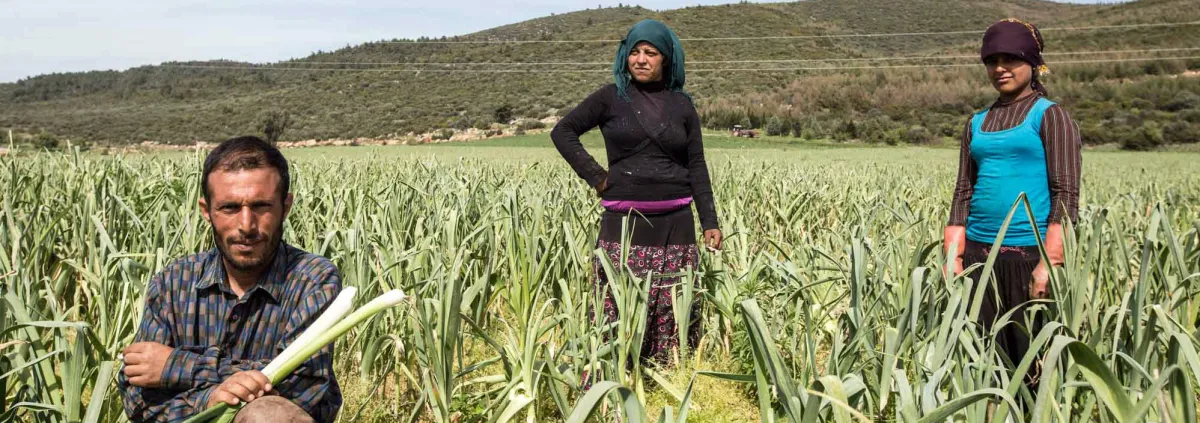
Turkey came across to the refugee inflow in 2011 and hosts the highest number of refugees in the world according to the figures of ILO. Therefore, it faces the challenge of integrating refugees into society and the labour market, including 2.1 millions of working age. Taking into account pre-war labour force participation rates in Syria, it can be estimated that the Syrian labour force in Turkey could be more than 900.000. It’s clear that the refugees constitute a very heterogeneous group in terms of education, professional experience and socioeconomic status. Thousands of them have started their own business in Turkey and employed Syrian refugees while thousands of them have no previous work experience or are mostly employed informally in low-skilled jobs such as seasonal agricultural work, construction, manufacturing and textiles.
Since the beginning of the Syrian crisis in 2011, Turkey has provided effective emergency response and declared a temporary protection regime for Syrian refugees, which has been supplemented by a resilience-based development approach, as expressed in the innovative Regulation on Work Permits of Foreigners under Temporary Protection, January 2016. This regulation allows access of officially registered Syrian refugees under temporary protection (SuTP) to apply for formal work permits. However, work permit regulation was not sufficient alone to create formal employment of SuTP with a take-up of around 31.185 work permits issued as of March 2019. It is clear that additional measures and incentives are needed to promote work permit applications and formal employment.
Turkey was expecting the conflict in Syria to end in a short time but it did not happen. It has been more than 8 years and Turkey has started to consider more seriously the social and labour market integration of the Syrians. Because it seems that the Syrians will stay longer in Turkey until the things in their country settle down.
Since the topic focuses on supporting the employability of migrants and refugees through validation, I will mention more about what is being done for this aim.
Since 2006, Turkey has a system for the validation of non-formal and informal learning basically for vocational qualifications. This system is run by a state institution called Vocational Qualifications Authority which is the most powerful platform to bring together the state, employees and employers in Turkey.
It was revolutionary to create a new path for qualifications and share the authority with the stakeholders at all stages. It was also new to award qualifications following through validation rather than formal education. The ultimate aim of the system is to equip the labour force with up to date qualifications and recognize the learning occurred at the workplace.
Since the law establishing the validation system was drafted in the early 2000s, the validation approach and its stages were not as clear as today. Therefore, the legislative framework and the processes in Turkey were not developed based on the validation concept as we broadly accept today. That’s why, while some stages are very strongly implemented, some are carried out in a different manner.
The identification stage is carried out by the certification bodies focusing on the eligibility of the candidate to start the process. It’s ensured that whether the candidate meets the entry requirements defined in the qualification specification or not. Also, the candidates are informed about the details of the assessment. However, there is no structured identification stage mapping the skills of the candidate or documentation stage gathering evidences.
Because of that, the assessment is based on the actual demonstration of learning outcomes by the candidates. This means that every candidate should take the theoretical and practical exams as they are defined in the qualification specification. I mean the assessment is based on actual evidence rather than the documented evidence. This is the authenticity of the Turkish system.
Assessment and certification are carried out by so-called VOC-Test centres which are accredited by the Turkish Accreditation Agency (TURKAK) and are authorized by VQA. These centres are mainly the public and non-governmental stakeholders such as chambers of commerce and industry, trade unions, employer associations and unions for the craftsman.
All kind of assessment activities are video recorded and stored accordingly. Successful candidates are awarded the formal Vocational Qualification Certificates which are also included in the Turkish Qualifications Framework.
This system is also open to migrants and refugees. However, there are some challenges for them to access like other priorities such as food, safe place to live and making money, the un-awareness of the potential candidates and the language problems. Besides, the refugees sometimes tend to misinform the state and non-governmental officers regarding their previous occupational skills. Or they might be scared with the idea of being assessed.
Some pilot projects are being implemented for the validation of learning outcomes of the refugees. Turkey has been working in close relationship with the international bodies like ILO, International Organization for Migration and the United Nations and also European institutions like ETF. The skills of the selected Syrian candidates have been identified and documented. Then, they have been provided with some orientation or preparation for the testing. They have participated in the theoretical and practical exams supported by interpreters in order to overcome the language barrier. The successful candidates have been awarded formal vocational qualifications and more than half of them have been employed.
By this way, around 1.300 refugees have gone through the validation procedures. It’s not satisfying compared to the number of 950.000 Turkish citizens who have successfully completed the process. However, it’s very important to show us the possibility.
There have been several other initiatives to facilitate the validation of learning outcomes of migrants and refugees.
An online tool for the skills audits of the refugees is under development by Turkish Employment Agency. Job and Occupation Consultants employed by the Turkish Employment Agency are planned to inform and guide the refugees in terms of opportunities for validation and further training.
The qualification standards and questions used in the exams have been translated into Arabic. The assessors speaking Arabic have been employed by the certification bodies.
Turkey is also using the EU funds for the finance of the validation arrangements.
Most of the Turkish citizens who went through the validation were already employed. So, it’s not easy to make a correlation between validation and employment. That’s why we cannot say that if the refugees go through validation, they will reach the employment opportunity. But we can definitely say that they will meet a major requirement to be employed since there is an increasing number of regulated professions in Turkey.

Dear Laura, thanks for the comment. Relevant Turkish stakeholders are already using the EU Skills Profile Tool.. It is really very useful for both institutions and refugees..