
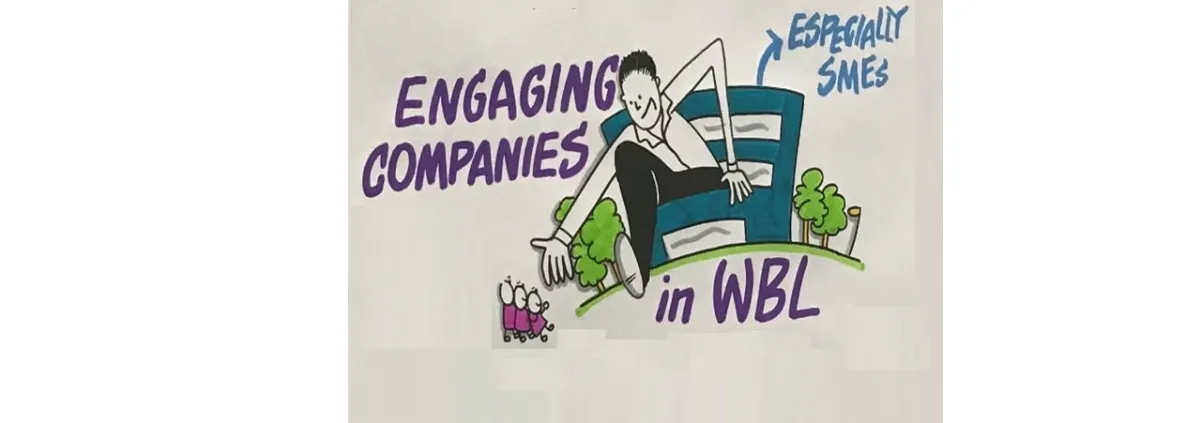
Eastern Partnership countries are spreading dual education to smaller companies as laws and standards are introduced.
Broad progress is being made in widening access to work-based learning (WBL) for trainees at vocational education and training schools across the EU's Eastern Partnership countries, delegates at the final day of a regional conference on WBL in Lviv, Ukraine, heard recently. Legal frameworks or strategic actions across countries that include Armenia, Azerbaijan, Belarus, Georgia, Moldova and Ukraine are being introduced to embed concepts and pilot projects where learners learn both at college and in the workplace.
Progress and challenges
Armenia is in the early days of introducing WBL, with the adoption in June 2019 by its national council of VET development of a policy framework for its development within the country's VET system, but has already formulated a roadmap of activities through 2025 to support this.
These include investigating if incentives could help to motivate employers to sign up for dual education and the introduction, last September, of two regional pilots in the dairy industry to train veterinary specialists and milk technologists.
There are challenges: employers are "not very open [to WBL] and do not see the benefits of having learners at their companies, though we hope these pilots - and government incentives - will help address that," Lilit Hovhannisyan of NGO Strategic Development Agency, said.
Azerbaijan has also adopted a strategic roadmap for VET and - after a quarter of century of neglect - is moving forwards to modernise its skills training by coupling it with WBL. It is prioritising integrating SMEs into VET and currently developing qualifications and specialisations in agriculture, an under developed sector that accounts for 36% of employment in the oil-rich country.
Georgia has been piloting WBL schemes since 2015 - and has introduced sector engagement pilots (agriculture is to be launched in December) and, since 2016, an innovative "work shadowing" programme that allows VET and general school students to familiarise themselves with different trades over short 50 hour/two month courses.
In Moldova, a focus on promotion has inspired a public campaign to advertise the benefits of "learn, work, earn!"
SWOT benefits
Ukraine, , is now extending dual education beyond traditional big business and public sector employers, as are Belarus and, conference guest, Kazakhstan, where a 40/60 split between school and workplace learning is now becoming the norm for WBL.
Mihaela Daciana, of Romania's University of Medicine, Pharmacy Science and Technology of Targu Mures, and Silviu Piros of the Vrije Universiteit, Brussels, teased out a SWOT (Strengths, Weaknesses, Opportunities and Threats) analysis to offer guidance to participants for the way ahead.
Six key guiding areas were identified - focusing on the essential importance of getting the legal framework for WBL reforms right, ensuring trust and cooperation between stakeholders, offering incentives to bring employers on board, methods for retaining apprentices in whom so much has been invested, and what skills to focus on in a rapidly changing labour market.
Another positive tool in a presentation on the European Alliance for Apprenticeships was provided, which the ETF and EU's DG Employment will actively consider expanding to the EaP countries in the near future.
A really interesting overview of progress on WBL in EaP!
Please log in or sign up to comment.