

As I explained in a previous post, this year our school created a new space, the entrepreneurial classroom, in order to train and develop entrepreneurial skills in our students.
Last January, as part of the entrepreneurial activities, we hosted an exhibition on sustainable development goals at the school, to promote ethical and sustainable thinking in our community (EntreComp). This traveling exhibition was provided by Unicef, trying to raise awareness about SDGs.

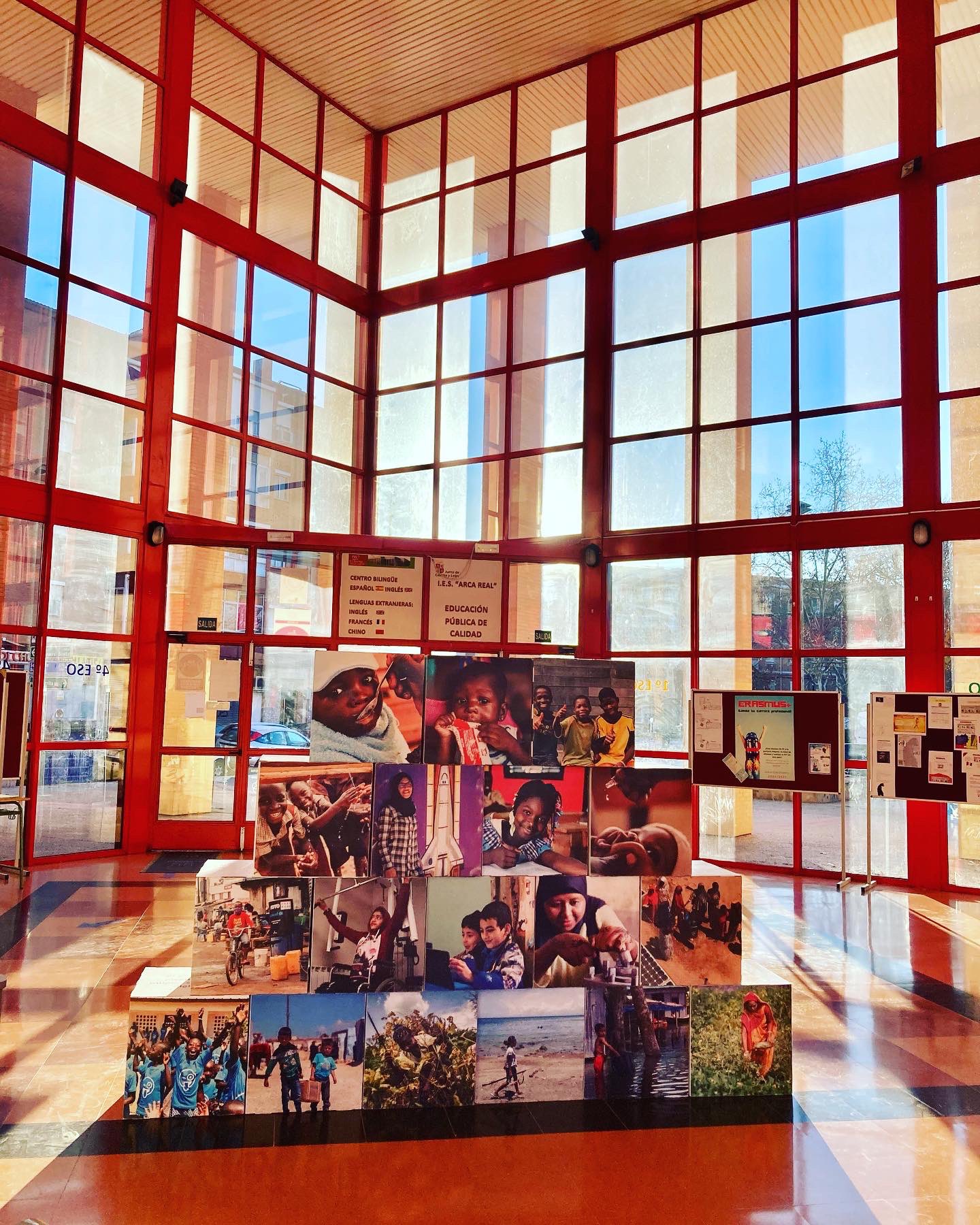
I challenged my first year students, as a social entrepreneurship activity, to think of ways of raising funds for Unicef to thank them. They worked in groups (work with other people) and suggested several courses of action (creativity, spotting opportunities), and together we valued those ideas in order to decide which were more feasible. And then the challenge was to go ahead and try to put them into action! (taking the initiative)
One of the ideas, was to turn the physical exhibition into a virtual exhibition that could be visited from anywhere in the world, and to add links to support Unicef. I asked another teacher in my department, to take part in the project, which was huge, and to create a landing page using WordPress for our virtual exhibition together with her students, since her students have to organise events, and this could be worked as part of her curricula (mobilising others). This is the landing page they created.
At the same time, my students used their phones, Google Street View, and ThingLink to transform the physical expo, into a virtual one. I even asked for a 360º camera as a Xmas gift, but I think Santa found it too expensive, so we had to settle with the phone and Google Street View for the 360º picture (mobilising resources). Fortunately my students are quite talented and managed to get a decent 360º picture that we could use, because I tried several times my self and couldn't take a proper pic. You can visit the virtual expo here
Initially we had thought to stop there, but we had a new 3D scanner that we needed to learn how to use. And ThingLink had just added a new 3D model feature that I was dying to try. I got one of my fellow teachers then, to teach us how to use the 3D scanner (mobilising others). It took me almost a month to learn to use the 3D scanner and be able to scan the SDG cubes, which it seems are one of the hardest things to scan, since the scanner prefers irregularities... but I finally managed, and taught some students to use it, as well, until we managed to scan the 17 SDG cubes (learn through experience, motivation and perseverance). It is not perfect, since the 3D models take about 15 seconds to load (they are big files) but it works.
Then we had an Etwining project, SustainABLE, which we had been working on since the beginning of the year, together with 3 other schools: two from Spain, and one from Portugal. So we thought, why not get them to take part in this project as well. We had been designing infographics about different SDGs to raise awareness in our schools, so we decided to put these infographics on the virtual expo, and add more videos, info, etc. We used different tools such as Canva, Genial.ly,...
The expo we had hosted was in Spanish, but we wanted it to be more international, so we decided to use a plugin to translate the landing page of our virtual exhibition, and add more info in English to it, so that anyone from anywhere in the world would find it interesting. We then enrolled our English teacher in our project, as well, to create some games using Genial.ly, which were added to the virtual expo. (mobilising others, work with other people) They are still working on it.
But then, oh then! After so much hard work, when we are ready to publish our virtual exhibition... we learned that you have to pay to use this 3D model feature by ThingLink if you want other people to watch it. An amount of money that we could not afford (financial and economic literacy, coping with risk and uncertainty). And unless we paid, we wouldn't be able publish our virtual expo and get people from outside our organisation to see the 3D cubes. I then talked to ThingLink about our project, and fortunately managed to get them on board as well (mobilising resources, mobilising others), since they allowed us to use the feature for free for this educational project (and I am most grateful to them!).
Then, the war in Ukraine started and we decided to place many buttons throughout our virtual exhibition asking people to donate through Unicef. We also organised a bake sale. The students themselves designed the logo, the posters, social media promos, and even named the cookies OREO'ODS, which I find brilliant! I just taught them how to make the cookies (chocolate covered mini OreoTM), and provided the ingredients and molds. They have made about 1.000 cookies so far. You can order the cookies from the virtual expo webpage (we do not send abroad, sorry! The cookies have to be picked up at school).
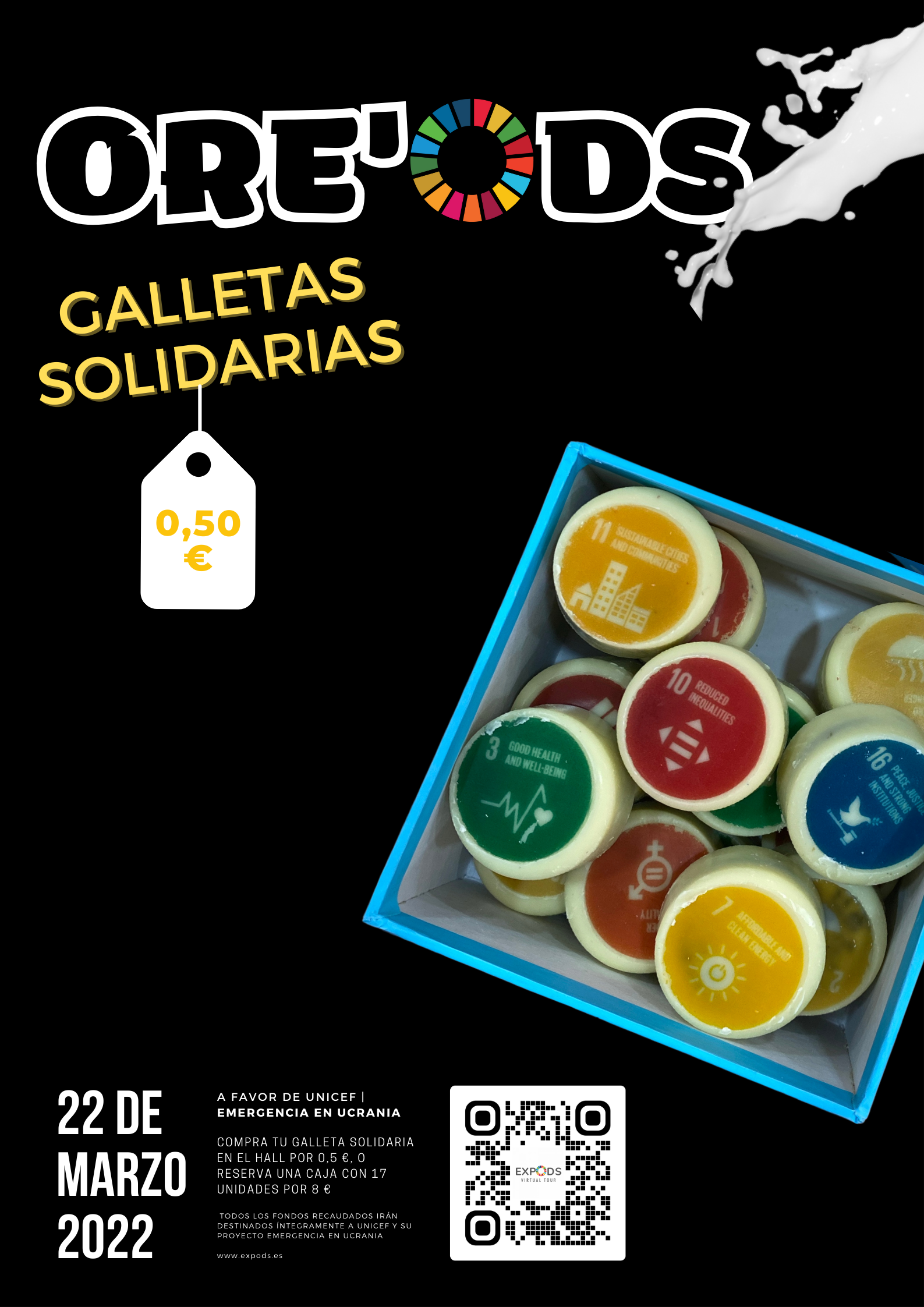
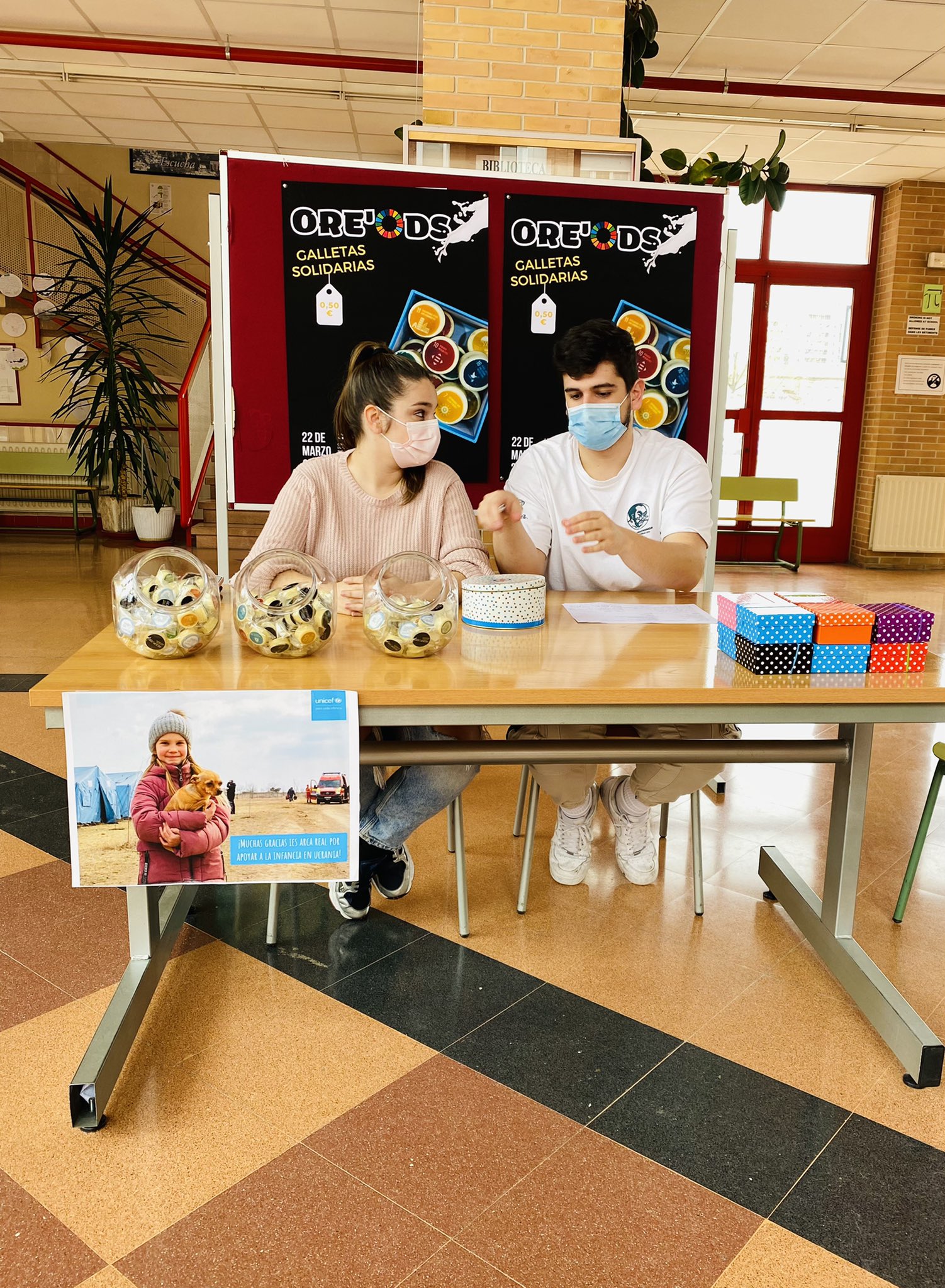
To sum up, with this social entrepreneurship project, our students (and myself!) have developed their entrepreneurial skills, their ethical and sustainable thinking, and their digital competence. At the same time, we are raising funds for Ukraine through Unicef and its Emergency in Ukraine campaign. And we have raised awareness about SDGs in our school, and in our society. We hope to reach millions of people, to inspire them to initiate a change in their lives, because the first step to achieving SD goals is to know about them.
To go to the landing page of the exhibition, click here, or scan this QR
To go directly to the virtual exhibition, click here Remember that if you have AR glasses you can use them for an immersive experience.
Thank you Sandra for sharing this very interesting initiative!
Please log in or sign up to comment.