
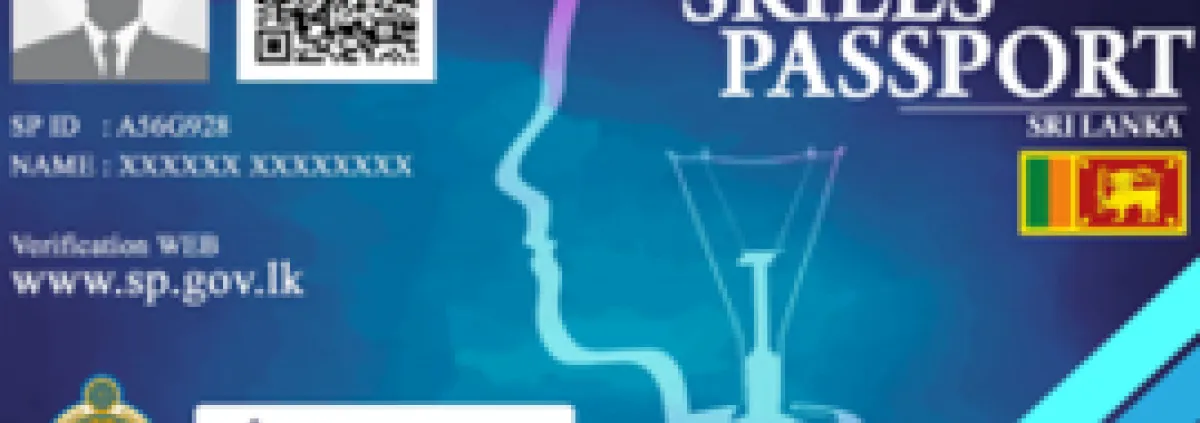
The SKILLS PASSPORT is a comprehensive portfolio of skills and qualifications of a worker, acquired informally, along with references. This enables both employers and workers of Sri Lanka to compare the skills with various skills assessment frameworks. It is essentially a "gateway" to finding a job and accessing further training for re-skilling and up-skilling.
This system of documentation will ensure the skills, expertise and experience of a worker is recorded in a methodical manner, both within and across sectors.
The SKILLS PASSPORT can be linked with a Recognition of Prior Learning (RPL) platform, that helps recognize informally acquired knowledge, skills and competencies through formal assessments and certifications.
The successful reintegration of migrant workers once they return to Sri Lanka relies on the workers providing evidence of their expertise and experience acquired overseas. Furthermore, a worker's ability to secure employment is linked with their skills and competencies. Presenting proof of expertise and experience acquired can be difficult for low and semi-skilled returnee migrant workers and workers in Sri Lanka. Although Sri Lanka has an established national skills assessment system, there is no systematic method of recognizing the skills of workers. As a result, such workers lose out on opportunities for obtaining employment in Sr Lanka with an attractive pay and decent work conditions, including the potential for upwards mobility.
In light of the above, the Tertiary and Vocational Educational Commission (TVEC) of the Ministry of Skills Development, Employment and Labour Relations, together with The Employers' Federation of Ceylon (EFC) and the International Labour Organization (ILO) introduced the Skills Passport, having identified the need for a fortified skills recognition system to assist returnee migrant workers and workers in Sri Lanka become more visible to potential employers in Sri Lanka.
The Skills Passport is a common platform through which a migrant worker's or a worker's in Sri Lanka, compatibility with a vacancy can be assessed together with the detailed history of the worker's core competencies and employment history. The worker can acquire exemptions from courses or modules already completed.
This platform was very recently introduced and still there are no much people registered to get Skills Passport. Minimum requirement is completing the NVQ (National Vocational Qualification in Sri Lanka) level 4 and minimum one year experience in industry. Those who have this requirements can apply skills passport. Yes, The Employers' Federation of Ceylon (EFC) also working with us to promote this concept to industry.