
Back to main finalists page
An inclusive, play-based STEM practice giving children of all abilities and backgrounds the tools and confidence to explore, create and find a sense of belonging.
What does it take for a child to feel included? For Farah Zeedia, the answer has always been the same: a space free from judgement where imagination and creativity can run free. A Palestinian educator who developed her practice in Gaza before displacement brought her to Germany, Farah has spent her career proving that STEM education does not require expensive equipment - just shared challenges, curiosity and an open mind.
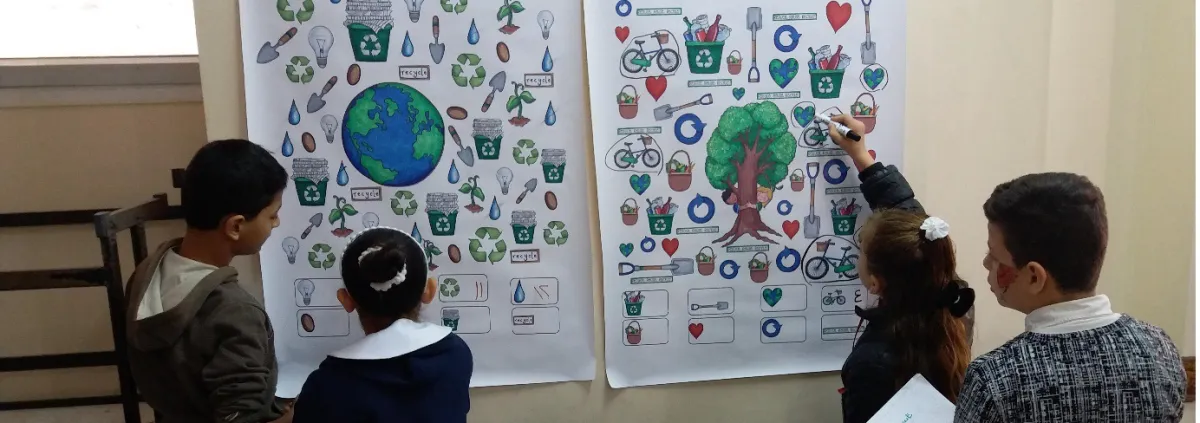
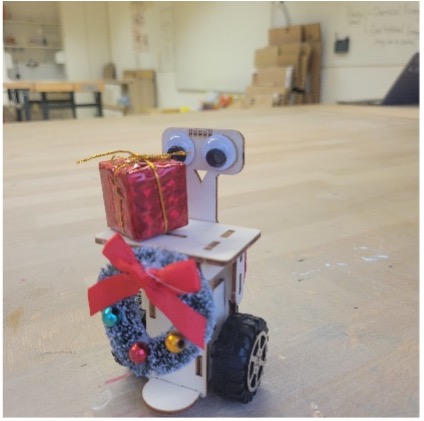
Her approach brings together hands-on engineering, storytelling and life skills to engage marginalised children and learners with diverse abilities in ways that traditional classrooms often don’t manage. In Germany, the Young Builders practice helps primary school children build robots from cardboard and recycled materials. In Gaza, as part of her Zacooch practice, she designed playful learning kits for children navigating conflict. In both settings, children develop problem-solving, creative thinking and teamwork skills that extend well beyond the activity itself. The results are the same too: disengaged children become curious and children who felt invisible begin to find their voices.
“I didn’t know I could be an engineer with just cardboard and my imagination. Now I feel like I can build anything.” Sara, primary school student, Germany.

Read on to find out why this initiative was selected as one of the nine finalists of the New Learning Award 2026.
The project
Farah’s practice grew from direct personal experience. As a teacher in Gaza, she saw how rigid, under-resourced systems consistently failed children who learned differently – those with disabilities, those displaced by conflict, girls with limited access to opportunities. When war forced her to leave Gaza and start again in Germany, she felt that exclusion herself.
In Germany, she launched Young Builders, an inclusive STEM programme for primary school children using low-cost, often recycled materials to teach engineering, problem-solving and teamwork. Students work in diverse groups, building robots from cardboard, solving narrative-driven challenges, and experimenting and trying again. Every activity is designed so that children with different abilities can participate fully and at their own pace, with Farah acting as a guide and fostering a classroom environment where difference is an asset and not an obstacle.
Before her displacement, Farah had already launched Zacooch in Gaza, a play-based STEM initiative that reached children through NGO’s and community centres, using storytelling and simple engineering kits to nurture creativity and resilience in some of the most difficult conditions. The war paused that work, but the same spirit lives on in every classroom she teaches today.
What makes this practice stand out
The ETF and its partners have selected this initiative as one of the nine finalists for the New Learning Award 2026. Here is why this learning practice stands out:
- Inclusion by design, not an afterthought: Every activity is devised so that all learners can participate, contribute and succeed together. So far, the practice has reached more than 50 students with diverse abilities and the impact on engagement has been striking
- Leading by example: Farah’s own experience of displacement and exclusion ensure the classrooms have a quality of openess and acceptance
- Contextualised learning: Rooted in low-cost materials and human connection rather than equipment and infrastructure, learning is never abstract but always grounded in the world the child already knows.
- A model ready to expand: This practice was born from a unique personal journey, but the core methodology – inclusive play-based STEM built on problem-solving and life skills – is replicable. With the right partnerships, the practice has the potential to reach many more schools and communities across Europe and beyond
“Staff have observed a significant transformation in classroom engagement. Farah’s practice fosters genuine inclusion and collaboration, proving that hands-on STEM effectively bridges social gaps between all students.”Administration team, International school, Germany
The future
This practice is the result of one teacher’s extraordinary journey, but its continuation belongs to everyone. Farah’s ambition is to relaunch Zacooch and scale it, building partnerships with schools, NGO’s and educational organisers to bring inclusive, play-based STEM to more children across Europe and beyond. Alongside this, she is pursuing research into storytelling as a tool for inclusion, work that will help others adapt the Young Builders methodology for their own contexts. The goal is clear: to take what began in one classroom and turn it into a framework that any educator, anywhere, can make their own.
VOTE FOR THIS PROJECT!
Your vote counts! Cast your vote for Young Builders as an inspirational new learning practice.
- Back to: ETF New Learning Award 2026
ETF in partnership with

Please log in or sign up to comment.