
What do we need to do to close the digital skills gap in Europe?
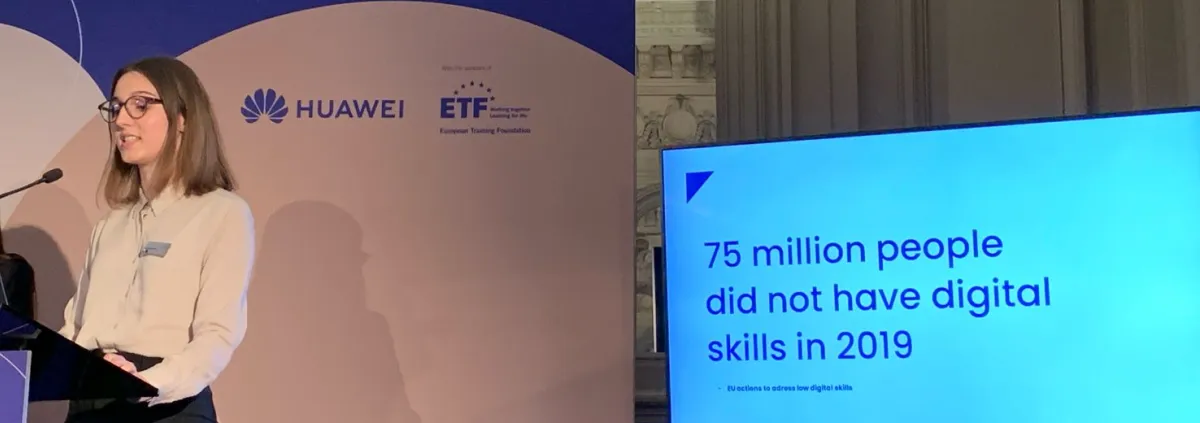
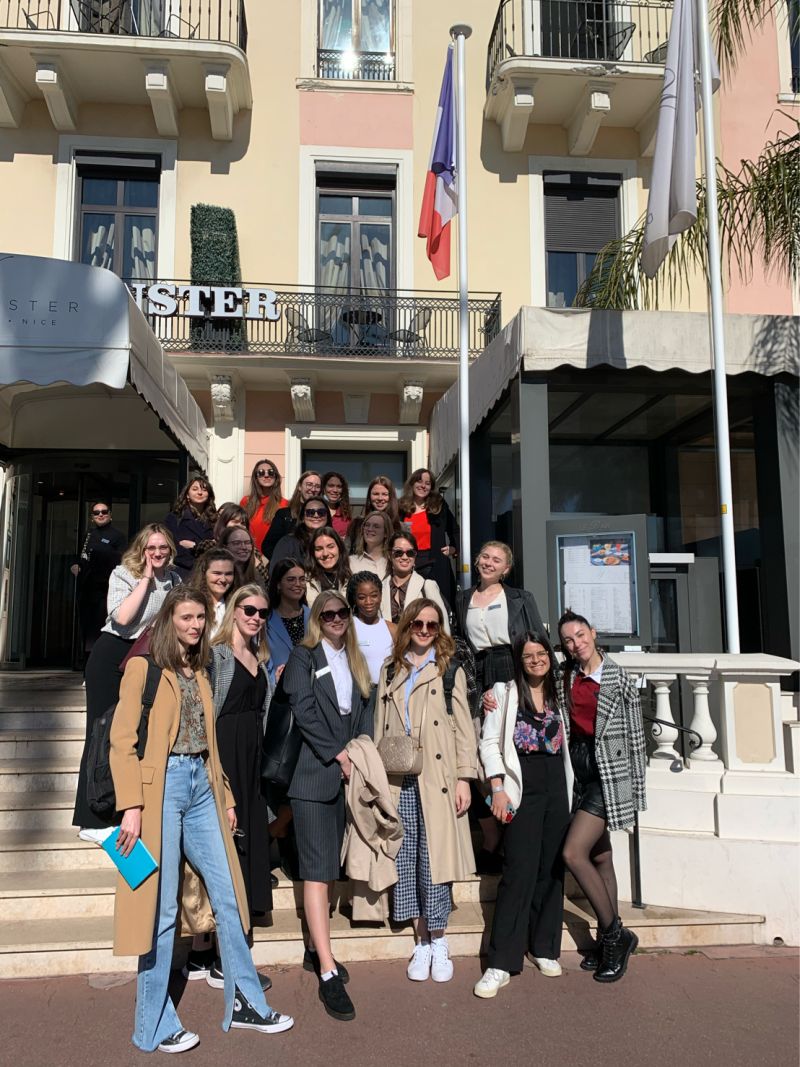
28 young females came up with proposals during the Winter School for female leadership in the digital age.

An initiative from the private sector
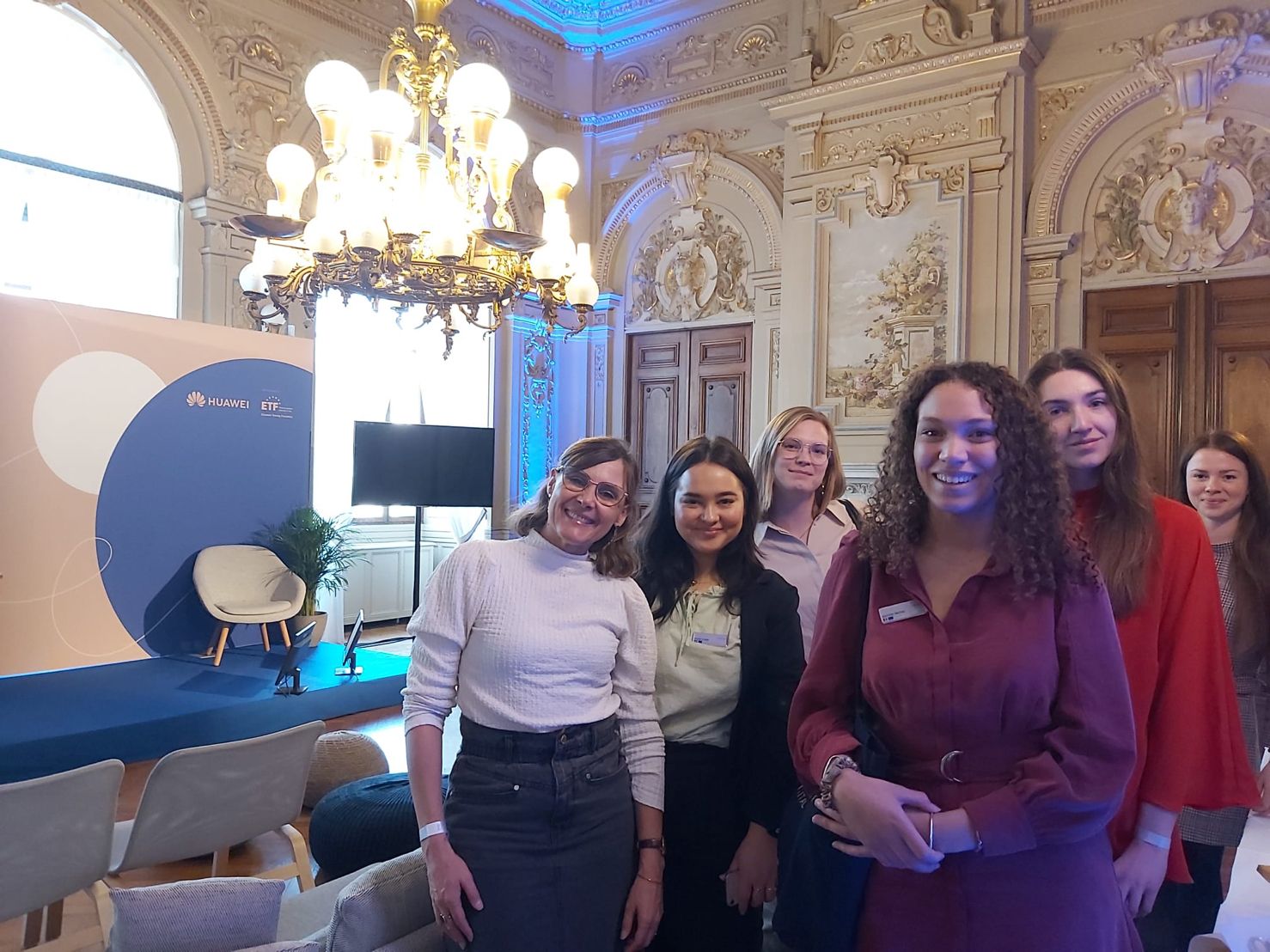
The Winter school for young female leaders, organised by Huawei Europe took place in Nice from 21st until 25th of February 2022 and is a good example of how the private sector can play a key role in helping young females to develop their leadership and digital skills in today’s world.
A wide range of workshops and panel discussions with high level experts took place to debate about female leadership, women in tech, coding, public speaking, cyber security, inclusion, diversity and a lot more.
The ETF is a strategic partner in this initiative. We selected the participant from the Western Balkan countries. Out of more than 300 applications received from the Western Balkan, Dženana Selimović from the University of Sarajevo, Department of Automation and Electronics was the lucky one.
Other 27 girls, one from each of the EU Member states, selected out of 2426 applications, were the happy few that took part in this unique experience. “During the week I learned a lot, not only about the topics we covered, but also about myself. I was outside my comfort zone numerous times and each time I made it through stronger, more confident, and more determined than before. The amount of support I received from the other participants was unbelievable. Despite different backgrounds we brought up the best in each others” said Lida Ahola, young female leader from Finland.
European Year of the Youth
This initiative fully fits within the European Year of the Youth. European policy makers and President Von der Leyen have stressed several times the importance of hearing the voice of young people and the need to involve youth into policy making processes.
This is what we, ETF did during this winter school. Myself, Kristien Van den Eynde supported the girls in drafting policy briefs on digital skills development in Europe. The girls had to identify solutions to the many challenges young people, and especially girls are facing in the digital age. Below you can read more about the content of the four policy briefs.
Special attention to gender equality and inclusion
“Women's leadership is not only key to ensuring a more equal and inclusive digital transition. Women's leadership is essential to continue building a world where empathy, kindness and generosity are the norm, rather than the exception” says Berta Herrero Estalayo, Huawei Europe, Senior Manager, EU Public Affairs leading on Equality, Diversity and Inclusion.
The Commission’s 2021 Women in Digital Scoreboard confirms that there is still, even within the European Union, gender gap in specialist digital skills. In the EU, only 19% of ICT and about one third of STEM graduates are female. There is no progress, as these figures have been stable over the last few years. The Digital Compass has set the target that the EU should have 20 million employed ICT specialists, with convergence between women and men, by 2030.
Challenges about digital skills seen through the eyes of young female leaders: the policy briefs
In a nutshell, these are the messages that the young females leaders will bring forward to EU policy makers at the European Commission or the European Parliament. The winning team will still need to further develop and finetune the policy brief before presenting them “in real” to the policy makers.
- “The mental health and well-being of the European Youth in the Digital Age”
Starting with the winning team, they addressed the problem of mental health and well-being.
The purpose of their policy brief is to shed light on the problem of mental health and well-being in the digital age and the role of education in training of young people on how they can protect themselves.
There are many negative sites of digitalisation such as cyber-bullying, extensive use of the internet, safety issues such as phishing or pretexting attacks. Also, with Artificial Intelligence (AI) and automation increasingly developing, it is hard for young people to distinguish with is real and what not.
What are proposed key recommendations?
- Implementing a training program on the EU digital training website
- Carry out a stakeholder dialogue and study to find out what content needs to be developed to improve the mental health and wellbeing related to digital skill
- Include mental health measures in the EU Digital Education Action Plan
- Create common guidelines for teachers and educators on mental health and wellbeing for students in the digital age

- “AI-labels for a Safer Digital World: bringing synthetic media awareness to all generations”
This team focused on making the digital world safe for all generations by eliminating deepfakes that can result in misleading information, and destruction of credibility of online content.
Deepfakes use AI algorithms to create realistic simulations of a person’s face, voice or body. It is a form of synthetic media and it can make someone saying something that he or she never said in real.
There is a need for an AI label regulation, interacting with the upcoming AI Act as well as other EU legislation on copyright protection, GDPR, liability of digital platforms etc.
What do they propose?
To create an AI label, such as the EU Ecolabel to will certify safe digital content.
- “Education on digital skills by the youth for the youth”
This team stated the problem of lack of digital skills in Europe and the fact that the formal education is failing to address the digital skills gap.
What is their proposal or recommendation?
To involve young people in the non-formal education reform by setting up a European Digital Youth Council to enable the conservation between students, policy makers, partners from the technology industry, app developers and gamification experts.
They see high potential in using gamification in education and their idea is to develop a location-based media game, called Teender (comparable with Pokemon Go) that provides tailored technology education for each EU country. The game would allow students to receive digital education that is in line with the regional and cultural differences in each of the Member States.

- “Creating an up-skilling programme for civil servants”
Last but not least, this team brought to the attention the digital skills gap in European public administrations.
The adoption of digital skills in the public sector is very important in order to provide customer-centric and digital public services, such as e-government.
What do they advise?
To set up an EU wide up-skilling programme, specifically designed for civil servants in basic digital competencies. Each member state will implement the programme at national level within the framework of the successful campaign “e-Skills for Jobs”. They recommend to use existing e-learning material such as the School of Governance and Technology (School of Government & Technology | SGT (govtechschool.de)

The ETF will follow up with the winning team to make sure that they can present the policy recommendations to the relevant EU policy makers.
To be continued ….
Do you want to have a glance of the atmosphere of the Winter School, have a look at this short film:
Some useful resources on digital skills development in Europe and initiatives targeted to females
Background EU documents
Digital Education Action Plan (2021-2027)
Europe’s Digital Decade: digital targets for 2030 | European Commission (europa.eu)
Gender equality strategy | European Commission (europa.eu)
Some EU Initiatives
European Commission’s Women in Digital Scoreboard 2021 - Digital Watch Observatory
Home | Gender4Stem (gender4stem-project.eu)
EU Prize for Women Innovators (europa.eu)
The European Centre for Women and Technology (ECWT) | GenPORT (genderportal.eu)
Homepage - Digital Education Hub
Please log in or sign up to comment.