
Blog post written by Bill Hinchberger
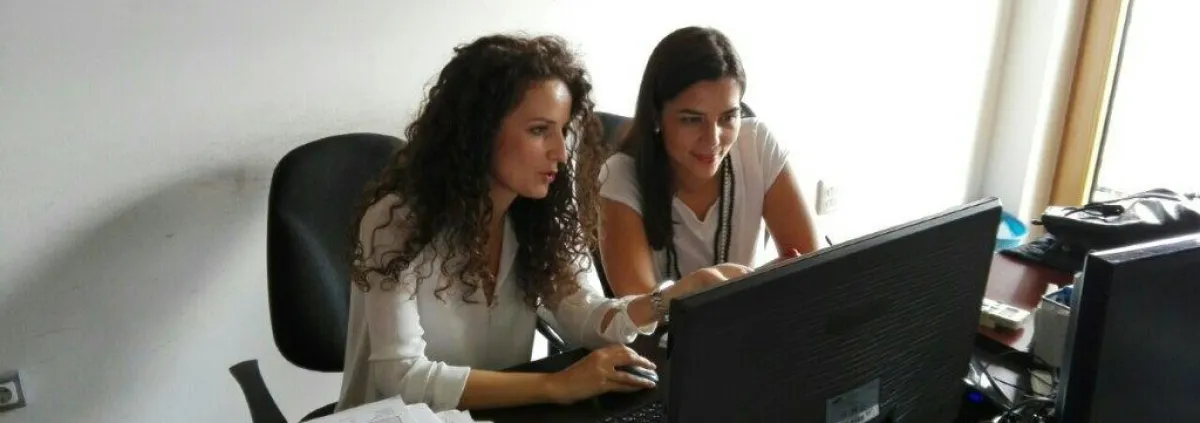
Given the trend toward online and blended learning in the COVID-19 era, teachers and trainers have been compelled to improve their digital skills. Many have done so, but not all. “When we look at the evidence about how well teachers have coped with the lockdown, it's difficult to be quite clear, but I think generally, perhaps the 50% of them have developed the capacity to teach online,” said Julian Stanley, VET teaching and learning specialist with the ETF. “It varies from country to country, obviously, and from school to school.”
Many outstanding examples of rapid-fire adaption and innovation can be cited, but to invest in teacher professional development efficiently, policymakers, training providers and practitioners need a better picture of the current state of affairs. This need is addressed by a project to pilot a tool that will support the self-assessment of digital competences of teachers and an analysis of training needs in South Eastern Europe that was recently launched during an online conference. The survey of individual teachers will help provide data that can be analysed regionally, nationally and in schools to identify training needs and help teachers get the training they need. The entire process, including the release of final reports, is expected to be completed by the end of the year.
The European Training Foundation (ETF) is leading the pilot in partnership with the Education Reform Initiative of South Eastern Europe’s Teacher Education and Training Network (ERI-SEE), the European Union's Joint Research Centre (JRC) and five countries: Albania, Montenegro, Moldova, North Macedonia and Serbia. Joining international experts, officials from all of those countries took part in the kickoff conference, which included a slot for national breakout groups to analyze relevant local issues.
“I think it is really amazing what the teachers did during the first wave of COVID-19,” said Tina Saric, Director of ERI-SEE. “Now they deserve more systematic support. This research will give us more insight into what the current situation is, what is needed and how we can deliver.”
The JRC has already been working to measure digital competency among educators, developing a European Digital Competence Framework for Educators (DigCompEdu) and a related tool called Check In, said Georgios Kapsalis, Research Fellow at JRC. The pilot project will build on these efforts. Kapsalis highlighted three key questions: (1) do educators have all the digital tools they need? (2) are they aware of their levels of digital competence? and (3) do they make use digital tools as an integral part of their teaching methods?
About 400-500 teachers from each country will complete the self-assessments. Each will receive individual feedback and suggestions on how to improve. “Self-reflection and self-evaluation are very good ways to understand the specific needs of the school and the teacher,” said Alessandro Brolpito, specialist in digital skills and learning at the ETF.
Individual responses will be aggregated to permit analysis that can inform policy making. “The study will give us an overview of the situation on the national and regional levels; it will give us a comparative analysis,” said Saric. This will help encourage cross-border cooperation, the adoption of regional best practices, and more sharing of expertise. That will help “to save financial and human resources and shorten the trial and error period.”
The survey will provide an indication of over-all teacher digital competence – and a sense of how many teachers are at what level, said Margarida Lucas, lead expert for the project. It will also help identify “the gaps in terms of areas of competence and professional development needs.”
There are very critical findings on this blog. Thank you!
Great to hear that Selcuk. We need teachers like yourself to reflect and act on the findings. Best regards Lida
It will be fascinating to see the outcomes of this work, Erika, thanks for an important and insightful blog.
Thank you, Lynne! We will keep up you updated on the progress and results of the pilot!
Please log in or sign up to comment.