
Post added by Kersti Raudsepp
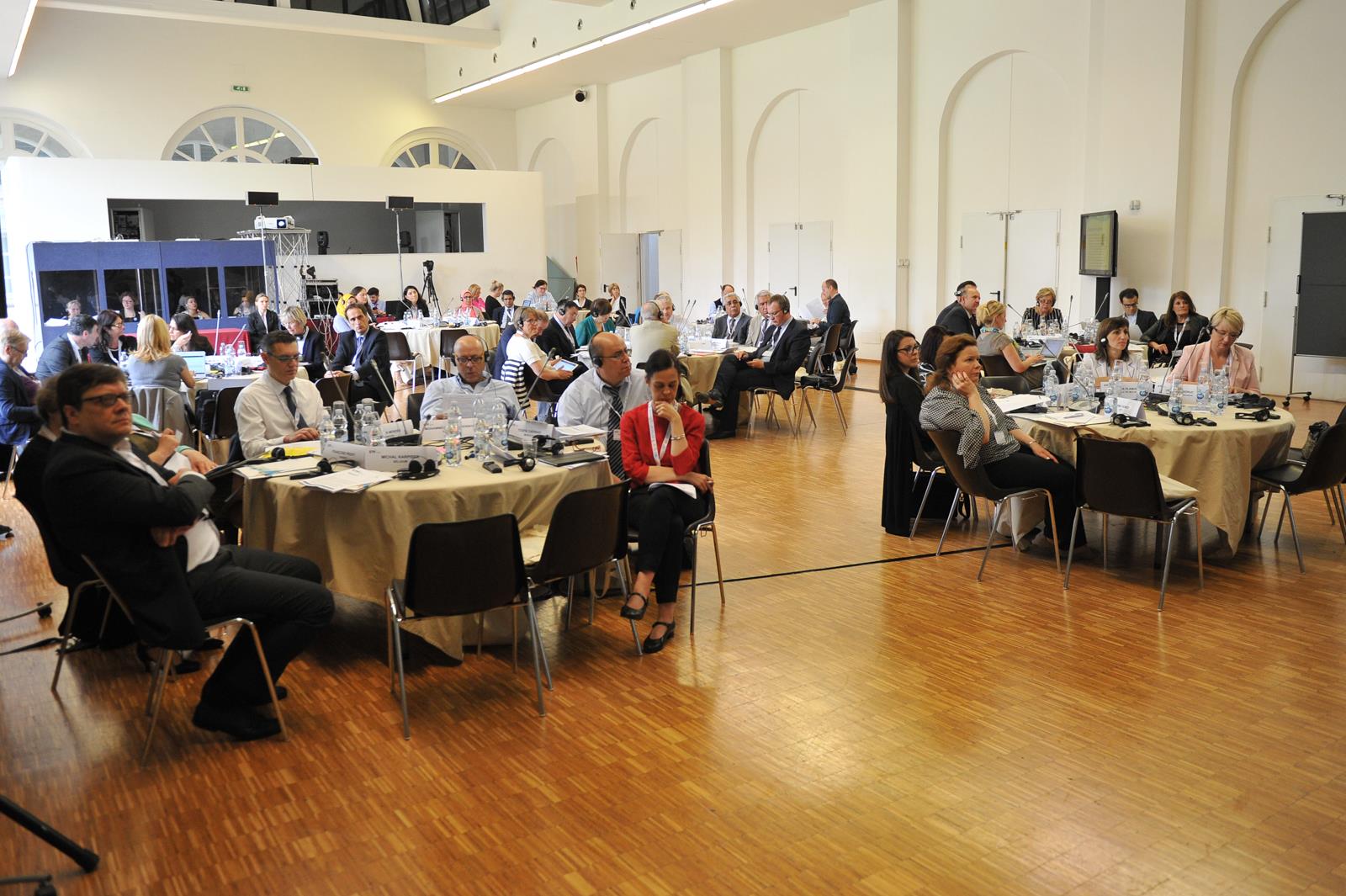
Last week, as a new addition to European Training Foundation (ETF) staff as a seconded national expert I was privileged to take part in the “Shaping Level 5” conference in Turin, hosted by ETF and Council of Europe. The conference explored ways to shape actions and programmes to support Level 5 qualifications in ETF partner countries. Level 5 includes many types of qualifications both in vocational education and training (VET) and higher education (HE), with different providers and learning paths. Though these qualifications are in demand by employers and job changers, young people and adults alike, they are often absent from national qualification frameworks (NQFs).
One and half days, filled with discussions, panels, workshops and exchanges in the margins challenged the status quo and broadened horizons. It was exciting to rejoice with countries that showcased their best practices, and at times provide a listening ear to the others who were looking for ways to revamp their qualifications at that level. Though there are numerous other conclusions that can be drawn from the meeting, the following is a reflection of what I took from this experience.
Level 5 qualifications would benefit greatly from dismantling the barriers that have been built into NQFs. The boundary between VET and higher education is artificial in the Lifelong learning perspective, accentuated further by different credit systems (ECTS vs ECVET), different levels (VET vs HE) and progression opportunities. For Level 5 programmes to be successful, radical rethinking is necessary. Cosmetic changes, as Stephen Adam from the Council of Europe pointed out, are not enough. Neither is relabelling the old post-secondary qualifications. Specific new Level 5 descriptors are essential. New integrated qualifications are to be created jointly to respond to specific labour market needs. These new qualifications have to be fit for purpose. Cooperation among different stakeholders, including VET and higher education, is crucial, together with willingness to be inclusive and radically rethink the issues.
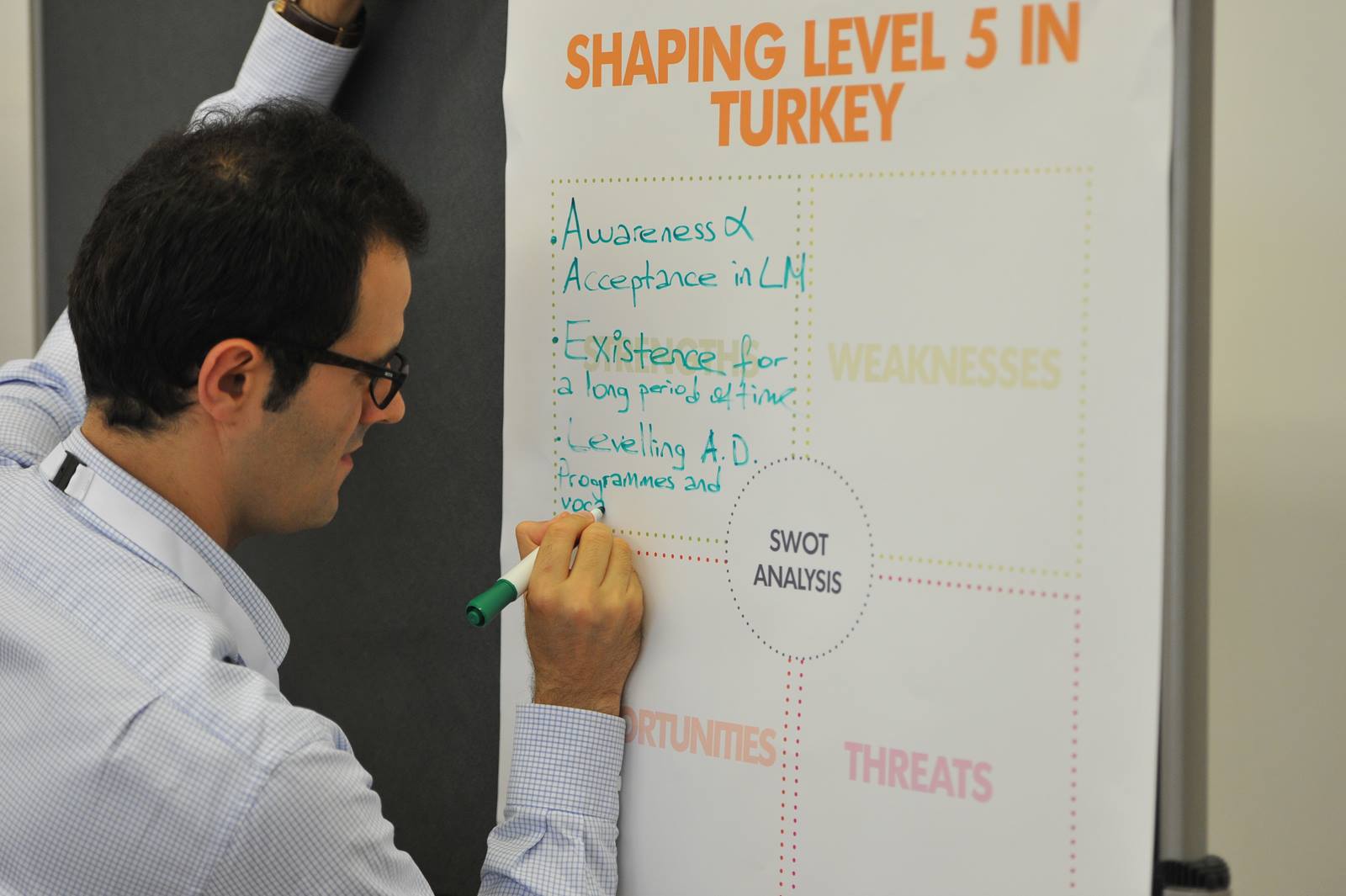
Work-based learning (WBL), otherwise an umbrella term for different work related activities, is a hallmark of successful Level 5 programmes. In Turkey, students’ placement in companies serves as an important interface between the school and the labour market. Employers get feedback on the quality of programmes through the work quality of trainees. If shortcomings are identified, employers make suggestions to update the programmes, thus making sure training stays relevant in the labour market context. WBL presence in programmes also helps employability, which should be the main goal of all professional education. Career guidance to help parents and students understand the benefits of programmes with good labour market outcomes is crucial.
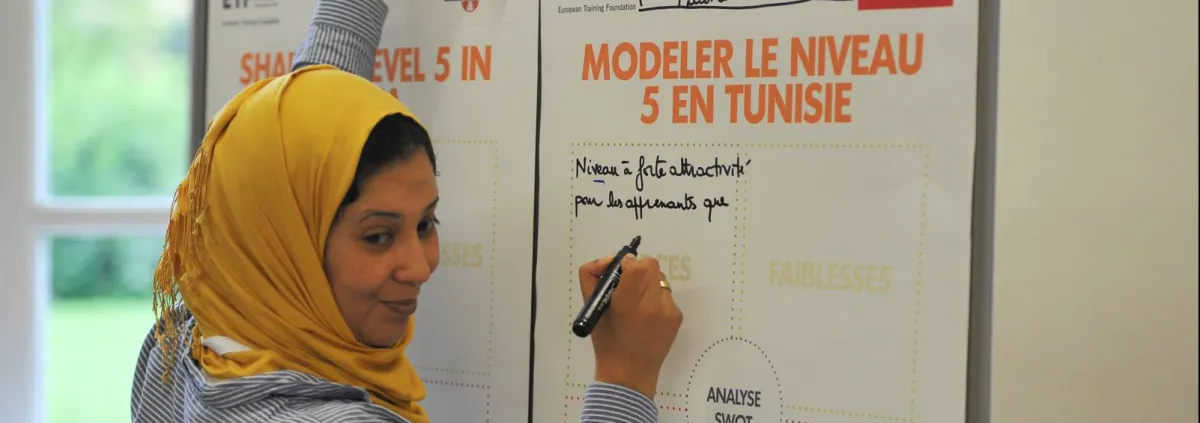
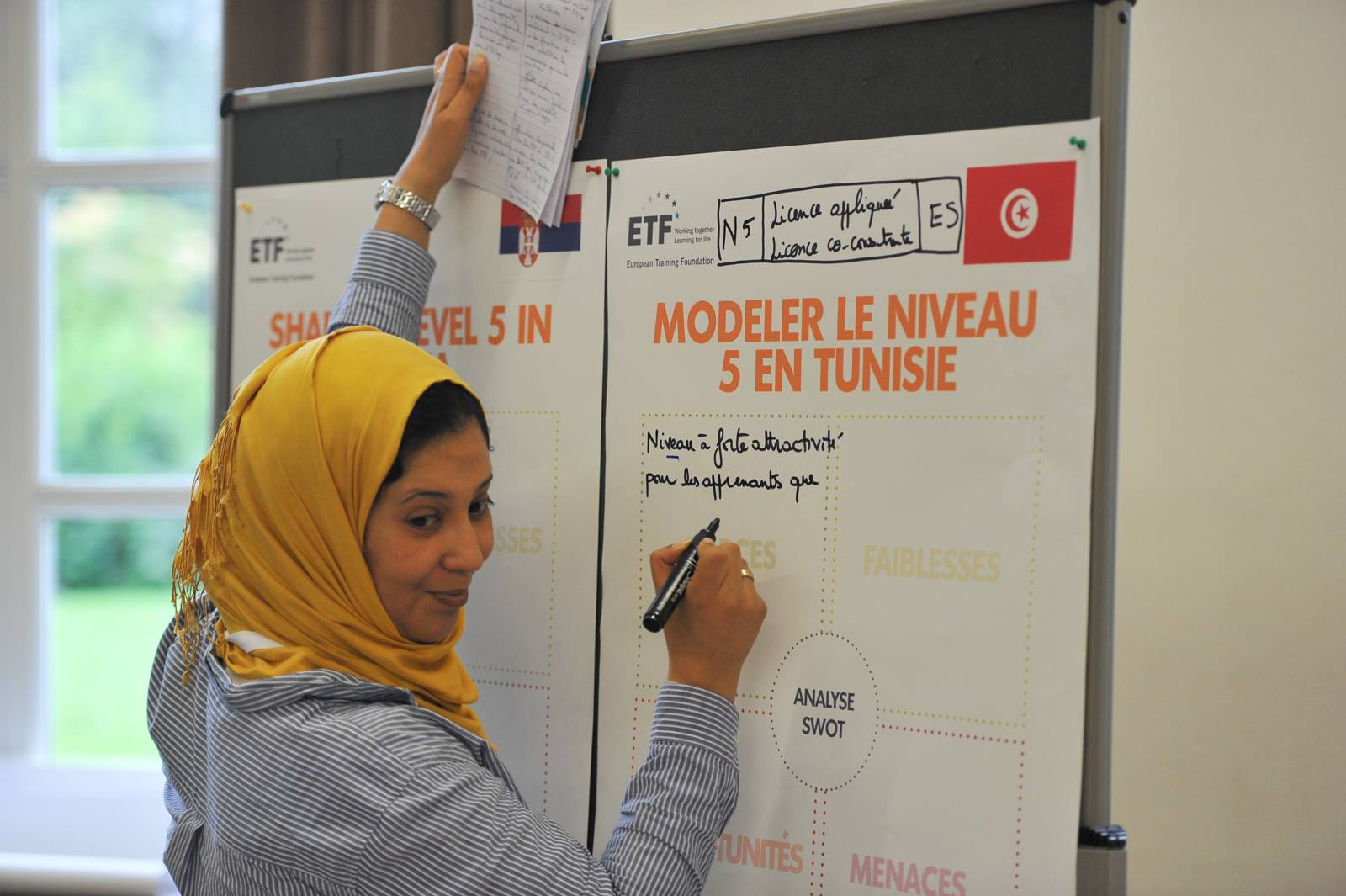
During the conference, concerns were voiced that although a lot has been happening on paper, implementation has lagged behind. Looking at the SWOT analyses prepared by 13 countries during the conference, it is obvious that countries expect more from increased actions at policy level—better integration between VET and HE, better collaboration between relevant stakeholders and countries, quality assurance, even actions at EU level. Though these are all very important aspects on the way forward, the true agents of change are the teachers who have the capacity to bring policy initiatives to learners. Apart from countries with longstanding traditions of learning outcome approach (Tunisia and Morocco) and their extensive work on related teacher training, this aspect is largely missing in the countries’ SWOT analyses. Only three other countries identified issues related to teachers, be it their inertia to change (Belarus), inadequate involvement in professional training (Moldova) or lack of pedagogical and andragogical guides and instructions and teacher professional development (Kosovo). As we know, identifying issues is the first step before any change can happen. In addition, Albania proposed actions in this area, stating the need for capacity building for policy makers and teaching staff.
Looking back at my native country Estonia, teacher training has always been an important component in VET reforms. The new approach to teaching, be it learning outcomes or teaching adult learners, has to do with paradigm shifts and changing teachers’ mindsets, and these are always challenging tasks. Long time, deliberate, concentrated efforts were needed to get results, which in their turn influenced the innovation culture and development of schools. VET teachers’ professional development has long been written in the VET law as a responsibility of the school. In addition, the teacher has a responsibility to engage in self-development. The State through the centralised education agency (Foundation Innove) coordinates VET teachers’ formal and continuing education. Methodological materials have been created. Practical seminars have been held on different subjects like the new approach to learning, writing learning outcomes or formative assessment. Schools had to send teams to these events so that the team with new skills and understanding could influence the everyday life at school more efficiently and coach colleagues. VET teachers networks according to their VET fields (for example, logistics teachers from all the schools) have been a valued opportunity for teachers’ non-formal training. At present, Foundation Innove provides coaching for school curriculum development, empowering the teams at schools to design the best possible provision according to centrally agreed principles.
Shaping Level 5 through teacher training was also one of the presentations in workshop 1, drawing on the example of Finland. Teachers need to be supported in their new roles, especially as educators of adult learners. Personalisation of adult learning is one key principle and prerequisite for the success of Level 5 learning and completion of qualifications, so that learners can take ownership of their studies. Also, teachers need skills on how to collaborate more with other people, especially with employers.
Please log in or sign up to comment.