
Over the last decade, active learning has become more and more popular and important in schools or other learning environments. Why is this? Well, active learning requires more involvement of the students. Instead of sitting and listening (or not) to a lecture, they must actively construct their new knowledge and skills. It requires students to be concentrated and more involved in the lesson. Therefore, creating a deeper learning experience.
But how do you do this? How do you get students more involved in your lessons? In my opinion, there are a few key elements that are important to support active learning:
- Allow students to interact with each other during learning. And don’t restrict this to just five minutes but throughout the entire learning process. Of course, it is important to make proper arrangements with your students. When the teacher has an important thing to say, the students should be actively listening. The important word is "actively" in the previous sentence. Always let your students repeat what you have said. And always appoint another student to repeat what you’ve just said. This will automatically trigger all students to actively listen to you. Because they know they might be appointed to repeat what you’ve just said. But as soon as the teacher’s lecture is over (and try to keep it as short as possible) allow students to work together and learn from each other. Interaction is allowed, and students should feel that it is allowed. The teacher’s class management should then be focussed on keeping the students interacting about their assignment.
- Make sure you have an engaging learning environment. If your classroom has only a small window, bad lighting, empty walls, and rows of desks with little place to move, doing active learning will be much harder. Some new paint, keeping the entrance door open, and rearranging the desks in the classroom might already create a new and inspiring atmosphere in the classroom. Even better if you can create a learning space where students can move around, stand up around a high table, or sit on a comfortable sofa to actively learn together. I cannot emphasize enough that the physical learning space is a key factor in active, or other forms of learning.
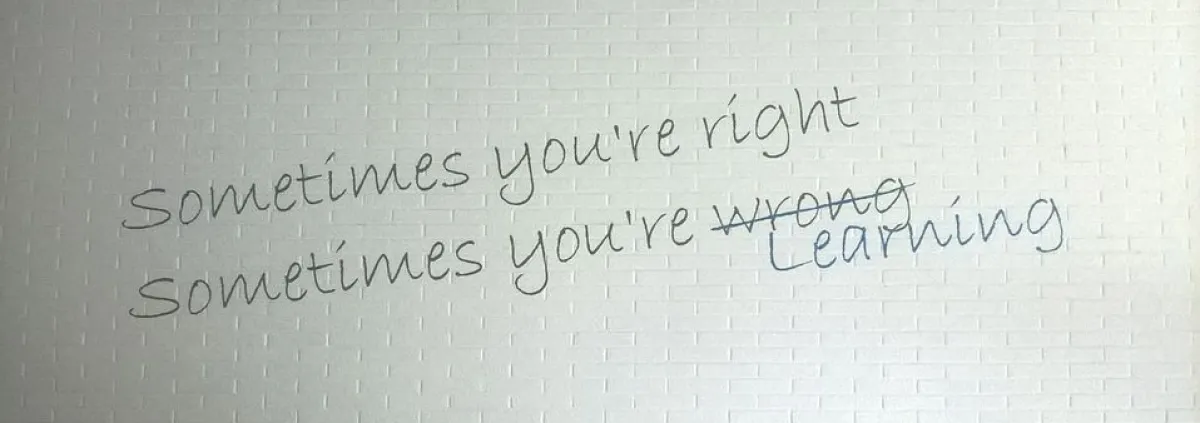
- Create an atmosphere in which students are allowed to fail. In order to really learn students, need to have the feeling that they can try new things. Or give answers they’re not sure of. But if this “learning behavior” is “rewarded” with bad marks. Students will stop trying and will just passively listen. There are never wrong answers in a learning process. Only learning moments. When the learning process ends in a final assessment, students must be able to give the right answers of course. (Even though this also can be a new learning moment)
Only if these key elements are reached teachers will be able to effectively implement active learning in their classroom. There are many active learning methods out there you can use. Some interesting ones can be found over here. Hopefully making the necessary changes in your practice and classroom. And implementing the methods that suit your needs will change the way you teach, and your students learn for the better.
Thank you, Ben! Excellent points that show simple ways of activating learners, which can be done in every setting by any teacher! A related webinar takes this topic further - please see the webinar recording, related blogs and videos here: https://openspace.etf.europa.eu/events/increasing-learner-activity-coll…
Thanks for this article. I really like you include the importance of an engaging learning environment. This can be done with little effort and resources and I am convinced it can make a big difference!
Thanks Ben - lots of great suggestions. I also found the teaching ideas of great practical value: https://fys-forums.eu/en/fys-toolkit/forum-curriculum/368-active-learni…
Please log in or sign up to comment.