
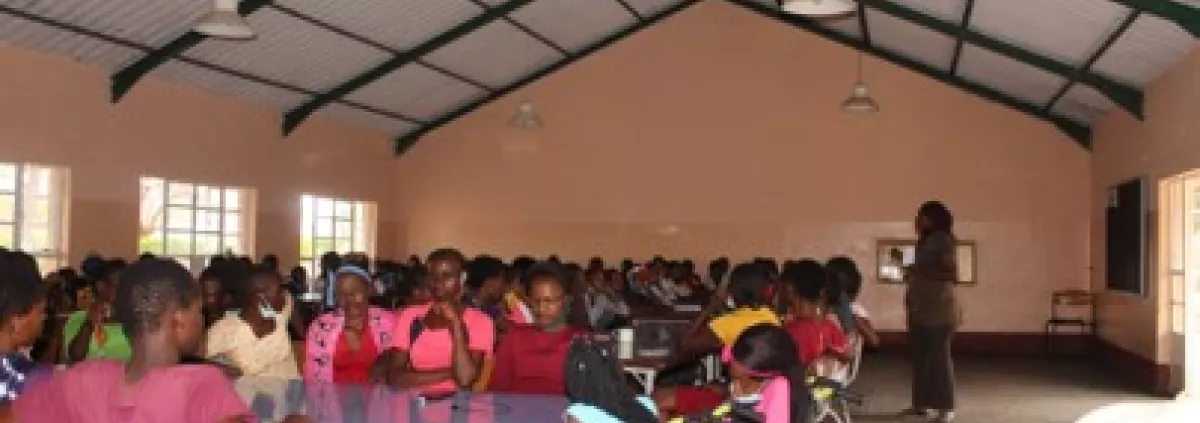
On July 1st 2022, the last virtual peer visit to a CoVE for the cycle of peer learning activities related to the ENE Sharing Innovation in Social Inclusion initiative took place. Host of the day has been DAPP Ponesai Vanhu Technical College, Zimbabwe.
The history of the college begins in 1981, right after Zimbabwe’s independence. It has so far been home to more than 5500 graduates through the years, and it currently offers both long courses (1-2 years) and brief courses (4-8 months, specifically targeted towards the inclusion of extremely vulnerable young women and people with disabilities), offering opportunities especially to the rural areas of the country.
For this centre, as well as for the featured Chaminuka Training Centre, inclusion is not only a cross-cutting issue, but a truly core value to its activities. Inclusion, both in terms of gender equality and needs linked to disabilities, is targeted with a holistic, systematic approach including the community at all levels both inside and outside the institute: from the learners to the trainers, from the local chiefs to the ministers of Zimbabwe and the international organisations. These steps are being taken by the centre since 2019 in the context of the TVET For All program, in collaboration with Leonard Cheshire Disability Zimbabwe, leader no-profit organisation for disability inclusion in the country, and with both the Belgian government and private entities in Zimbabwe.
The first step towards inclusion is, in fact, cultural. Fragile people have to be found by involving their families and the local chiefs, since they are often kept “hidden” by their communities. Vulnerable girls are often unable to attend school from an early age since they are married and have babies to tend to: in this case, they need to be addressed with daily counselling about the importance of professional training and of having a daily income. Rural youth, which is hard to reach for both geographical and social reasons, is targeted through outreach training programs. Then comes the need assessment and adaptation, as well as the constant monitoring of activities, granting a training offer which takes into account not only the job market needs, but also the learner’s needs and the necessity of training not only professionals, but complete and responsible community members.
The program resulted in a systemic adaptation of the centre in the profiles of:
- Infrastructural adaptation (ramps, adaptive entrances, toilets, and sanitation facilities, lowered windows…)
- Training materials and curricula adaptation (translation, braille textbooks, DVDs in sign language, audiobooks in MP3 format, disability friendly softwares, sign language training), including tailored assistive devices based on the student’s specific needs.
- Training of trainers on inclusivity practices and on the use of adaptive materials and teaching techniques
-Psychosocial support and counselling for the students
- Involvement of other students, through the creation of peer groups which create a safe environment for the disadvantaged learners. In the case of vulnerable female learners, the groups resulted in the creation of a saving group and the collective purchase of professional materials.
Despite many technical difficulties, a rich group of stakeholders from both Ponesai Vanhu and Chaminuka centres were able to intervene to offer a complete and exhaustive picture of the activities and didactical offers.
The meeting has reminded the attendants a lessons which value goes far beyond the context of VET: education represents a cornerstone in building strong, resilient, and inclusive communities.
Using the words of one of Ponesai Vanhu’s graduates, “these programs can change your life”.
The first cycle of peer activities for the SISI initiative has been concluded by this rich, meaningful day.
These visits have represented unique occasions for the centres to learn, to build a constructive dialogue, and to form a strong network for excellence. The initiative is not over though: new activities are to come in the following months.
The event was organised by ETF ENE SISI initiative together with ENAIP NET and Humana.
More material about the event can be found at the following link.
Dear DAPP Zimbabwe Teams,
Dear Vocational School counterparts: Management, staff, students, private sector representatives,
Dear Ana,
The ETF and ENAIP teams, participating members of the ETF ENE SISI network, would like to THANK YOU all for being so welcoming and open to share your work, developments and future plans.
You were impressive with your thorough preparations and enthusiasm. You presented your work diligently but not only: you showed your resilience and determination to overcome the difficulties we all can encounter in real life/ diverse contexts.
You made it and in a perfect way. Congratulations!
Thank you for sending to us all the presentations, links and videos.
All these rich set of documents/testimonies from all your work/ partners will be included in the compendium on the work we will do together on the ongoing developments of the ETF Network of VET Centers of Excellence- SISI members.
We will also discuss further in the planned face to face Peer Learning activity organized by ETF and hosted by our partners ENAIP in Italy some time in October 2022. Information will follow in due time.
Meanwhile please accept our warmest greetings.
ETF and ENAIP teams
Please log in or sign up to comment.