
'You are important because you are shaping today and the future!'
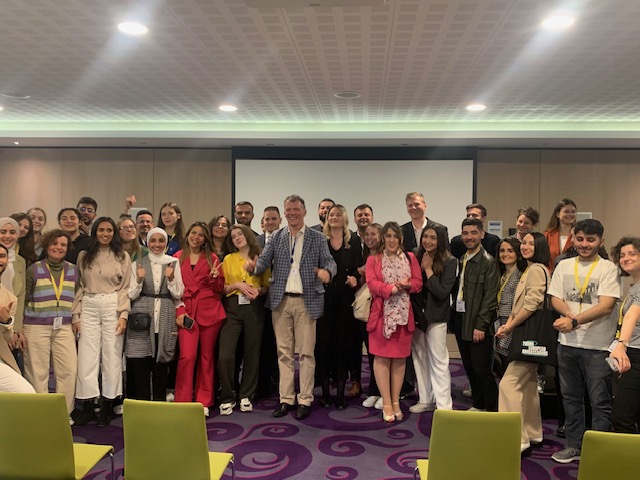
These are the words of Mathieu Bousquet, Acting Director for Thematic support, coordination of policy and financial instruments at DG NEAR, welcoming 60 young people to Brussels on 4 May 2023 from the Young European Ambassadors programme as they prepared to participate in three days of visits, workshops and networking meetings, all organised by EU Neighbours East.
This programme, which aims to strengthen relations and build connections between the EU and young people across the EU’s neighbouring regions, is a dynamic and vibrant network with communication and friendship at its core. Started in 2018, the programme currently has 900 active ambassadors, young citizens between the ages of 16 – 26 from countries in Eastern Europe, the Western Balkans, and South and East Mediterranean, where the programme is called EU Jeel Connect.
'You are,' Bousquet declared, 'The future leaders and changemakers.'
The backdrop to this year’s gathering was the nomination of 2023 as the European Year of Skills. Confirming the official launch of the year on 9 May to coincide with Europe Day, Bousquet said, 'this special year will shine the spotlight' on the critical role of skills in underpinning the transition to a greener, more digital and inclusive future for everyone.
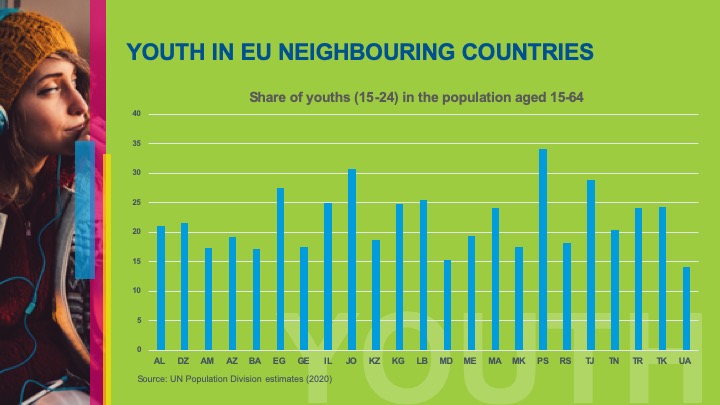
Young people between the ages of 15 – 24 account for up to 35% of the working age population in many of the EU’s neighbouring countries and Bousquet highlighted some of the challenges they face including 'high unemployment, inactive labour markets and education systems that do not respond to labour market requirements.' He emphasised the importance of collaboration in order to target key issues and build more cohesive and stronger societies.
Responding to a question from Amine Gahfez from Algeria regarding how to increase youth mobility, Bousquet confirmed that the 'question of recognition of qualifications is very important for mobility and we are working with the European Training Foundation to improve this.'
For the European Training Foundation (ETF), the EU agency that helps countries in the EU’s neighbouring regions to reform their education, training and labour market systems to meet the challenges of the future, the European Year of Skills provides an impetus to its work with partners to implement far-reaching and meaningful system change. The Young European Ambassadors event presented a unique opportunity for the ETF to host its first Year of Skills ‘ideathon’, a brainstorming event to tackle some of the most challenging obstacles to green and digital skills acquisition and development, as seen from the viewpoint of young people.
The idea of the ideathon!
Daria Santucci, of the ETF’s Strategic Communications Team, explained the concept behind the ideathons.
'Being able to harness the voices and opinions of young people helps us gain invaluable insight into what skills means for them and how skills can be learnt.' She continues,
'For ETF, helping to bring about changes that will support people on their journey to gaining the relevant skills for the future is what we strive for. We need to ensure that institutions provide lifelong learning systems that help equip people with the knowledge and competencies for successful careers and rewarding lives in a greener and more digital future.'
The language of skills
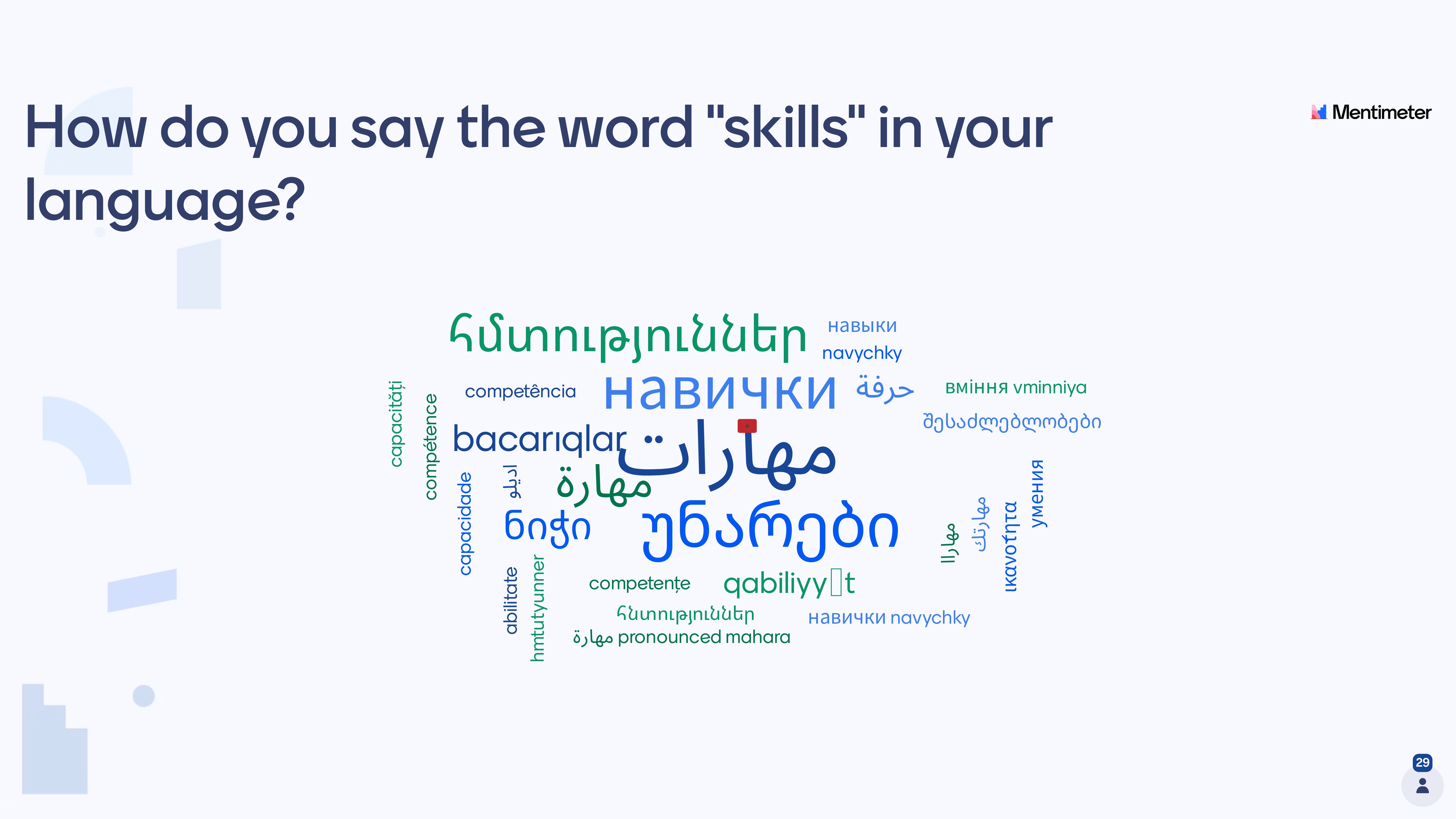
The workshop started with an exercise aimed at understanding the many different ways the participants say the word skills. Understanding cultural similarities and appreciating differences helps to create a supportive, peer learning environment which facilitates knowledge share and exchange. Following a group discussion of some of the green and digital jobs that were gaining importance in their countries (particularly online jobs), the young ambassadors were invited to name the skills they considered particularly important for the future. Soft skills dominated their responses with empathy, communication and collaboration among the top answers.
Dividing the ambassadors into cross-country working groups then provided an excellent moment of exchange that enabled them to further explore the similarities and differences in approaches to skills tuition in their countries. The premise for the ideathon was set-out in detail by Santucci.
She said:
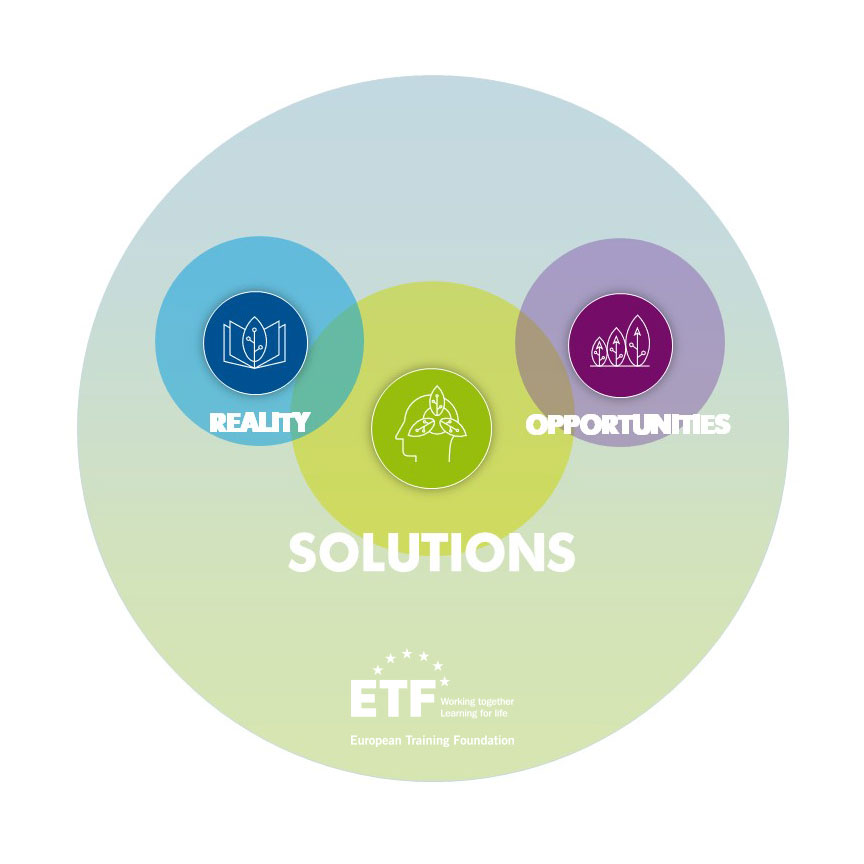
'We ask you to think about the reality of skills tuition in your countries and to identify how green and digital skills are currently taught. If you know of certain skills that are needed but are not currently being addressed, this could be an opportunity to identify actions and initiatives that could be an innovative solution to address this gap in skills teaching and learning.'
The proposals
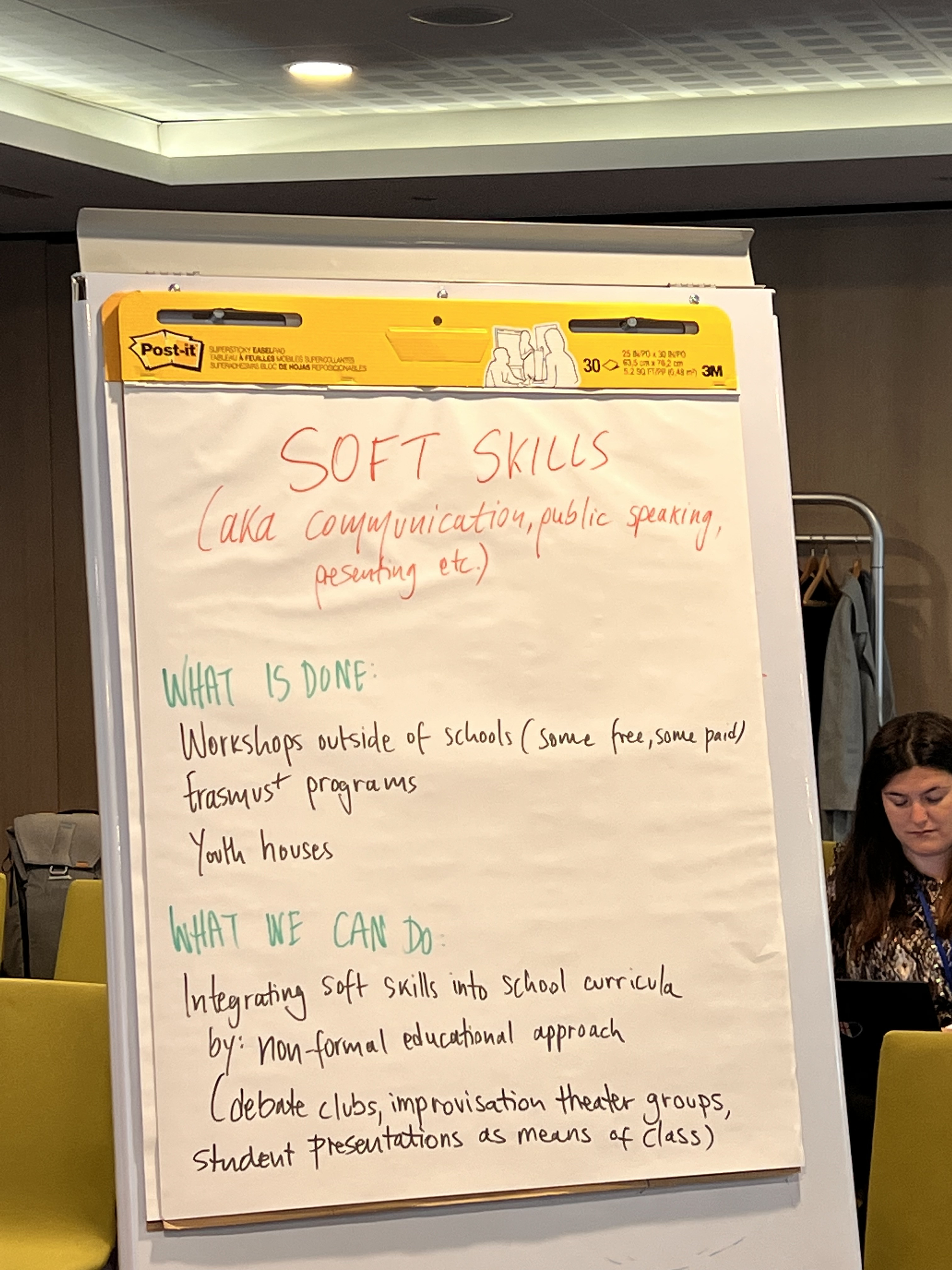
Given the timing constraints of the workshop, the results of the brainstorm were both impressive and fascinating. One of the groups comprising ambassadors from Tunisia, Georgia and Jordan among other countries prioritised the importance of communication skills for the digital future and proposed workshops, debating societies and the introduction of soft skills into school curricula as a way to gain these competences.
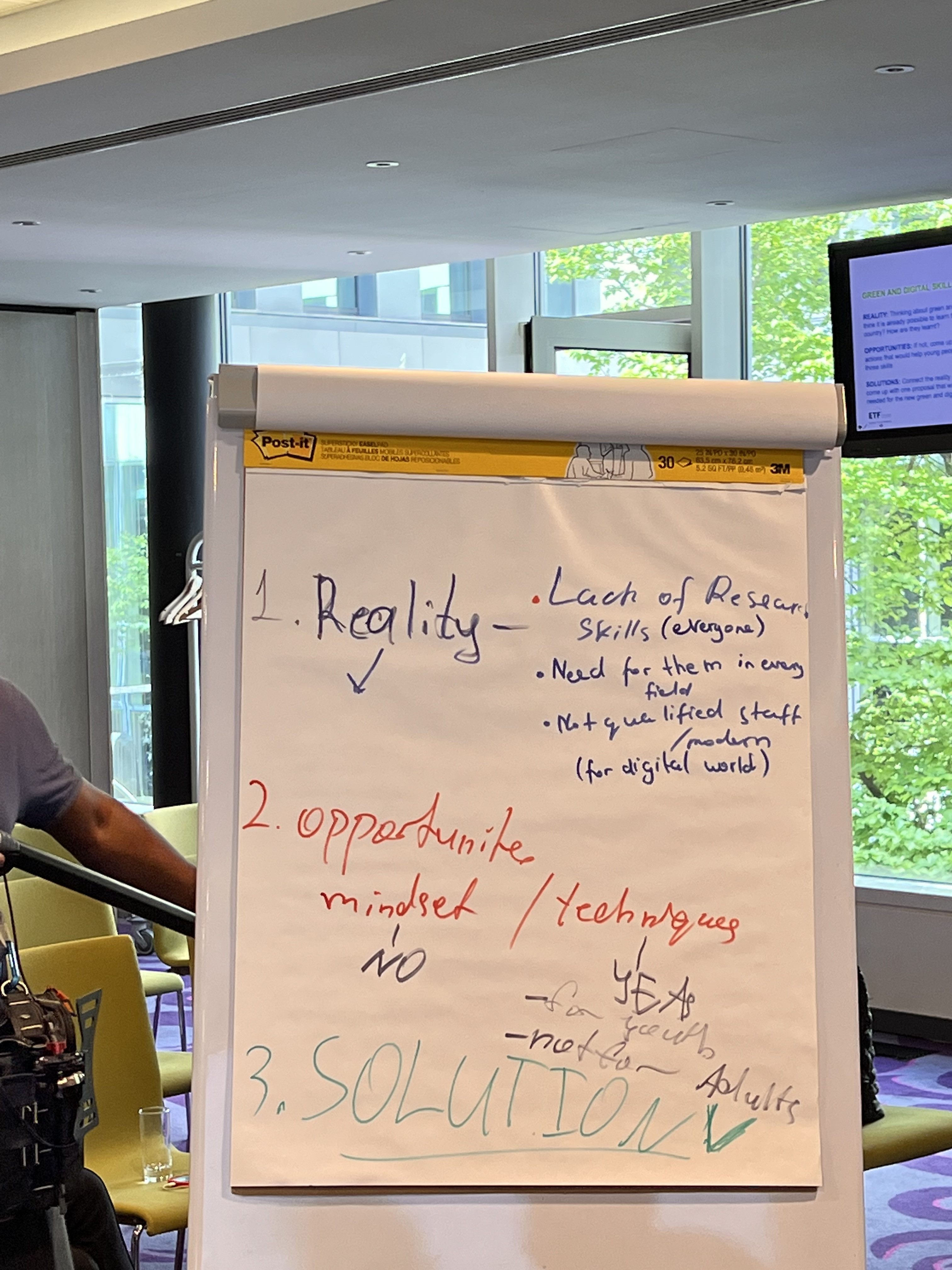
Other groups with ambassadors from Poland, Ukraine and Palestine*, among others, believed that the involvement of the private sector and the development of ‘Green Hubs’ could help accelerate the greening of curricula which would lead to greater job opportunities in the green economy. Other groups including participants from Algeria and Egypt believed that digital education for all should be prioritised to increase access to the global workplace.
 |
 |
Looking ahead
Bringing the workshop to a close Santucci summarized some of the stand-out points.
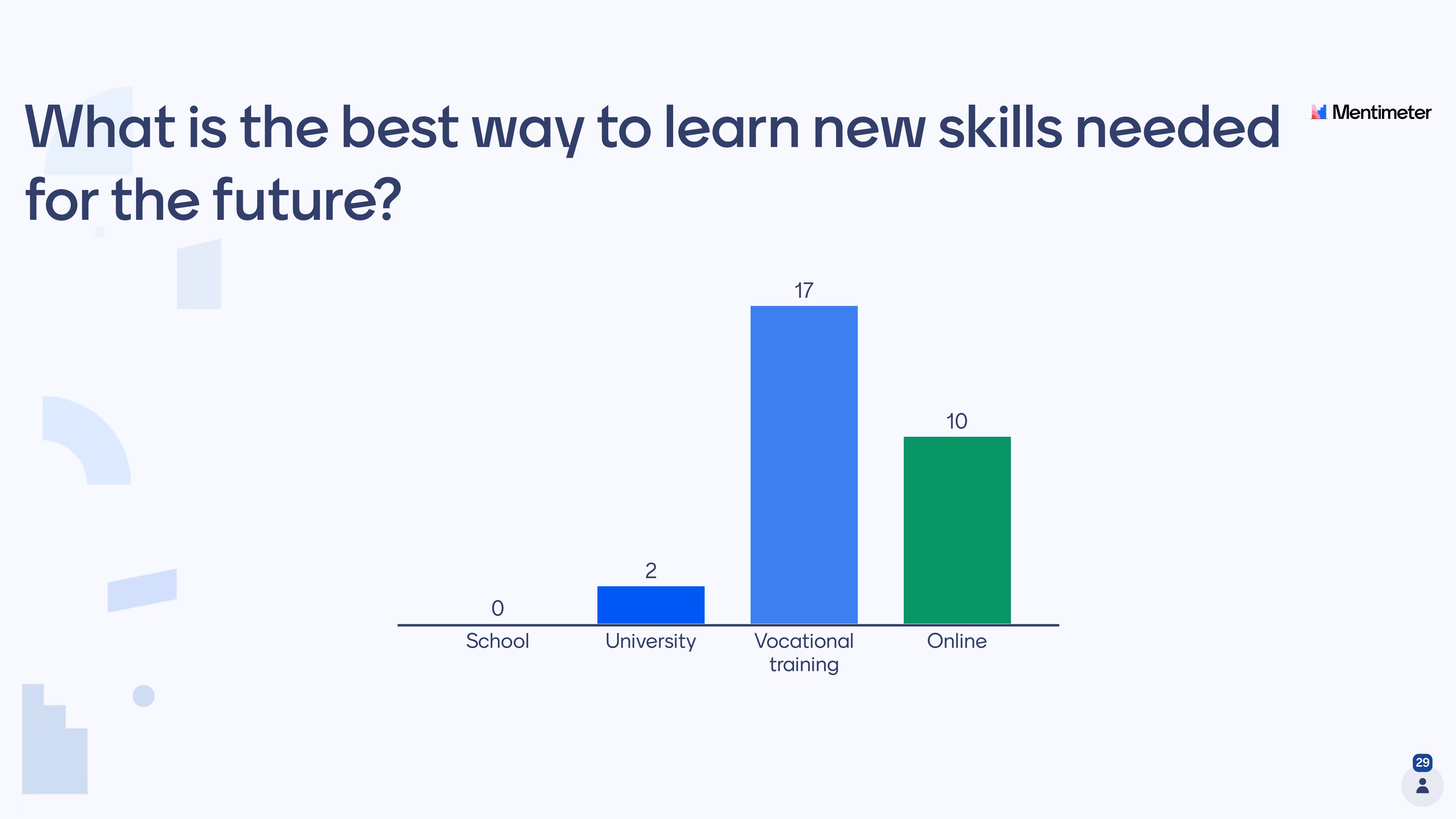
'We know from the online Mentimeter at the beginning of this workshop that our young ambassadors believe skills learning currently takes place mostly in vocational training and online settings, rather than school and university. Yet many of their proposals foresaw formal education still playing an important role in providing the key skills for the future, as long as curricula and teaching programmes were updated with the relevant green and digital knowledge.
Santucci concludes.
'This was a brilliant opportunity for us to involve a very motivated and dynamic group of young people in some of the complex decisions facing educators today. Education systems need to recognise the younger generation’s unique perspective if they are to provide them with the skills they need to succeed.'
The views and thoughts gathered from this event will be added to those generated at other ideathons held later in the year. This compilation of opinions and knowledge will feed into the ETF’s prioritised action plans, aimed at maximising the impact of the European Year of Skills for citizens across Europe's neighbouring regions.
*This designation shall not be construed as recognition of a State of Palestine and is without prejudice to the individual position of the Member States on this issue.
Please log in or sign up to comment.