

Took place last May, the latest ETF Quality Assurance (QA) Forum peer visit to Montenegro was unique and exceptional in terms of the lessons and benefits it entailed. The visit, which lasted for a couple of days, represented a valuable opportunity for the representatives of ETF QA Forum’s member countries to meet face to face and exchange their expertise and insights in the area of quality assurance in education systems and how to further improve the systems and approaches.
“The visit was supposed to be in 2020 but it was postponed due to Covid” said Ivan Marković, Senior Specialist at Centre for Vocational Education and Training of Montenegro.
"The first of its kind in Montenegro, the visit was a good chance for specialists and professionals from various nationalities, policy areas and technical backgrounds to provide their constructive feedback on the quality assurance measure related to the new Methodology for external evaluation in VET schools in Montenegro" added Marković.
In the same context, it is important to refer to the fact that QA Forum member institutions are represented by “National Contact Persons” who are people actively engaged in the Forum activities and provide feedback to their institutions and other stakeholder on the outcomes of Forum activities, by sharing the acquired experience and knowledge during the peer visits they participate in.
“The teams in Montenegro have done a great job in developing regulatory frameworks, methodologies, and standards needed for their schools” said Dr. Kakhaber Eradze, Deputy Director, National Centre for Educational Quality Enhancement, Georgia in the context of his reflection on the visit.
The peer visit allowed for the participating Members not only to reflect and provide feedback on the Montenegrin system, but also to self-reflect on approaches in their own countries. One of the issues emphasised was on involving different stakeholders in the process of external evaluation of VET providers “…including the private sector as well as other external actors in the framework of assessment and evaluating education and learning outputs is important for the process not to be limited to formal education institutions only” added Dr. Eradze.
In the same line of thought agrees Stela Guvir, Head of the Public Relations and International Cooperation Office, National Agency for Quality Assurance in Education and Research that following a participatory approach is critical in the context of improving QAof VET providers. “Involving taxpayers, parents, businesses, labour market representatives, and civil society organizations, and all those to which the government is accountable is of a paramount importance” she said.
While ensuring that all relevant stakeholders are well represented in the QA forum process is necessary, coordinating the various visions, and interests of those stakeholders is no less important “In Georgia, we formed a specialised committee 7 years ago with the aim of having all private sector representatives on board and making sure their voices are heard when it comes to decision making, policy formulation and discussions related to curricula development” added Dr. Eradze.
An idea of the ETF to further bring member countries together for mutual learning, bonding and networking at the policy level, a peer visit is a development-orientated procedure. It supports the capacity to analyse and identify strengths and weaknesses of existing quality assurance approaches and measures. The last peer visit took place in 2019 in Tunisia with the next one tentatively scheduled to be next November of this year.
More about the Montenegro peer visit, check the following:
- ETF’s next peer visit to Montenegro: Why is it that important? | Open Space (europa.eu)
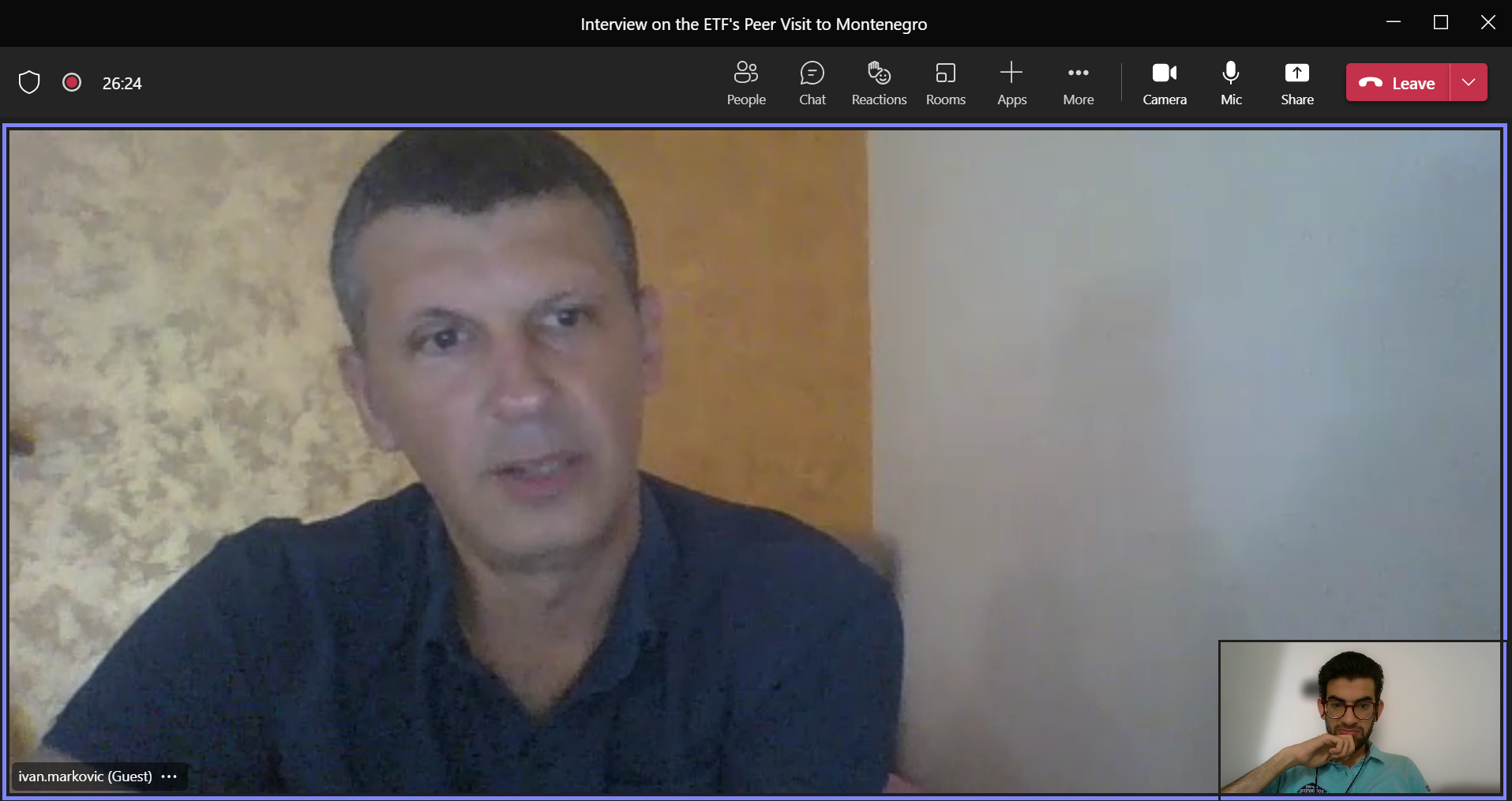
During the interview with Ivan Marcovic earlier this month

During the joint interview with both Dr. Kakhaber Eradze and Stela Guvir
Please log in or sign up to comment.