
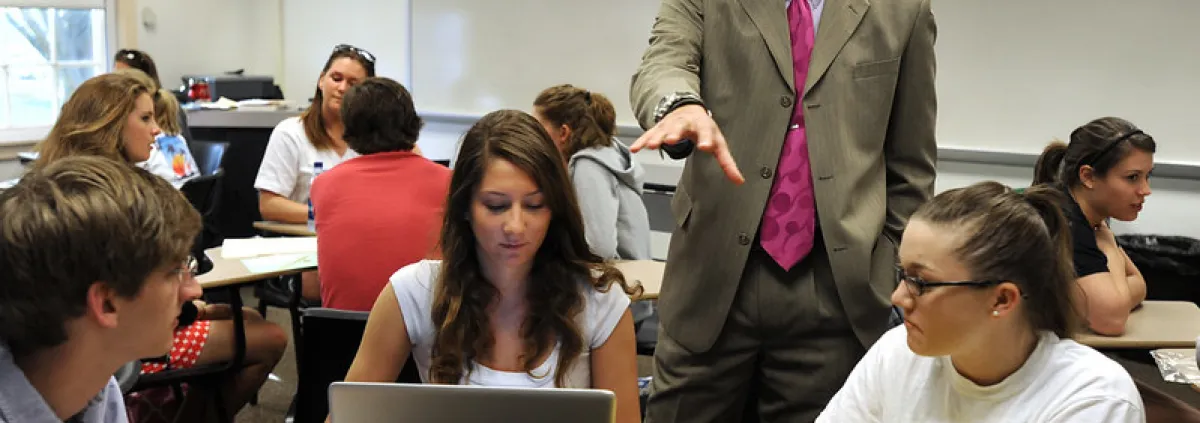
The COVID-19 crisis has spurred innovation throughout the world of Vocational Education and Training (VET) as instructors and institutions have scrambled to adjust to a new reality. Perennial backburner ideas, notably distance learning (DL) and blended learning (combining classroom time with DL), have suddenly been jettisoned to the forefront. “Methods like problem-based learning, project-based learning, community learning, service learning, blended learning, flipped classroom, group work, etc. are all used to engage learners to be active in the learning process,” said moderator Florian Kadletz, specialist in entrepreneurship and enterprise skills at the European Training Foundation (ETF) as he opened an ETF webinar titled Increasing Learner Activity, Collaboration and Interaction For Distance And Face-To-Face.
The event featured five expert panellists and focused on questions that had been culled beforehand from participants from around the world. Here are some of the highlights from the webinar. The recording in Russian and English as well as materials can be found here: https://openspace.etf.europa.eu/events/increasing-learner-activity-collaboration-and-interaction-distance-and-face-face-learning
Student-Teacher relationship
The student-teacher relationship is key, according to Ben Bastiaensen, ambassador teacher from the Future Classroom Lab (European Schoolnet). Good relationships lead directly to “good collaboration among pupils themselves and between the teacher and the pupil.”
Michael Leitgeb, applied mathematics and informatics teacher at the higher technical VET school Mödling in Austria, echoed the importance of relationships. “When the relationship is good, we can communicate much better in a distance learning situation,” he said.
Feedback and interaction
With DL, teachers need to learn how to better understand whether or not students are engaged, said Julian Stanley, a VET teachers and trainers specialist with ETF. “A lot of us don't yet know what the student is doing when we're teaching at a distance online,” he noted. “We haven't gotten a good feel for what they're actually doing.”
Feedback (both giving and receiving) is fundamental, said Teona Gelbakhiani, VET teacher in Entrepreneurship at the Information Technologies Academy of LEPL College in Georgia. “The feedback we give to students and feedback we get gives us the opportunity to update the learning processes and learning materials to take into consideration the needs of students and their expectations,” she added.
“Engagement can be found when [students] are heard and perceived,” said Leitgeb. “We have to give them the chance to give us feedback, for example, in a live session,” he said. “And we have to hear them.”
Feedback shouldn`t be restricted to the student-teacher kind, said Stanley. It should extend to the student-student realm – and not just because group work is effective. “You've got to set up situations whereby students are feeding back to one another, either in pairs or groups or different ways,” he said. “Otherwise, you wear yourself out… We need to be smart about becoming managers and facilitators of feedback, and not having a monopoly.”
Leitgeb recalled how he went overboard early during the lockdown. He asked all of his students to prepare videos explaining the solution to a maths problem. So many long-winded videos later, he was unable to provide reasonable feedback to everyone. Next time he put students in groups, with one time-limited videos per team. However, students were active and learned much more than just solving a maths problem.
Not too much
Ambitious and enthusiastic teachers started piling on with project-based learning at the beginning of the crisis. In some cases, this proved counterproductive as students felt overwhelmed by the workload. “When every teacher tried to make, for example, project -based learning or use sophisticated things, that was absolutely horrible for the students, because they didn`t really know where to find the time [to complete the assignments],” Leitgeb said.
Assuming that students have multiple instructors, which is often the case, instructors need to coordinate to ensure that they are not bombarded with multiple projects.
Special DL Challenges
DL presented significant challenges with student engagement, observed Mikheil Samkharadze, information technology (IT) manager and VET Teacher in IT Network Administration at the Information Technologies Academy of LEPL College in Georgia. Teachers needed to familiarize themselves with online tools, but they often couldn`t help solve the problem of how to teach practical skills at a distance.
That issue was partially addressed by having students work on projects in groups. Gelbakhiani had her entrepreneurial students work together to create business plans. But many students lack high-powered computers, Samkharadze noted. One response was to use clouds and simulators.
The challenges might be gigantic, but there is an upside. “One of the exciting things about distance learning is that it can create new possibilities for collaboration,” said Stanley. One teacher can record a video lecture while another works with groups on projects.
Peer-to-Peer teacher learning
Teacher cooperation cannot be taken for granted, as Stanley noted. Most teachers are very good at creating their own materials and lesson plans, but not so accustomed to working with colleagues. But some have moved forward: Gelbakhiani discussed a programme she was involved in.
In this new world, teachers need first to change their attitudes, including those towards failure. “Facilitate that it is okay for teachers to fail,” said Leitgeb. Teachers tell students that failure is OK as a learning experience, but they don`t apply that to themselves. “A lot of us don't allow ourselves to fail.” More experimentation might be interesting.
Need for multiple pedagogies – including traditional ones
An overall conclusion from the panel discussion and interaction with participants is that an increase in learner activity, collaboration and interaction requires the application of multiple pedagogies, activating teaching methods and traditional ones, in order to support the development of knowledge, skills and attitudes – hence, leaner competence. Why this is relevant was explained by Florian Kadletz: “The rapid changes in the labour market and the related changing skills demands triggered by globalisation, digitalisation, demographic changes, migration, climate change and other developments require high levels of adaptability, flexibility, creativity, team working skills, LLL competence – hence learners need to acquire strong key competences, meaning very good basic skills and transversal skills – next to solid technical skills. Learners cannot be trained anymore in one specific technical skill set for one specific profession. They need to be prepared for regular task-, but also company-, and even profession-change. Therefore, the mere focus on technical skills and a fixed set of knowledge is not enough. In addition, there is good scientific evidence that diverse and differentiated pedagogies that engage learners improve most types of learning outcomes.”
To read recent blogs on the topic and engage in the discussion:
-
https://openspace.etf.europa.eu/blog-posts/how-corona-accelerated-innovation-education
-
https://openspace.etf.europa.eu/blog-posts/first-shock-school-closures-over-now-we-want-more
-
https://openspace.etf.europa.eu/blog-posts/day-when-school-deserted
- https://openspace.etf.europa.eu/blog-posts/vocational-teachers-turkey-responding-covid-19
- https://openspace.etf.europa.eu/blog-posts/supporting-vocational-teachers-under-lock-down
- https://openspace.etf.europa.eu/blog-posts/etf-launches-webinar-series-best-practice-distance-learning
- https://openspace.etf.europa.eu/blog-posts/jordan-equipping-teachers-distance-learning
- https://openspace.etf.europa.eu/blog-posts/five-lockdown-lessons-israel
For more information on ETF Covid19 actions https://openspace.etf.europa.eu/pages/education-during-covid-19-crisis
For more information on ETF work https://www.etf.europa.eu/en and https://www.facebook.com/etfeuropa/
Please log in or sign up to comment.