
Flexibility is most frequently discussed characteristic of contemporary curricula (Tsatsaroni, & Sarakinioti, 2018; Zwan, & Afonso, 2019; Crato, 2020). Ryan and Tilbury (2013) defined flexible learning in three dimensions: the Pace, the Place and the Mode. The Pace dimension speaks about flexible learning path, which is related to learning speed, length of curricula, part-time learning, recognition of prior learning. The Place dimension includes diverse and authentic learning environments such as work-based learning, collaborative engagement of employers and employees, exchange of practice. The Mode dimension encompasses the media aspects such as the use of technology to support learning. Flexibility of learning pathways, combining school-based and work-based learning pathways, is stressed by Rintala and Nokelainen (2020), as it helps to promote individual competence needs. Personalised learning is also much linked to flexible curricula as it allows students’ voice be heard (Steward, 2017), and moreover, it involves collaborative learning, communities, use of ICT. Rao and Meo (2016) note that flexible curricula are focused on choices and options and adaptation to individual student’s needs.
Nikolov et al. (2018) defined contemporary curricula in terms of its flexibility and openness, which is regarded as a means to respond to learners’ needs, offering differentiated instruction, diversified grouping, learning space and environment. Nikolov et al. (2018) defined flexibility of curricula in relation to Aims and objectives (what), Teaching and learning strategies (how), Environment (where) and Time (when). Learning aims and objectives could be uniform and /or personalised, learning content is flexible and reflects choice, interests, levels. Flexible curricula are characterised by differentiated instruction, learning content can be broken down into different sized pieces, it can be more or less structured. Flexible curricula are based on active learning methods, regular guidance for learners, scaffolding. Grouping of learners are various and include individual/small groups/whole class and collaborative and individual learning. Learning environment is not rigidly fixed. Learning can take inside/outside classroom/school/company. It can be organised in a traditional and /or blended or a digital way. Diverse learning time alternatives are based on learning pace, duration, time span, moment, sequence.
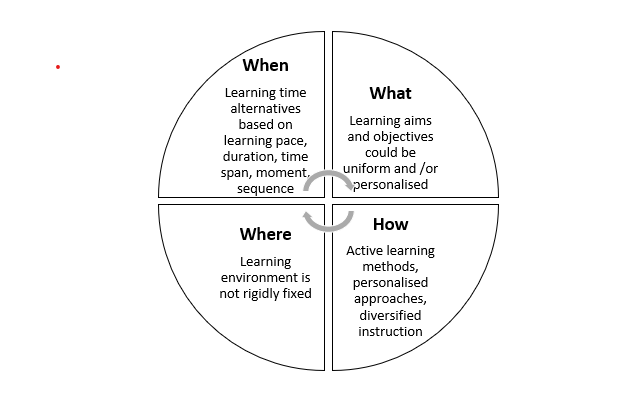
Picture 1. Elements of flexible curricula
Flexibility of curricula includes many aspects such as personalised learning, valuing prior learning, collaborative and co-creative learning, authentic learning, autonomous learning, knowledge transferability and other. Understanding elements of flexible curricula and the way they are reflected in contemporary curricula may give valuable insights and solutions for teachers, educators, policy makers while revising and updating curricula addressing challenges of 21st century education.
We invite you to share your ideas, practices regarding flexible curricula. Would you agree that flexibility is the way to address highly diversified demands of contemporary learners?
References
- Crato, N. (2020). Curriculum and Educational Reforms in Portugal: An Analysis on Why and How Students’ Knowledge and Skills Improved. In F. M. Reimers (Ed.), Audacious Education Purposes (pp. 209–231). Springer International Publishing. https://doi.org/10.1007/978-3-030-41882-3_8
- Nikolov, R., Lai, K.-W., Sendova, E., & Jonker, H. (2018). Distance and Flexible Learning in the Twenty-First Century. In J. Voogt, G. Knezek, R. Christensen, & K.-W. Lai (Eds.), Second Handbook of Information Technology in Primary and Secondary Education (pp. 685–699). Springer International Publishing. https://doi.org/10.1007/978-3-319-71054-9_45
- Rao, K., & Meo, G. (2016). Using universal design for learning to design standards-based lessons. SAGE Open, 6(4), 1–12. https://doi.org/10.1177/2158244016680688
- Rintala, H., & Nokelainen, P. (2020). Vocational Education and Learners’ Experienced Workplace Curriculum. Vocations and Learning, 13(1), 113–130. https://doi.org/10.1007/s12186-019-09229-w
- Ryan, A., & Tilbury, D. (2013). Flexible Pedagogies: New pedagogical ideas. 41.
- Stewart, D. (2017). Personalised Learning Pedagogies within Contemporary Schools. Journal of Initial Teacher Inquiry, 3.
- Tsatsaroni, A., & Sarakinioti, A. (2018). Thinking flexibility, rethinking boundaries: Students’ educational choices in contemporary societies. European Educational Research Journal, 17(4), 507–527. https://doi.org/10.1177/1474904117744697
- Zwan, N. van der, & Afonso, A. (2019). Activating the Research Methods Curriculum: A Blended Flipped Classroom. Political Science & Politics, 52(4), 749–753. https://doi.org/10.1017/S1049096519000581
Please log in or sign up to comment.