
This paper has been drafted jointly by Cedefop and ETF: The main authors are Jens Bjornavold and Slava Pevec from Cedefop, and Arjen Deij and Jolien van Uden from ETF with inputs from Koen Nomden (DG EMPL European Commission)
The first qualifications frameworks appeared in the late 1980s , beginning of 1990s, but only after 2008 we see a rapid increase worldwide. While Cedefop has been monitoring the NQFs that are linked with the EQF implementation, ETF has been supporting partner countries to develop NQFs as part of wider education and training and labour market reforms. The result was that we used different development stages.
While working together with the EQF Advisory group on exploring how we could compare the EQF with other NQFs and RQFs we decided to consolidate our approaches based on our experience with NQFs and RQFs.
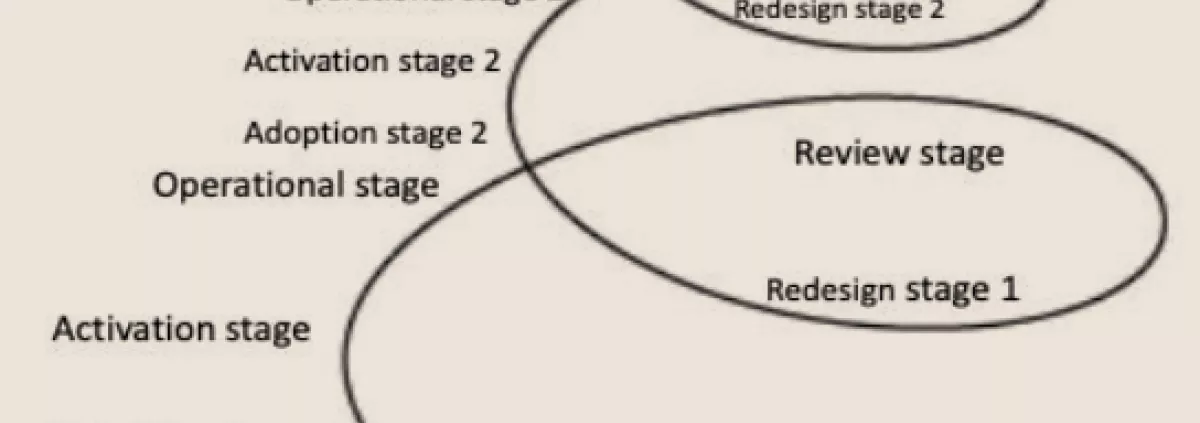
The result is this paper that tries to describe the different development stages that we have observed. We now have a common monitoring tool to compare QF by their developmental stages.
The stages are not prescribing how QFs should be implemented, but rather observe what has been happening so far. Not every QF follows this path. Every Qualifications Framework is unique, and developments are not always progressive but these stages describe a cyclical development pattern where exploration of the functions and modalities of a framework is followed by designing the framework, formally adopting it, putting it into practice until its fully operational and reviewing it to improve it, redesign it and adopt the improved framework, etc.
The paper was discussed in 2020 in the EQF AG project group on Comparison, adapted to reflect the latest developments of Regional Qualifications Frameworks and shared in the EQF Advisory Group in November and with Unesco and Unesco Institute for Lifelong Learning for the development of the Global Inventory of National and Regional Qualifications Frameworks.
It will be published as a Briefing Note shortly.

The development stages with indicators for each stage will be very helpful for developing countries. Particularly, I liked the preconditions for referencing. This is a very useful resource for countries!
I also felt that maybe more emphasis could have been put on quality assuring qualifications and placing them on the framework.
I agree that putting emphasis on qualifications is important. Qualifications Frameworks are Framework of qualifications after all. Without qualifications in them they do not have an added value. But for these qualifications to be part of the NQF they will be subject to quality assurance processes.
Please log in or sign up to comment.