


Availability, applicability and attractiveness of European policy and practice of Work-based Learning in VET for Russian VET teachers
Following the previous post about the project 587102-EPP-1-2017-1-EN-EPPJMO-MODULE "European policy and practice of Work-based Learning in Vocational Education and Training", co-financed by the European Commission, we want to present some interesting research outcomes obtained within this project.
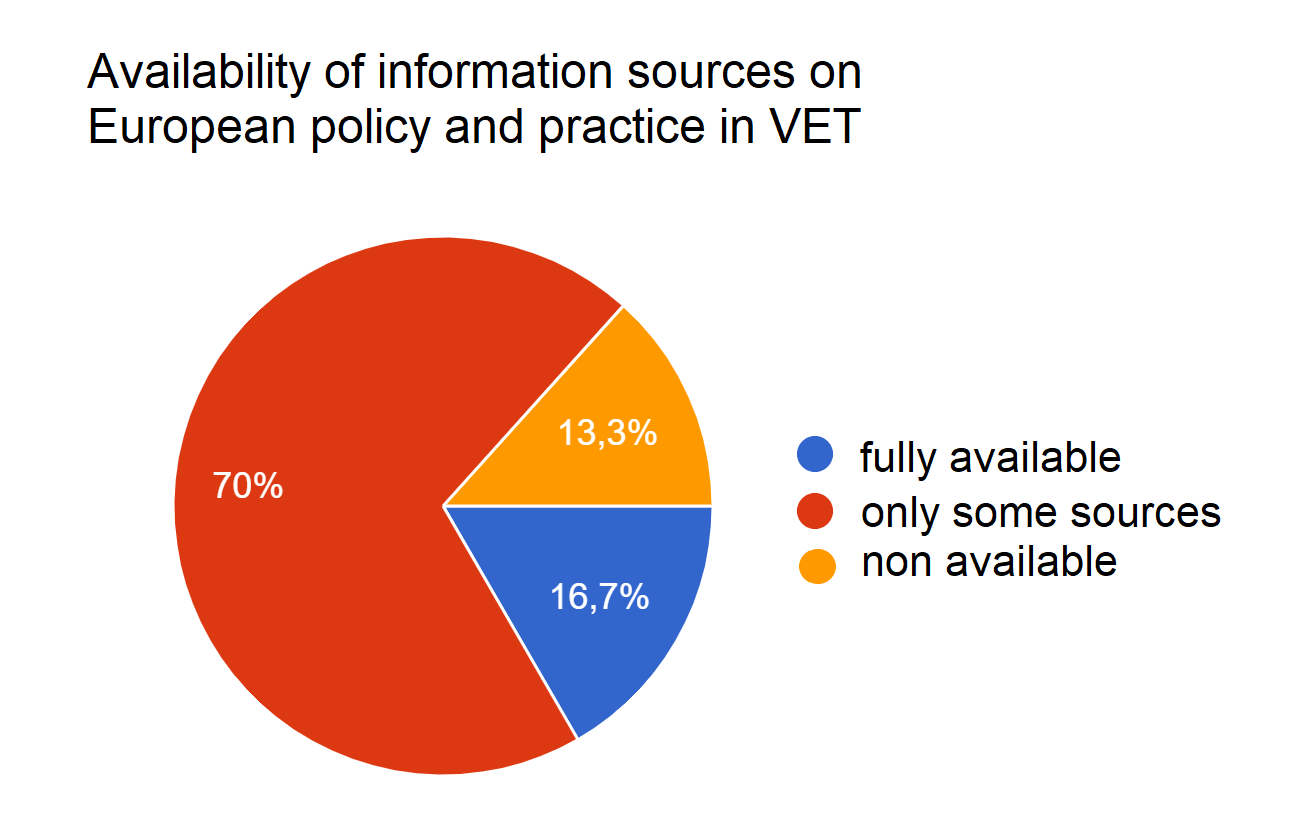
1. At the end of the course "European policy and practice of Work-based Learning in Vocational Education and Training", it was interesting to learn from the participants (future and current VET teachers) their understanding of the possibility of independently finding information on the topic of the course. The biggest part of learners (70%) expressed concern about the availability of these documents, as they were almost all in English and the course instructors were able to provide only a small portion of the materials needed for the study in Russian. Nevertheless, almost 17% of learners confirmed the full availability of necessary documents by Google search. Unfortunately, 13% of the learners remained in a state of inability to find the necessary documents due to the weak knowledge of foreign languages. See the chart below. We may conclude that there is a certain demand to produce translations of basic documents on European policy and practice of Work-based Learning in VET if we are going to promote these policy and practice further in the RF further. For example, we may recommend
- Work-Based Learning in Europe. Practices and Policy Pointers. 2013
- Work-Based Learning. A Handbook for Policy Makers and Social Partners in ETF Partner Countries. 2014
- Cedefop. Work-based learning in continuing vocational education and training: policies and practices in Europe. 2015.
2. The next question was to assess the European experience in the implementation of work-based learning on a ten-point scale in EU countries. See the chart below.
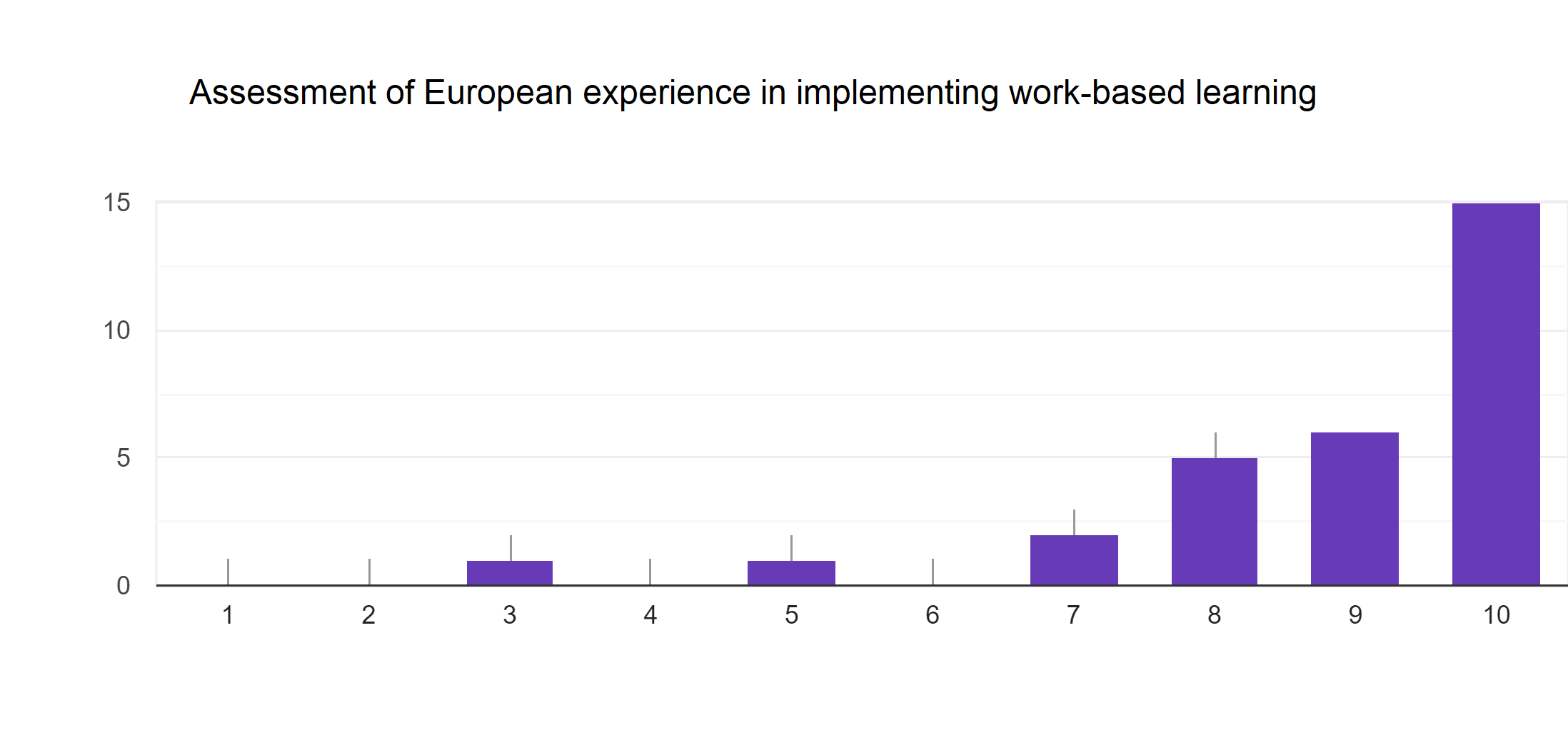
The instructors found that their efforts in promoting European experience was rather successful as 86 % of learners estimated what they had learnt from 8 to 10 points.
3. It was interesting also to figure out the estimation of applicability of work-based learning practices in the Russian vocational education and training system.
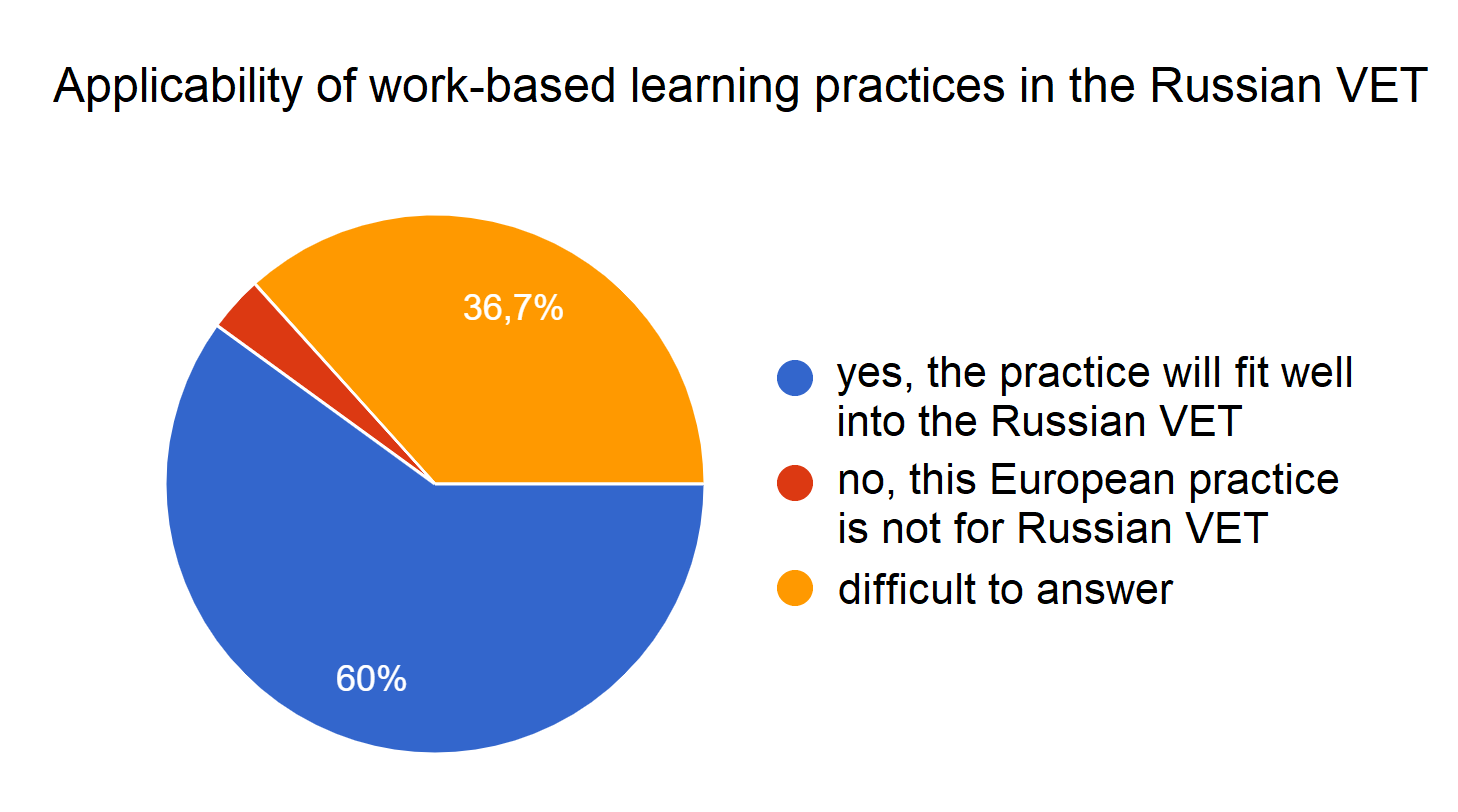
The chart above shows that 60% of respondents appreciated the acquired knowledge on work-based learning practices and confirmed that European approaches fit well into the Russian VET, they found similarity and attractiveness to their own training practice.
The survey covered 32 students at the Russian Vocational Pedagogical University (63% - women, 37% - men). The age of the respondents was from 17 to 32 years old. 56.7% of respondents have practical experience, and 43.3% have not yet started work. Of the respondents: 56.7% - bachelors, 16.7% - masters, 26.7% - aspirants.
The European Commission's support for the production of this publication does not constitute an endorsement of the contents, which reflect the views only of the authors, and the Commission cannot be held responsible for any use which may be made of the information contained therein.
Please log in or sign up to comment.