

Creating opportunities for more and better apprenticeships throughout the EU and partner countries was under the spotlight Friday [November 19] at a joint European Training Foundation (ETF) and European Alliance for Apprenticeships (EAfA) online webinar.
The event, the 6th regional meeting for Western Balkans members of the EAfA, since the first in Turkey in 2016, had been planned as a physical meeting in Serbia, but Europe’s current spike in Covid cases meant that, like last year, participants could only meet digitally.
Opening the event, ETF director Cesare Onestini, celebrated the diversity that gives the alliance strength.
“Our common goal is more and better apprenticeships in Europe and partner countries,”
he told delegates that included representatives of new EAfA members Israel and North Macedonia.
Past experience within the alliance suggested that sharing ideas and experience lead to the creation of new solutions.
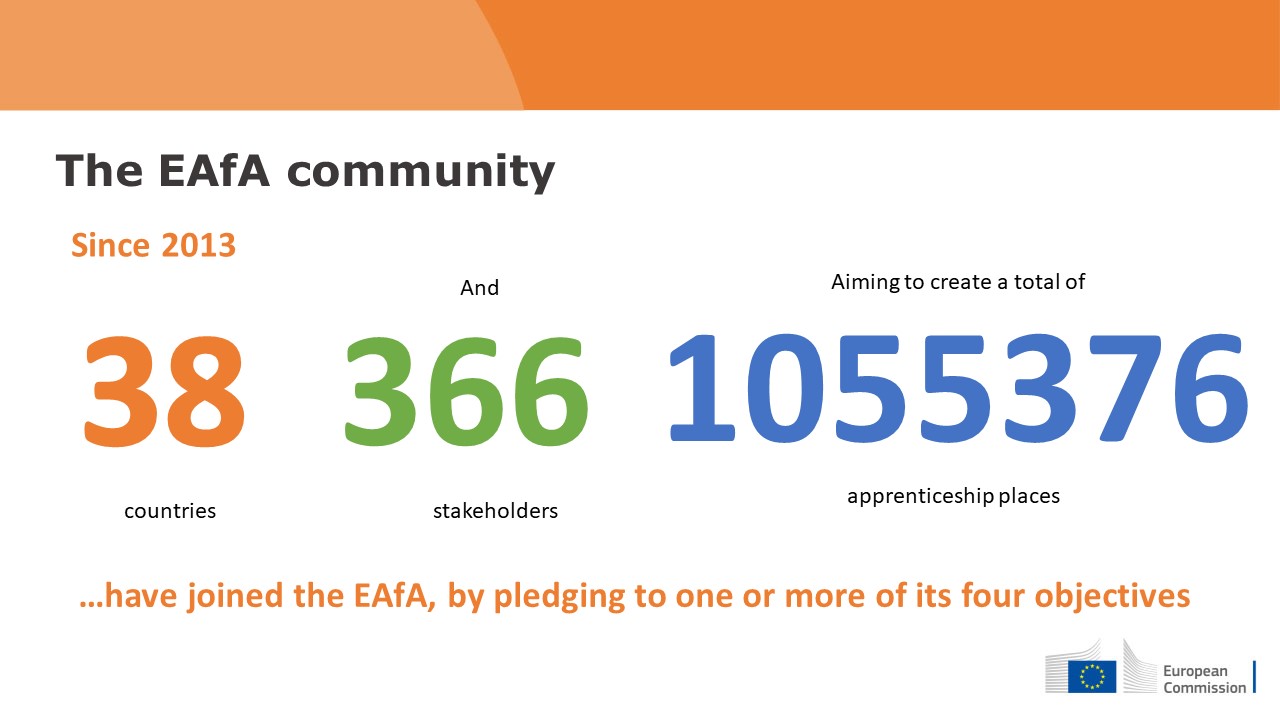
The alliance was founded in 2013 and now numbers 38 member countries that have created a combined total of more than one million apprenticeships.
“We see that despite Covid, initiatives keep growing and having momentum,” Mr Onestini said. “We, in the ETF, continue to support EU candidate countries’ efforts to support EAfA objectives. They have made remarkable progress in reforming work-based learning programmes. We see this as one area where experience has grown and many initiatives have been adopted.”
Although digital and online options had their limitations, as demonstrated during the pandemic, the use of them – for example in adapting practical training to distance learning – has also done a lot to “push new ideas and innovation,” he added.
Ana Carrero, Deputy Head of Unit at the EC’s Directorate General for Employment, Social Affairs and Inclusion, noted the increasing importance of work-based learning in EU strategies for ensuring the education and training continue to meet the needs of a fast-changing labour market, as exemplified by its inclusion in last year’s Osnabrück Declaration.
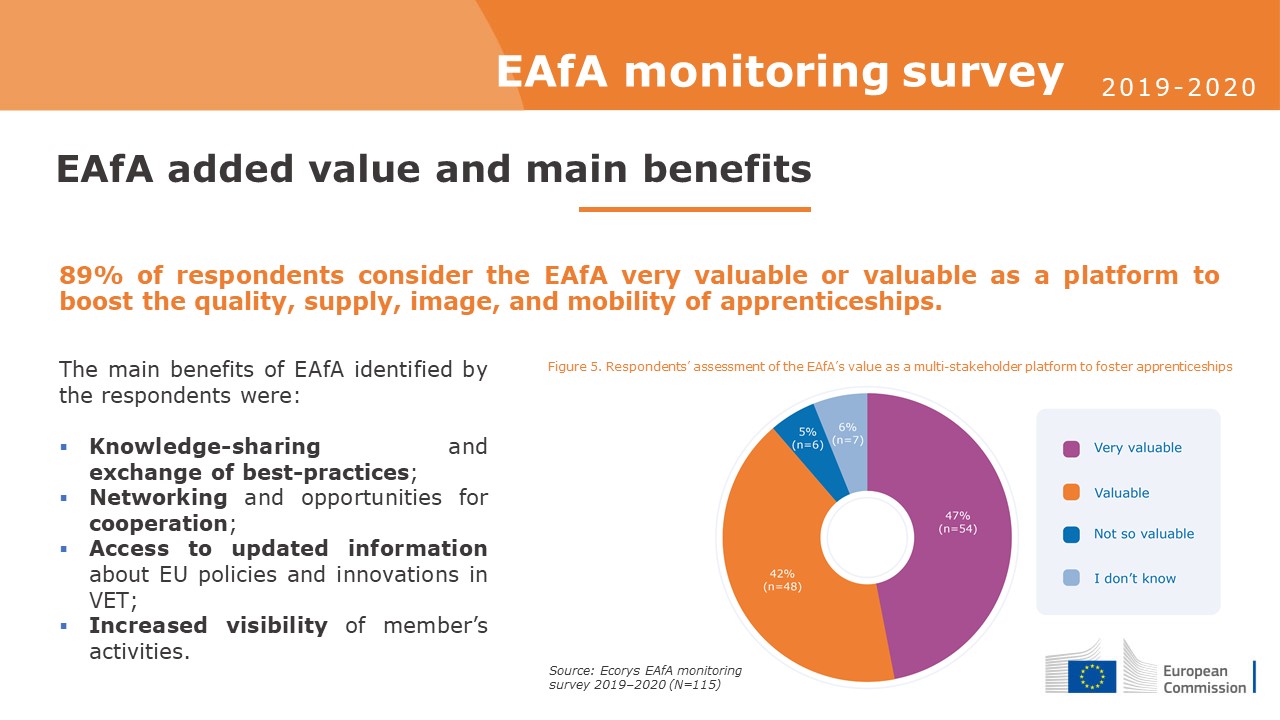
EC policies and support for apprenticeships and work-based learning (WBL) aimed to “ensure that vocational education and training (VET) programmes contain WBL components,” she said.
“We consider this key to addressing youth employment, better matching of company needs and increased attractiveness for VET.”
EU policies were “strongly focussed on international cooperation, including in the border regions,” she said, adding that policies including those such as the new Youth Guarantee, that is beginning to be adopted in EU partner countries, could “contribute to more effective and labour market relevant policies.”
Ensuring that the private sector was engaged in WBL and apprenticeship programmes was also an essential part of the approach, Neil Taylor, Head of the European Bank for Reconstruction and Development – EBRD Kosovo*.
The bank was a major institutional investor in the Western Balkans, where it had invested €14.6 billion in 800 projects.
“Economic inclusion offers a huge potential for countries to improve their potential through improved training and skills,” he said. “The region is now coming out of crisis – our updated forecast is for 6.4 percent growth in 2021, which is a significant rebound from last year. There is a huge opportunity for recovery to be both green and inclusive.”
Citing a number of projects funded by the bank in the Western Balkans regions, including supporting the Serbian government in drafting a new law on apprenticeships and helping set up dual education support centres in Bosnia & Herzegovina, he added:
“Only an education and skilled labour force can really enable economies to become competitive and grow. It is important to do this in an inclusive way that creates opportunities for women, youth and the disadvantaged.”
Jasmina Poličnik, of the Adult Education Directorate of Slovenia’s Education Ministry, gave the perspective of the Slovenian Presidency of the Council of the European Union, noting a council resolution on supporting a new agenda for adult learning over the next decade, which aimed “to increase and improve high-quality provision of adult learning opportunities, whether formal, non-formal or informal.”
A round up of progress in Western Balkans EafA member countries included news of Albania’s draft VET optimisation plan that would use new multi-functional centres as regional hubs to link learners and potential employers, aiming for “better management of human and financial resources,” and North Macedonia’s successful programme to train trainers and company mentors, alongside plans to adopt a new law on VET and WBL.
Gabrijela Grulić, Serbia’s assistant minister of education, science and technological development, noted that
“acquiring skills and knowledge via work-based learning will ensure that young people find employment. Serbia is keeping up with the latest developments and now perceives knowledge and education in a whole new way.”
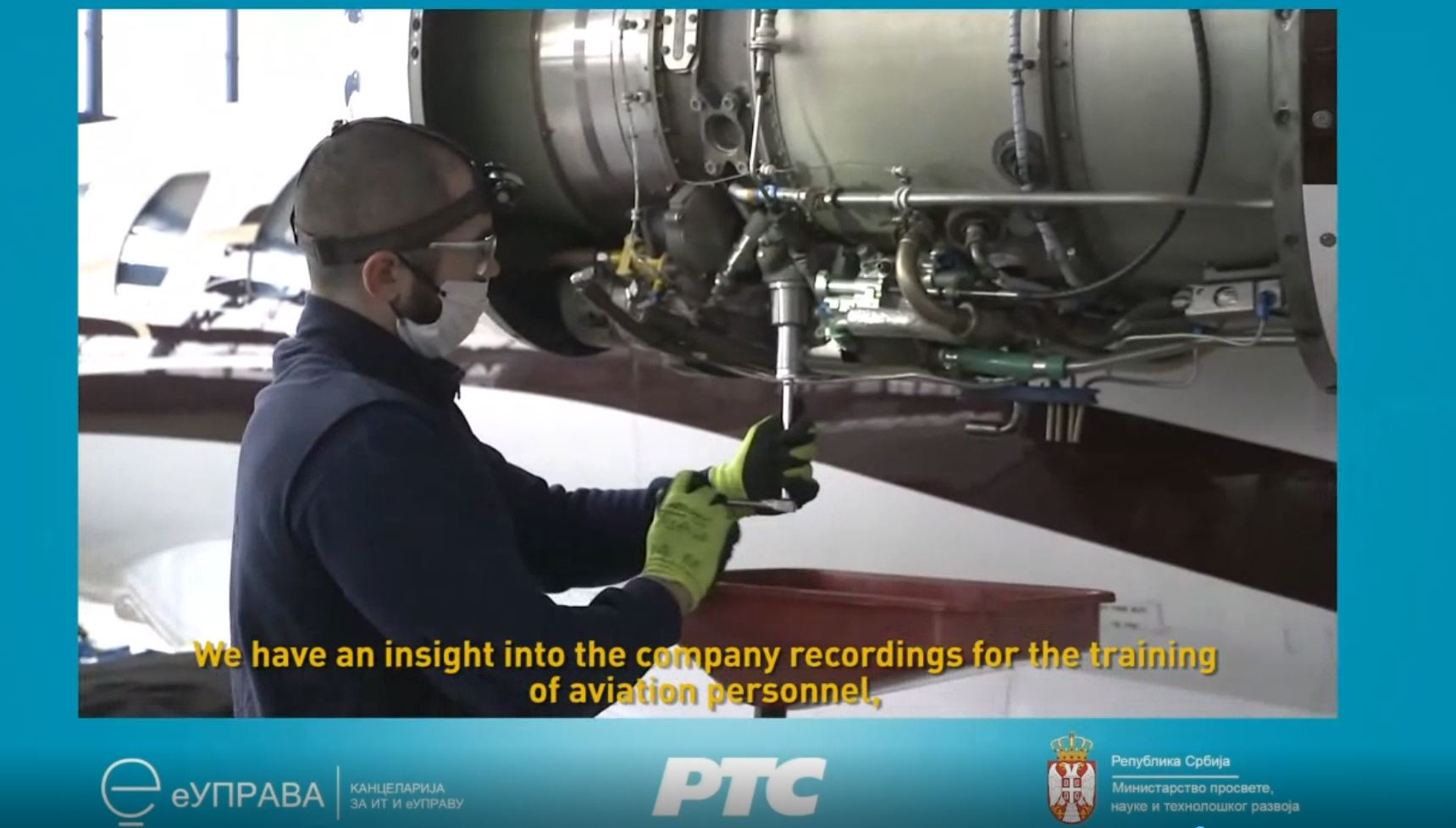
That new perception was evident in a Ministry video she shared showcasing young trainees in WBL programmes talking about how effective such programmes are.
Montenegro’s Marko Vukašinović, Head of the Directorate for Planning and Implementation of EU Funds, Ministry of Education, noted that although the country was the smallest in the Western Balkans, its numbers involved in WBL schemes and employer engagement was impressive: more than 500 students across grades first to third grades and 300 employers.
Süleyman Akgül, Head of Work-Based Vocational Education in Turkey’s Ministry of National Education, noted that WBL operated now in 33 fields and 181 occupations, securing employment for 90% of graduates.
The webinar wrapped with a look ahead to next year’s physical 7th West Balkans regional meeting – due to be held in Serbia – where the focus will be on digitalisation and work-based learning and how to progress regional versions of the EU’s Youth Guarantee.
* This designation is without prejudice to positions on status, and is in line with UNSCR 1244/1999 and the ICJ Opinion on the Kosovo declaration of independence
Please log in or sign up to comment.