

Nearly three dozen countries make up the European Neighbourhood Region, and are called ‘partner countries’ by the European Training Foundation (ETF). The subregional groups are: the Western Balkans, the Eastern Neighbourhood, the Southern Neighbourhood, and Central Asia. The Russian Federation is classified as its own group.
This is a diverse lot, but most are middle-income countries and recipients of technological advances rather than creators. To better understand the demand for skills in transition and developing countries, the ETF compiled a report called Changing Skills Demand in the Countries Neighbouring the European Union.
This blog post focuses on a section of the report that makes observations about how these countries are affected by global drivers of change and gives examples of the ensuing dynamics. This provides the basis to assess the needs for new skills.
We have given an overview of labour market trends in an earlier blog post.
Increasing participation in global value chains (GVCs)
Several low- and middle-income countries now play key roles in GVCs, attracting more foreign direct investment (FDI) and technology transfers. This contributes to higher productivity and faster growth. Jobs are created and wages boosted. Workers are learning new skills. There is even talk of leapfrogging over advanced economies potentially hamstrung by legacy productive systems with outdated technology that would be costly to replace.
Neighbouring countries that surround the EU enjoy strong connections to the ‘economic centre’ via trade, FDI, labour migration, and special economic agreements.
GVCs tend to be organised around Europe’s large manufacturing hubs. Israel, Russia, Turkey, Egypt, Morocco and Tunisia show the highest levels of participation. Top sectors include agriculture, agri-food, plastics and rubber, textiles, metal products, electrical and electronic equipment, chemicals and motor vehicles.
The steady integration of the Turkish automotive sector provides one success story: it has graduated from mere assembly operations to producing components and innovating, resulting in greater demand for skilled labour and the emergence of new skills.
Sectoral shifts in the economies of region
As elsewhere, the makeup of the economies the European Neighbourhood is constantly shifting. Shared trends include service-sector growth, relatively static industry and, diminishing agricultural activity. The service sector already dominates the region, accounting for between 45% to 80% of the workforce in individual countries.
Growth of the service sector has varied from 8-18% across the countries over the last two decades. Yet output, defined as changes in gross value added, often lags behind. This indicates low productivity and decreasing wages in the sector.
Agriculture remains important in many places, such as Tajikistan, Turkmenistan, Uzbekistan, Morocco, Albania and Georgia – sometimes accounting for as many as one-third of jobs. But agricultural employment declined everywhere between 2000 and 2019. Farm workers are leaving the land, mostly for new service jobs that require reskilling and upskilling.
Some countries with once large, but now shrinking, agricultural sectors have registered higher than average increases in industrial employment - up to 5% in the last decade. These include Albania, Algeria, Egypt, Kyrgyzstan, Turkmenistan, Uzbekistan and Kazakhstan.
The biggest gains can be seen in the service sector, although less in high-end services (financial, health, education and ICT) than in low-end ones (hospitality, wholesale and retail trade, real estate and personal services). To adjust to these changes, workers will need to cultivate socio-emotional skills, key competences and soft skills.
Early signs of automation and robots
Jobs that could be automated by current technologies stood at around 50% in Morocco, Turkey, Russia, and Egypt, according to a 2017 study by consultancy company McKinsey.
For now, nearly three-quarters of the world’s industrial robots are in five countries (China, Japan, the United States, Korea and Germany), according to the International Federation of Robotics (IFR). Measured as the number of industrial robots per 10 000 employees, robot density in manufacturing is a key indicator. Three countries from the European Neighbourhood included in the study ranked far behind global leader Singapore (918) and Germany (346). Israel outdistanced a few middle-income nations, such as Mexico, 49 to 43. Turkey had 29 and Russia six.
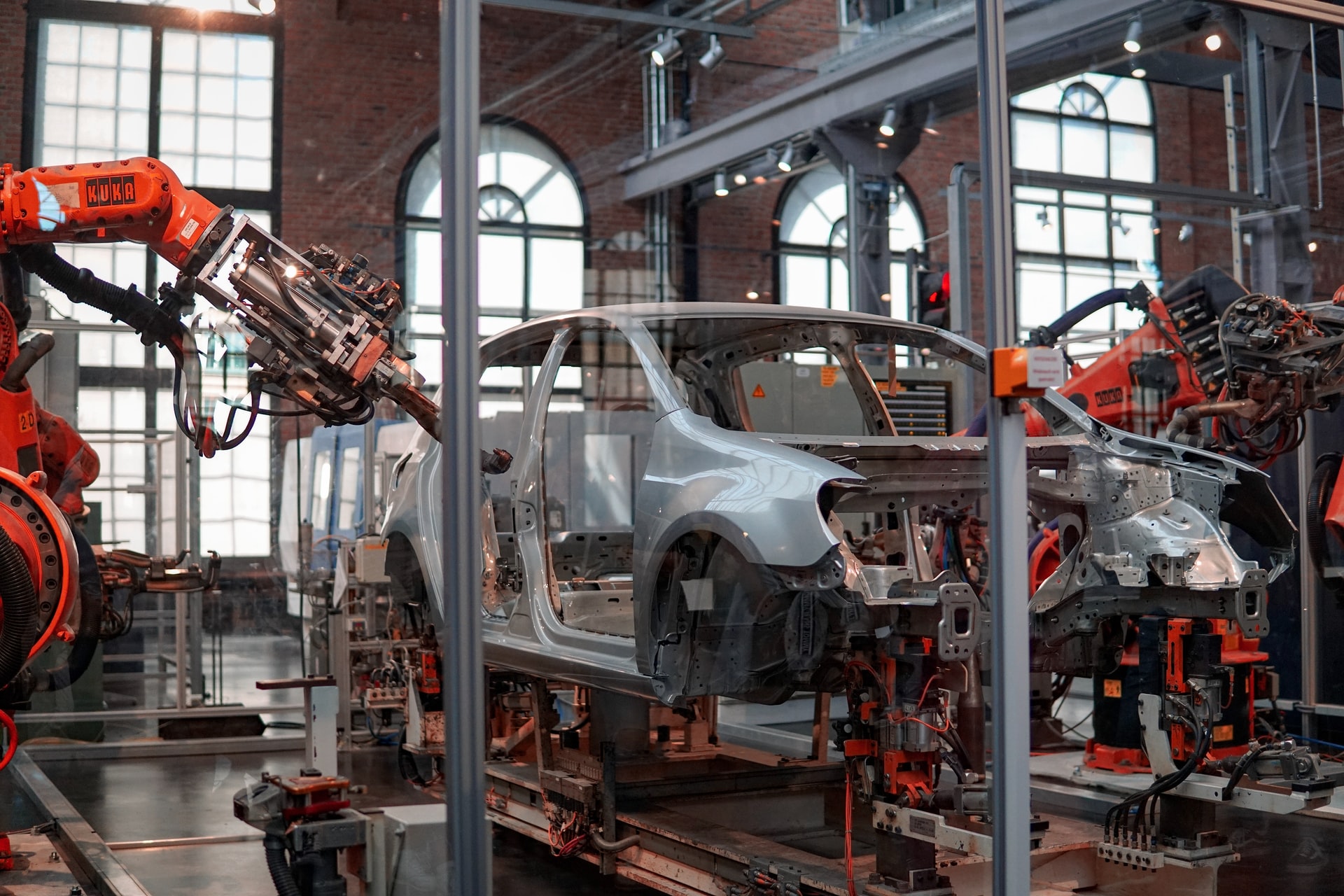
The automotive industry is the most important customer for industrial robots. Turkey’s growing strength in that sector helps explain its relatively high number. It has become a promising emerging market for robots, according to the IFR. In terms of absolute numbers, all of the dozen European Neighbourhood countries studied showed significant increases in robots between 2014-2019, led by Morocco with a 42% upswing. Turkey occupied the 20th position in terms of industrial robots used, with a stock of over 15 000 in 2019.
Industrial robots can increasingly be found in plants that produce metal and machinery, plastics and chemical products, food and beverages, and more. In the region, Turkey, Russia, Morocco, Tunisia and Serbia lead the way on expanding beyond the automotive industry. Robot technology is also used in non-manufacturing applications such as agriculture, logistics, construction, medicine, entertainment, defence, transportation and maintenance, among others.
Some provide services for humans. Developments in service robotics imply tremendous changes for agricultural and service sector jobs, including in the European Neighbourhood. Turkey might be primed to begin to replace sundry menial service jobs with robots, said one study. While still well behind the world leaders, Russia, Israel and Turkey have begun to develop domestic robotics industries.
Newly emerging sectors and cross-cutting trends
Accessible and affordable high-speed Internet connections create employment opportunities for skilled workers. They also allow countries to catch up in areas ranging from the digital economy to precision farming.
Although still low, e-commerce shows very high rate of annual growth in European Neighbourhood countries, further accelerated by the lockdowns of the Covid-19 pandemic. In the Middle East and the Gulf, Egypt, the UAE and Saudi Arabia are moving forward. Saudi Arabian online retailer Noon.com is competing with Alibaba and Amazon. Acquired by Amazon, Egypt’s Souq.com is the market leader in the Middle East. Based in the United States, Esty is an online crafts market that has created opportunities for artisans in at least 20 European Neighbourhood countries. Egypt opened the ride app market to Uber and local competitor Careem in 2018. The country now ranks among Uber’s fastest growing markets.
The broader ICT sector can provide new opportunities. ICT employment in developing and emerging economies has grown very rapidly, though the European Neighbourhood countries still ranked poorly on the Digital Entrepreneurship Index in 2020. Support for entrepreneurship is needed.
Initiatives to promote growth and innovation are emerging, often supported by the EU. One example is the Digital Agenda for the Western Balkans (DAWB). Similarly, EU cooperation with the Eastern Partnership (EaP) countries includes sharing experiences of the EU’s Digital Single Market and supporting the implementation of the EU4Digital initiative in the region.
In line with these developments, the sector (particularly ICT services) grew continuously in terms of value added as a share of GDP during 2010–2017, particularly in Belarus, Serbia, Russia, Israel, Ukraine, Azerbaijan, North Macedonia and Bosnia-Herzegovina, according to a 2019 UNCTAD report.
Meanwhile, the region must combat global warming and other environmental maladies. That drives green transformation. The pursuit of green growth can create economic opportunity. Initiatives from water conservation to transportation reform will require substantial upskilling and reskilling of the workforce. The European Union is backing a series of green projects throughout the region.
Expansion of platform work
Virtual platforms (online labour markets) provide work for otherwise-excluded people, especially in developing countries. Employers mostly reside in higher-income countries; workers live mostly in lower-income ones. Virtual migration is substantial - though language, time zones and cultural distance still affect relationships. For UK-based platforms, non-UK workers mainly come from India, Pakistan, Bangladesh, Ukraine and the Philippines.
Globally, Ukraine ranked 7th, followed by Egypt at 10th, Russia 12th, Serbia 18th and North Macedonia 20th, according to the Oxford Internet Institute. In terms of financial flows and number of tasks executed, Ukraine took first place in Europe and fourth in the world. according to an ILO study. It also ranked as the top global supplier of ICT freelancers, with 18% of Ukrainian white-collar workers having already tried digital work and saying they would like to switch to it full-time; every second white-collar worker viewed it as a potential additional source of income.
Ukraine’s competitive advantage is a highly educated labour force with ample IT and language skills; yet Ukrainians’ earnings and living standards remain relatively low, while unemployment, underemployment and skill mismatches are high. Economic and military crises, combined with poor law enforcement, informality and very low wages, turn talented professionals into digital workers who can transcend local and national markets to earn income from abroad. Foreign clients can obtain good-quality work at a relatively low cost, while the country’s cultural proximity and location in the Eastern European time zone simplify online communications.
When it comes to freelancers per 1000 people, many countries from the European Neighbourhood appear in the top ten list: Serbia, North Macedonia, Jamaica, Armenia, the US, Montenegro, Bosnia and Herzegovina, the Philippines, Malta, Barbados, and Albania. Serbia has 3.52 freelancers per 1000 people.
Changes in employment patterns and occupational structures
In line with global trends, the European Neighbourhood countries are experiencing changes in employment patterns, with jumps in non-standard forms of employment, such as temporary and part-time contracts, self-employment, independent contracts, posting of workers and on-call/on-demand working arrangements.
The gaps in employment and working conditions between the public and private sectors remain visible. Public jobs are relatively decent. The private sector is infamous for poor wages and working conditions and precarious contracts. Job polarisation is feeding rising income and wealth inequality and political populism in places such as Egypt and Eastern Europe.
These countries have a relatively high share of self-employment, often translating into low-quality jobs, notably subsistence farming. Yet most countries in the region have recorded a drop in the share of self-employment since 2010. This decrease is more than 10% in countries with large agricultural sectors. The reasons for this decline are manifold and vary between countries.
Changes in the occupational structure have also engendered the creation of higher skilled occupations. Ukraine, Serbia and North Macedonia have relatively large shares of high-skilled occupations (38%, 28% and 28% respectively), while the figure for Albania was only 17% in 2018. Over the last decade, the share of high-skilled occupations has increased significantly in Ukraine (by 5%) and moderately in Turkey and Albania (2%).
When a country’s economic progress and/or skills structure cannot keep pace with developments, skills mismatches often increase.
The occupational mismatch of employees with tertiary education working in semi-skilled occupations is quite high in the region, ranging from 11% in Montenegro to 36% in Georgia, according to an ETF study. Men more likely to be mismatched than women. Insufficient job creation generally combines with an over-supply of graduates, though sometimes STEM positions lack sufficient qualified candidates.
The mismatch between the supply of skills and the requirements of modern jobs is widening. Some countries need more workers with vocational and technical backgrounds. Employers complain that education systems produce too few people with the right kinds of skills, good attitudes, and self-discipline.
The lack of post- secondary non-university education also takes part of the blame. In many Eastern European countries, the most important skills lacking in young workers are technical competence, problem-solving abilities, English proficiency, leadership skills, and creative and critical thinking, according to STEP skills study carried out by the World Bank.
In conclusion
These six trends point to the need for new skills to address increasing gaps in labour markets. Monitoring new skills needs and improving the skills development supply accordingly are not actions only for developed countries. Developing and transition countries also need to watch out for these developments and take necessary actions.
For further reading, see the Article 2 in the ETF report.
Please log in or sign up to comment.